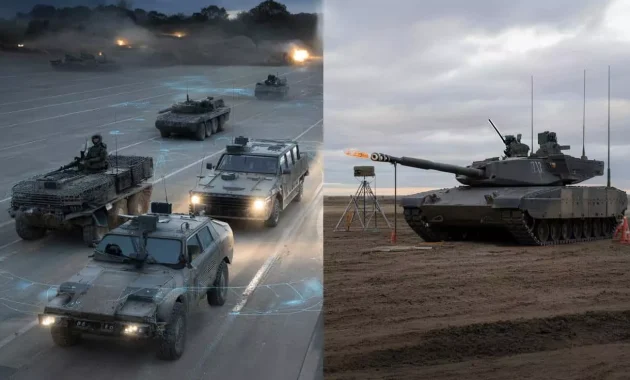
In the heart of Europe, two titans of military might are charting vastly different paths. While France is accelerating its Scorpion program, a cutting-edge suite of armored vehicles that are redefining the future of ground warfare, the United Kingdom is mired in delays and doubts surrounding its Challenger 3 main battle tank modernization.
As Paris unveils a rapidly expanding family of state-of-the-art armored platforms, London is struggling to keep pace, its Challenger 3 program plagued by setbacks and a shrinking fleet. This divergence highlights the contrasting approaches to national defense and technological innovation that are shaping the military landscape of the continent.
France Accelerates with Its Scorpion Program
Over the past decade, France has embarked on a strategic overhaul of its army, centered on the Scorpion program. This ambitious initiative aims to deliver a suite of smaller, faster, and more agile armored vehicles that can adapt to the evolving demands of modern warfare.
At the heart of Scorpion is the Griffon, a highly maneuverable multi-role armored vehicle that has already entered service. Alongside it, the Jaguar armored reconnaissance and combat vehicle has been unveiled, boasting advanced sensors and firepower. These platforms are designed to work in tandem, providing French forces with enhanced mobility, protection, and firepower.
According to defense analysts, the Scorpion program represents a decisive shift in French military thinking. “France has recognized the need for a more nimble, responsive ground force that can navigate the complex battlefields of the 21st century,” explains military strategist Dr. Emilie Boulanger. “The Scorpion vehicles embody this vision, delivering cutting-edge capabilities that can outmaneuver and outperform traditional main battle tanks.”
Challenger 3: A Modernization Stuck in Neutral
In stark contrast to France’s forward momentum, the United Kingdom’s Challenger 3 modernization program has been plagued by delays and spiraling doubts. The upgrade, intended to breathe new life into the country’s aging Challenger 2 fleet, has been beset by technical challenges and budgetary constraints.
As the project’s timeline has slipped, the UK’s main battle tank force has dwindled, with the number of operational Challenger 2s dropping from over 400 to just 227. “The Challenger 3 program has been a slow-moving train wreck,” laments defense analyst Robert Harding. “The delays have left the British Army with a shrinking tank force that is increasingly outmatched by the rapid advancements in armored warfare happening elsewhere.”
Critics argue that the Challenger 3, even when finally delivered, will be a step behind the latest generation of main battle tanks. “By the time the Challenger 3 enters service, it will already be outdated,” warns military historian Dr. Natalie Jepson. “The French Scorpion vehicles, with their superior mobility, firepower, and protection, will have a clear edge on the battlefield.”
Two Models of Rearmament in One Continent
The divergent paths taken by France and the United Kingdom in modernizing their armored forces underscore the broader strategic differences shaping the European defense landscape. While Paris has embraced a vision of smaller, more agile platforms, London has clung to the traditional main battle tank model, with the Challenger 3 program struggling to keep up.
This contrast reflects the broader philosophical divide between the two nations. France has sought to adapt to the evolving nature of warfare, prioritizing mobility, flexibility, and technological superiority. In contrast, the UK has remained anchored to the legacy of its Challenger lineage, reluctant to abandon the tried-and-true main battle tank doctrine.
As the world’s military powers race to develop the next generation of armored vehicles, the stark contrast between France’s Scorpion and the UK’s Challenger 3 highlights the high stakes at play. The outcome of this strategic divergence could have far-reaching implications for the balance of power and the future of ground warfare in Europe.
What “Already Outdated” Really Means on a Battlefield
The criticism that the Challenger 3 will be “already outdated” by the time it enters service is a sobering assessment of the pace of technological change in modern warfare. In a world where armored vehicles are evolving at breakneck speed, even a few years can make a significant difference in terms of capability and relevance.

Experts argue that the French Scorpion platforms, with their emphasis on agility, situational awareness, and cutting-edge sensors, will have a distinct advantage over the Challenger 3. “The Scorpion vehicles are designed to be future-proof, with the ability to rapidly integrate new technologies and adapt to changing battlefield conditions,” explains defense analyst Dr. Emilie Boulanger.
In contrast, the Challenger 3’s more traditional design and slower development timeline may relegate it to a supporting role, rather than the cutting edge of armored warfare. “By the time the Challenger 3 hits the field, it will be outmatched in terms of speed, firepower, and survivability,” warns military historian Dr. Natalie Jepson. “This could have serious implications for the UK’s ability to project power and maintain strategic superiority.”
The Future of Armored Warfare
The divergent paths taken by France and the United Kingdom in modernizing their armored forces reflect the broader trends shaping the future of ground warfare. As militaries around the world grapple with the challenges of urban combat, asymmetric threats, and the need for greater agility, the traditional main battle tank model is being challenged by more nimble, technology-driven platforms.

The Scorpion program’s emphasis on smaller, faster vehicles equipped with advanced sensors and networking capabilities represents a glimpse of this evolving battlefield landscape. By contrast, the Challenger 3’s struggles to keep pace highlight the risks of clinging to legacy systems in a rapidly changing strategic environment.
As the world watches the unfolding drama between France and the UK, the stakes are high. The outcome of this strategic divergence could shape the balance of power in Europe and beyond, with far-reaching implications for the future of ground warfare.
Experts Weigh In
“France has recognized the need for a more nimble, responsive ground force that can navigate the complex battlefields of the 21st century. The Scorpion vehicles embody this vision, delivering cutting-edge capabilities that can outmaneuver and outperform traditional main battle tanks.”
– Dr. Emilie Boulanger, Military Strategist
“The Challenger 3 program has been a slow-moving train wreck. The delays have left the British Army with a shrinking tank force that is increasingly outmatched by the rapid advancements in armored warfare happening elsewhere.”
– Robert Harding, Defense Analyst
“By the time the Challenger 3 enters service, it will already be outdated. The French Scorpion vehicles, with their superior mobility, firepower, and protection, will have a clear edge on the battlefield.”
– Dr. Natalie Jepson, Military Historian
As the world continues to evolve, the battle for military supremacy on the ground is becoming increasingly complex. The contrasting approaches of France and the United Kingdom highlight the high stakes involved in shaping the future of armored warfare. The outcome of this strategic divergence will have far-reaching implications, not just for the balance of power in Europe, but for the very nature of ground combat in the decades to come.
FAQ
What is the Scorpion program in France?
The Scorpion program is a French initiative to modernize and reshape the country’s ground forces. It involves the development of a suite of smaller, faster, and more agile armored vehicles, including the Griffon multi-role armored vehicle and the Jaguar armored reconnaissance and combat vehicle.
How is the Challenger 3 program in the UK struggling?
The Challenger 3 program, which aims to upgrade the UK’s aging Challenger 2 main battle tank fleet, has been plagued by delays and technical challenges. As a result, the number of operational Challenger 2 tanks has dwindled, and the Challenger 3 may be outdated by the time it enters service.
What are the key differences between the French Scorpion and the UK’s Challenger 3 programs?
The Scorpion program emphasizes smaller, more agile armored vehicles with advanced sensors and networking capabilities, reflecting France’s vision for a more nimble and adaptable ground force. In contrast, the Challenger 3 program is rooted in the traditional main battle tank model, which critics argue may be outmatched by the rapid advancements in armored warfare.
What are the implications of the contrasting approaches between France and the UK?
The divergent paths taken by France and the UK in modernizing their armored forces highlight the broader strategic differences shaping the European defense landscape. The outcome of this divergence could have far-reaching implications for the balance of power and the future of ground warfare in Europe.
How does the “already outdated” assessment of the Challenger 3 reflect the pace of change in modern warfare?
The criticism that the Challenger 3 will be outdated by the time it enters service underscores the rapid evolution of armored vehicles and the need for militaries to adapt quickly to technological advancements. The French Scorpion platforms, with their emphasis on agility and cutting-edge sensors, are seen as better equipped to handle the demands of modern warfare.
What are the broader trends shaping the future of armored warfare?
The contrasting approaches of France and the UK reflect the broader shift away from the traditional main battle tank model towards more nimble, technology-driven platforms. Militaries are grappling with the challenges of urban combat, asymmetric threats, and the need for greater agility, leading to a greater emphasis on smaller, faster armored vehicles equipped with advanced sensors and networking capabilities.
How could the outcome of this strategic divergence impact the balance of power in Europe?
The outcome of the contrasting approaches to armored warfare between France and the UK could have significant implications for the balance of power in Europe and beyond. The relative capabilities and strategic positioning of these two nations’ ground forces could shape the military landscape and influence the broader geopolitical dynamics in the region.
What are the potential long-term consequences of the UK’s Challenger 3 program struggles?
The delays and technical challenges facing the Challenger 3 program could have serious consequences for the UK’s ability to project power and maintain strategic superiority. With a shrinking tank force that is increasingly outmatched by the rapid advancements in armored warfare, the UK may find itself at a disadvantage on the future battlefield.
Originally posted 2026-02-11 15:15:45.