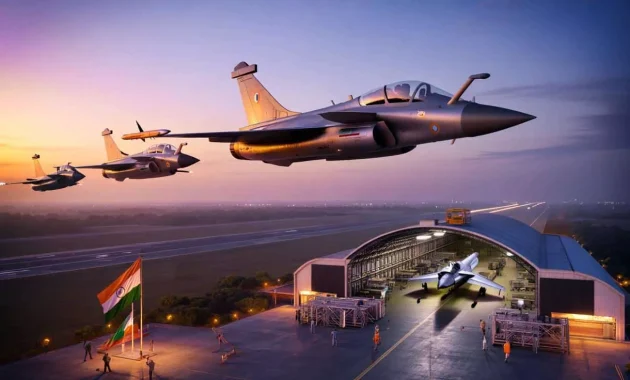
The skies over India are set to witness a historic transformation, as the much-anticipated Rafale fighter jet deal inches closer to reality. With a multi-billion euro proposal on the table, the Indian government is weighing the acquisition of 114 Rafale jets, a strategic move that could reshape the country’s defense capabilities for years to come.
Behind the impressive figures lies a complex web of geopolitical considerations, technological advancements, and industrial partnerships. As India navigates the delicate balance between urgent needs and long-term ambitions, the Rafale’s potential acquisition could become one of the largest defense-industrial collaborations in the nation’s history.
A €28 Billion Proposal on the Table
The Indian government is currently considering a €28 billion proposal for the procurement of 114 Rafale fighter jets, a significant portion of which would be manufactured in India under the “Make in India” initiative. This deal, if finalized, would not only bolster the Indian Air Force’s (IAF) combat readiness but also lay the foundation for a strategic partnership between India and France in the defense sector.

The sheer scale of the proposed acquisition underscores the importance the Indian government places on maintaining a strong and modern air force. With the IAF facing challenges in maintaining its fleet of aging aircraft, the Rafale deal represents a crucial step in ensuring the country’s air superiority in the years to come.
Experts believe that the successful completion of this deal could pave the way for further collaboration between India and France in areas such as technology transfer, joint research and development, and the co-production of defense systems.
Balancing Urgent Needs with Long-Term Ambitions
The Rafale deal is a delicate balancing act between India’s immediate defense requirements and its long-term strategic objectives. On one hand, the IAF is in dire need of modern, capable aircraft to maintain its edge over adversaries in the region. On the other, the government is keen to leverage this opportunity to bolster its “Make in India” initiative, which aims to transform the country into a global manufacturing hub.

By negotiating for a majority of the Rafale jets to be produced in India, the government is not only addressing the IAF’s operational needs but also creating a platform for domestic defense manufacturing and technological advancement. This approach aligns with India’s broader vision of reducing its reliance on imported defense equipment and developing a robust indigenous defense industry.
The successful execution of this deal could also have wider implications for India’s strategic positioning in the region, as it strengthens the country’s ability to project power and safeguard its interests in an increasingly volatile geopolitical landscape.
Why the Rafale Still Matters for the IAF
The Rafale’s selection as the preferred fighter jet for the IAF was a hard-fought battle, with the aircraft emerging victorious over competitors like the Eurofighter Typhoon and the F-16 Fighting Falcon. This victory was not just a matter of numbers, but a testament to the Rafale’s proven capabilities in areas such as air superiority, precision strike, and multirole operations.

As the IAF grapples with the retirement of its aging fleet of MiG-21 and MiG-27 aircraft, the Rafale’s induction could provide a much-needed boost to the force’s combat capabilities. With its advanced avionics, weapons systems, and electronic warfare suite, the Rafale is widely regarded as one of the most capable fourth-generation fighters in the world.
Moreover, the Rafale’s ability to integrate seamlessly with India’s existing defense infrastructure, including the indigenous Tejas light combat aircraft and the upcoming fifth-generation fighter, makes it an attractive choice for the IAF’s long-term modernization plans.
Industrial Stakes for “Make in India”
The Rafale deal’s significance extends beyond the realm of defense, as it represents a crucial opportunity for India to strengthen its domestic manufacturing capabilities under the “Make in India” initiative. By negotiating for a majority of the Rafale jets to be produced locally, the government is not only creating thousands of jobs but also fostering the growth of a robust defense industrial base.

The transfer of technology and the establishment of production facilities in India would provide a platform for Indian engineers and technicians to gain hands-on experience in the design, manufacturing, and maintenance of advanced fighter aircraft. This, in turn, could accelerate the development of indigenous defense capabilities and reduce the country’s reliance on foreign imports.
Furthermore, the Rafale deal could serve as a catalyst for the growth of a vibrant ecosystem of Indian suppliers, sub-contractors, and ancillary industries, further strengthening the “Make in India” initiative and positioning the country as a global defense manufacturing hub.
How Technology Transfer Really Works
At the heart of the Rafale deal lies the critical issue of technology transfer, a key component of the “Make in India” strategy. The successful integration of foreign technology into domestic production processes is crucial for India to achieve its long-term goal of self-reliance in the defense sector.

The proposed agreement with France includes a comprehensive technology transfer package, which would grant Indian engineers and technicians access to the Rafale’s advanced design, manufacturing, and maintenance capabilities. This transfer of know-how would not only enable the local production of the fighter jets but also lay the foundation for future joint research and development projects.
However, the effective implementation of technology transfer is often a complex and delicate process, requiring a careful balance between protecting intellectual property rights and fostering meaningful collaboration. The success of the Rafale deal will hinge on India’s ability to navigate these challenges and ensure a seamless transfer of technology that benefits both countries.
What This Could Mean for Future Conflicts
The potential acquisition of the Rafale fighter jets carries profound implications for India’s defense posture and its ability to respond to future conflicts in the region. With the addition of these advanced aircraft to the IAF’s fleet, India’s air power will be significantly bolstered, enhancing its capacity to project force, deter aggression, and safeguard its national interests.

The Rafale’s cutting-edge capabilities, including its superior air-to-air and air-to-ground capabilities, advanced sensors, and electronic warfare suite, could prove invaluable in scenarios where India may need to engage in swift, decisive air operations. This, in turn, could strengthen the country’s deterrence posture and potentially reduce the risk of escalation during future crises.
Moreover, the successful integration of the Rafale into the IAF’s existing fleet, coupled with the development of a robust domestic defense manufacturing ecosystem, could pave the way for India to become a more self-reliant and technologically advanced military power, better equipped to navigate the evolving security landscape of the 21st century.
The Path Forward
As India and France continue to negotiate the intricate details of the Rafale deal, the outcome will undoubtedly shape the future of the Indian Air Force and the country’s broader defense capabilities. The successful completion of this agreement would not only bolster India’s air superiority but also serve as a testament to the strength of the India-France strategic partnership.

Beyond the immediate military implications, the Rafale deal represents a crucial opportunity for India to further its “Make in India” initiative, fostering the growth of a vibrant defense manufacturing ecosystem and reducing its reliance on foreign imports. The effective transfer of technology and the establishment of joint production facilities could catalyze a new era of indigenous defense capabilities, positioning India as a global leader in the aerospace and defense industry.
As the world watches closely, the Rafale deal stands as a testament to India’s ambition to become a self-reliant and technologically advanced military power, capable of safeguarding its interests and projecting its influence in an increasingly complex geopolitical landscape.
FAQs
What is the value of the proposed Rafale deal?
The Indian government is currently considering a €28 billion proposal for the procurement of 114 Rafale fighter jets, with a significant portion to be manufactured in India under the “Make in India” initiative.

How will the Rafale deal impact the Indian Air Force’s capabilities?
The induction of the Rafale fighter jets will significantly bolster the Indian Air Force’s combat capabilities, providing advanced air superiority, precision strike, and multirole operational capabilities to maintain the IAF’s edge over adversaries in the region.
What are the key benefits of the Rafale deal for India’s “Make in India” initiative?
The Rafale deal represents a crucial opportunity for India to strengthen its domestic defense manufacturing capabilities under the “Make in India” initiative. The transfer of technology and the establishment of production facilities in India will create thousands of jobs, foster the growth of a robust defense industrial base, and reduce the country’s reliance on foreign imports.
How will the Rafale deal impact India’s strategic positioning in the region?
The successful completion of the Rafale deal could have wider implications for India’s strategic positioning in the region, as it strengthens the country’s ability to project power and safeguard its interests in an increasingly volatile geopolitical landscape.
What are the challenges involved in the technology transfer process for the Rafale deal?
The effective implementation of technology transfer is a complex and delicate process, requiring a careful balance between protecting intellectual property rights and fostering meaningful collaboration. The success of the Rafale deal will hinge on India’s ability to navigate these challenges and ensure a seamless transfer of technology that benefits both countries.
How will the Rafale deal contribute to India’s self-reliance in the defense sector?
The successful integration of the Rafale into the IAF’s existing fleet, coupled with the development of a robust domestic defense manufacturing ecosystem, could pave the way for India to become a more self-reliant and technologically advanced military power, better equipped to navigate the evolving security landscape of the 21st century.
What is the timeline for the finalization of the Rafale deal?
The negotiations for the Rafale deal are ongoing, and the timeline for its finalization remains uncertain. However, both India and France are committed to reaching an agreement that meets the strategic and industrial objectives of both countries.
How will the Rafale deal impact India’s future defense partnerships and collaborations?
The successful completion of the Rafale deal could pave the way for further collaboration between India and France in areas such as technology transfer, joint research and development, and the co-production of defense systems. This could also serve as a model for future defense partnerships and collaborations that strengthen India’s position as a global player in the aerospace and defense industry.
Originally posted 2026-02-04 22:49:05.