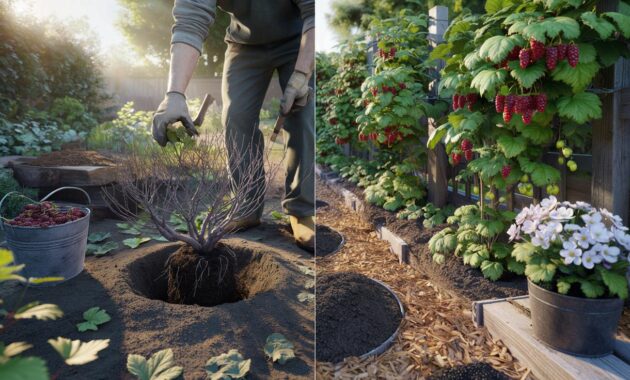
Autumn quietly sets the table for a bumper spring, if you time things right.
The trick sits in plain sight. Plant the right kind of fruit while plants are dormant, and roots sprint quietly through winter. Here’s a smart, low-cost way to make that happen: focus on small fruits that settle fast and wake early.
Why autumn planting changes your spring
Planting while the top of the garden rests gives the roots a head start. Soil stays mild in many regions through November and December. Moisture holds. Microbes still work. That calm, unseen period lets berry shrubs knit fine roots and lock into the soil profile.
Plant while plants are leafless and dormant. Winter roots prime spring shoots, which means earlier flowers and earlier bowls of fruit.
There’s a money angle too. Nurseries sell bare-root stock at lower prices late in the year. Bare-root plants are light, easy to carry, and fast to establish. You also cut packaging, skip heated greenhouses, and dodge long-haul transport.
For UK readers, aim for late November into early December, weather allowing. In the northern US, plant once leaves have dropped and before the ground freezes. In milder zones, winter planting runs into January. The rule is simple: plant when plants are dormant and soil is workable.
Which “fruit” to plant now
That headline points to small fruits: blackcurrants, redcurrants, raspberries, gooseberries, and—where soil fits—blueberries. These shrubs handle cold, shrug off changeable springs, and reward basic care with generous bowls of berries.
| Fruit | Soil/pH | Sun | Spacing | Planting form | First harvest |
|---|---|---|---|---|---|
| Blackcurrant | Fertile, slightly acidic to neutral (pH 6–7) | Sun to light shade | 1.5 m / 5 ft | Bare-root or potted | Year 1–2, peak from year 2 |
| Redcurrant | Moist, well-drained, neutral | Full sun best | 1.5 m / 5 ft | Bare-root or potted | Year 2 |
| Raspberry (summer-bearing) | Rich, well-drained, pH 5.6–6.5 | Full sun | 45–60 cm / 18–24 in between canes | Bare-root canes | Year 2 on second-year canes |
| Raspberry (autumn-bearing) | As above | Full sun | 45–60 cm / 18–24 in | Bare-root canes | Year 1 on new canes (late summer–autumn) |
| Gooseberry | Moist, fertile, pH 6–7 | Sun; tolerates light shade | 1–1.5 m / 3–5 ft | Bare-root or potted | Year 2 |
| Blueberry | Acidic (pH 4.5–5.5), ericaceous mix | Full sun | 1–1.2 m / 3–4 ft | Potted often best | Year 2, better with cross-pollination |
Step-by-step planting that actually works
- Pick the spot: morning sun, shelter from strong winds, soil that drains after rain.
- Test pH if you can. Currants like neutral. Blueberries need acidic. Raspberries sit between.
- Open wide, not deep: dig a hole twice the width of the roots, only as deep as the root mass.
- Blend compost into backfill. Add well-rotted manure for raspberries and currants. Avoid fresh manure.
- Soak bare-root plants 30 minutes before planting. Keep roots damp while you work.
- Set blackcurrants 5 cm/2 in deeper than they grew in the nursery to encourage new shoots. Set others at nursery line.
- Backfill and firm the soil. Water slowly to settle soil around roots.
- Mulch 5–8 cm/2–3 in with leaves, wood chips, or straw. Keep mulch off stems.
- For raspberries, install wires or a simple trellis now. Tie canes loosely.
Bare-root season is prime time: late November to early winter in mild areas, as late as soil allows in cold ones.
Low-fuss care and a quick harvest timeline
These shrubs don’t ask for much. Keep one rule in mind: water deeply in the first spring if rain misses a week. Mulch thickly to hold moisture and block weeds. Feed in spring with compost around the drip line. Stop nitrogen-heavy feeds by midsummer to avoid soft, disease-prone growth.
Pruning that keeps fruit coming
- Blackcurrant: after planting, cut all shoots to two buds to build a strong stool. Each winter, remove a third of the oldest dark wood at the base to keep young canes coming.
- Redcurrant and gooseberry: train an open goblet. In winter, keep a framework of 8–12 branches and shorten new laterals to 2–3 buds.
- Raspberry, summer-bearing (floricane): fruit grows on second-year canes. After fruiting, cut those brown canes to ground level. Keep and tie new green canes for next year.
- Raspberry, autumn-bearing (primocane): fruit grows on this year’s canes. In late winter, cut all canes to ground level for a clean, simple crop.
Plant now and expect the first handfuls by late spring on currants, with bumper bowls by year two. Autumn raspberries can even fruit in their first season.
➡️ Most people overuse cleaning products, this method works better with less
➡️ A surprising frying trick lets eggs slide effortlessly without butter oil or water
➡️ This is the easiest way to keep drawers from turning into chaos
➡️ Homebodies Share These 3 Personality Traits
➡️ Can This New High-Tech South Korean Frigate Really Compete With France’s “Star” FDI?
Common pitfalls to skip
- Waterlogging: heavy clay that stays wet rots roots. Raise beds, add grit and organic matter, or choose a drier spot.
- Starving soil: berries love organic matter. Thin, tired soil slows root growth and shrinks harvests.
- No mulch: frost heave and weeds take over bare ground. Mulch gives stability, moisture, and cleaner fruit.
- Tight spacing: poor airflow means mildew and botrytis. Give each plant breathing room per the table.
- Skipping support: raspberries flop, canes snap, and fruit spoils. Even two sturdy posts and wire make a difference.
Why this move pays back health and climate
Fresh berries cut packaging waste and food miles. You pick at peak ripeness, so flavour and vitamin C stay high. Children graze happily. Neighbours trade cuttings. The garden shifts from ornament to pantry, one shrub at a time.
Flowering in spring draws bees and hoverflies. That activity boosts pollination across your plot. Birds love the fruit too. Share a few clusters, or net lightly just before ripening if you must. Choose softer netting with a tight mesh to avoid wildlife snags.
One small row can replace dozens of plastic punnets a season, while supporting pollinators and cutting weekly shop costs.
Extra gains, practical numbers and a couple of caveats
Plan for yields. A mature blackcurrant can give 2–4 kg (4–9 lb) per bush. Redcurrants often return 1.5–3 kg (3–7 lb). A 3 m / 10 ft row of raspberries can fill several freezer bags each week in peak season. That turns into breakfast toppings, quick jams, and pies with almost no effort.
Slim on space? Currants grow well as cordons along a fence. Blueberries thrive in tubs of ericaceous compost on a sunny patio; use rainwater where tap water runs hard. Autumn raspberries fit raised beds and give a neat, once-a-year prune.
Think about local rules. Some US states once restricted blackcurrants due to white pine blister rust. Most lifted bans, yet checks still help. Pick rust-resistant varieties if you garden near pines. Watch for cane blight on raspberries after wet springs; remove and bin infected canes, and improve airflow.
If you like a quick trial, plant one blackcurrant, one redcurrant, and five autumn raspberry canes this winter. Total outlay stays modest with bare-root stock. Track the savings by tallying punnets you no longer buy next summer. That small experiment often pays back the cost in a single season and keeps paying every year after.