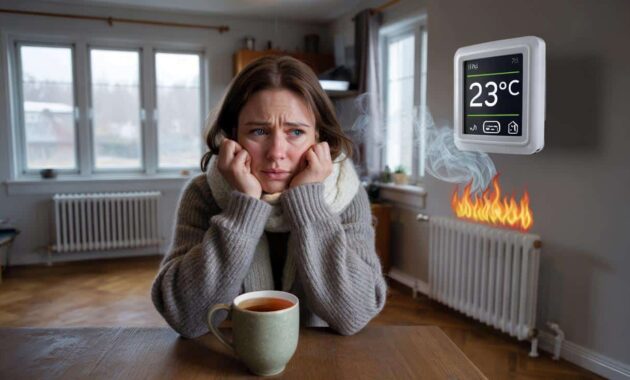
The thermostat said 23°C. The little orange flame icon was glowing bravely. Yet Anna was still sitting at her kitchen table in a wool sweater, scarf wrapped around her neck, fingers wrapped around a mug that had gone lukewarm ten minutes ago. The radiators were ticking and hissing like they were working overtime. Her heating bill suggested they were. Her body disagreed.
She walked from room to room, bumping the thermostat up one more degree each time she passed it, like that was the magic number that would finally chase away the chill.
By 10 p.m., the air felt… not exactly cold, but never truly warm either. Just this annoying, clingy coolness that sat in the background and refused to leave.
The house was heated. Yet somehow, it didn’t feel heated.
Why your house feels cold even when the heat is on
Experts say our bodies don’t only react to the number on the thermostat. They react to surfaces, drafts, and how evenly warmth is spread. A room can technically be “warm enough” and still feel like a fridge if your walls and windows are sucking the heat right back out.
That’s the strange paradox many people discover once they hit winter: the boiler is running, the radiators are hot to the touch, but their feet are blocks of ice. Your brain reads that mixed signal and decides: this house is cold.
So you push the temperature higher, expecting comfort to follow. It often doesn’t. Instead, you just pay more to stay slightly less miserable.
Anna’s story is painfully common. One energy consultant told me he hears the same sentence several times a week: “We keep turning it up, but we’re still cold.” He visited a small semi-detached house last January where the owners were heating to an eyebrow-raising 25°C.
Despite that, the couple wore fleece jackets indoors and their 5-year-old played on the sofa because the floors were “too icy.” The consultant’s thermal camera showed what they couldn’t see: the external walls were radiating cold back into the room, and a thin blue streak under every window marked a constant trickle of outdoor air.
On paper, the heating system was powerful enough. In real life, they were paying to warm the neighbourhood. The thermostat was fighting a losing battle against leaks and cold surfaces.
➡️ The plant that perfumes the home and repels mosquitoes : here’s why everyone wants it in spring
➡️ Most people underestimate how often they make spending decisions
➡️ Pellets: the little-known trick to save big on your heating before autumn
➡️ A polar vortex disruption is on the way, and its magnitude is almost unheard of in February
Physics explains that nagging chill. Our bodies lose heat in four main ways: conduction (touching cold surfaces), convection (air drafts), radiation (to cold walls and windows), and evaporation. When your walls or windows are cold, your body literally “radiates” warmth towards them.
So even if the air is nominally 21°C, your skin senses the colder surfaces and registers discomfort. Your feet on a cold floor will tell your brain you’re not safe and cozy, no matter what the thermostat says.
Experts call this the “mean radiant temperature” of the room. If that average is low because of chilly walls, leaky windows, or an uninsulated floor, you’ll feel cold and start chasing comfort with the only tool you know: turning up the heat.
Practical fixes that warm you more than another degree on the thermostat
Heating engineers repeat this mantra quietly: first reduce the losses, then boost the heat. The quickest wins often come from stopping the invisible streams of cold air that creep into your home. Start with the obvious culprits — windows, doors, loft hatches, and unused chimneys if you have them.
You can run your hand slowly around frames on a windy day and feel miniature “air rivers” sneaking in. A strip of self-adhesive foam, a brush seal at the bottom of a door, or a simple draft excluder can transform the feeling of a room.
Closing heavy curtains as soon as it gets dark also changes the game. They act like an extra blanket over your glass, reducing that radiant chill that makes your back feel cold when you sit near a window. Small, cheap gestures. Big impact on comfort.
Experts also point out a subtle trap: overheating one room while the rest of the house is a glacier. A super-hot living room next to a much colder hallway or bedroom creates constant air movement. Warm air rises and escapes, colder air sinks and slides in to replace it. You end up living inside a permanent draft.
A better strategy is to set a slightly lower temperature but spread it more evenly, with doors closed where possible. Bedrooms, for instance, can often be kept cooler while still feeling pleasant if the bed area is protected from drafts and your bedding does the heavy lifting.
We’ve all been there, that moment when you hover by the radiator settings thinking, “One more notch will fix this.” Often, what truly fixes it is balance, not brute force.
One heating specialist I spoke to put it bluntly:
“Turning the thermostat up isn’t a comfort strategy, it’s a panic reflex. People don’t need more degrees. They need less heat escaping.”
He recommends starting with a quick home “comfort audit”:
- Walk barefoot on every floor: where does it feel icy or slightly damp with cold?
- Sit by each window at night for two minutes: do you feel a sneaky cold stream on your neck or hands?
- Touch internal walls versus external ones: are the outside walls noticeably colder?
- Open and close doors: which ones unleash a wave of cold air from unheated spaces?
- Note where you instinctively grab a blanket or extra jumper: that’s a clue, not a personal failing.
*Once you see your home as a landscape of warm and cold surfaces, your heating choices start to change on their own.*
The emotional side of feeling cold in your own home
There’s a hidden layer to all this that experts bring up quietly: feeling cold at home can make you feel like you’re failing somehow. You pay your bills, the boiler works, the thermostat is high… and yet you still shiver. It’s frustrating and, for some, a bit shameful.
People blame themselves. They think they’re “too sensitive” or “just bad with cold.” Often, what’s really happening is a mix of building flaws, old windows, slight health issues, and mismatched expectations learned from perfectly warm hotel rooms.
Let’s be honest: nobody really does this every single day, but pausing once a season to understand how your house loses heat can be more powerful than any fancy smart thermostat. It turns a vague feeling of “I’m always cold” into specific, fixable problems.
| Key point | Detail | Value for the reader |
|---|---|---|
| Stop the drafts first | Seal doors, windows, and gaps before touching the thermostat | Feel warmer at the same temperature and cut wasted energy |
| Think surfaces, not just air | Cold walls, floors, and glass make you feel chilly even in warm air | Targeted fixes (rugs, curtains, insulation) boost comfort fast |
| Balance the whole home | Avoid huge temperature gaps between rooms and unheated spaces | Reduce drafts and create a more stable, cozy atmosphere |
FAQ:
- Why do I feel cold at home when others say it’s warm?Your body may be more sensitive to drafts or cold surfaces, or you might be sitting near a leaky window, on a cold floor, or by an external wall. Health, circulation, age, and even tiredness can also change how warm or cold you feel.
- Is it cheaper to turn the heating up or fix drafts?Fixing drafts and insulating pays off quickly. Turning the heating up gives short-term relief at a long-term cost, while sealing gaps keeps every future degree of heat working harder for you.
- What room should I focus on first?Start with the place where you spend the most still time: usually the living room or bedroom. When you’re sitting or lying down, your body generates less heat, so drafts and cold walls feel more intense there.
- Does underfloor cold really matter if the air is warm?Yes. Cold feet signal discomfort to your brain and make your whole body feel colder. A simple rug or insulating underlay can change how warm a room feels without touching the thermostat.
- Could my heating system be too powerful or badly set?Yes. Oversized boilers that cycle on and off, radiators without balancing, or badly placed thermostats can cause hot-and-cold swings. A heating engineer can adjust flow temperatures and balance radiators so the warmth is smoother and more even.