
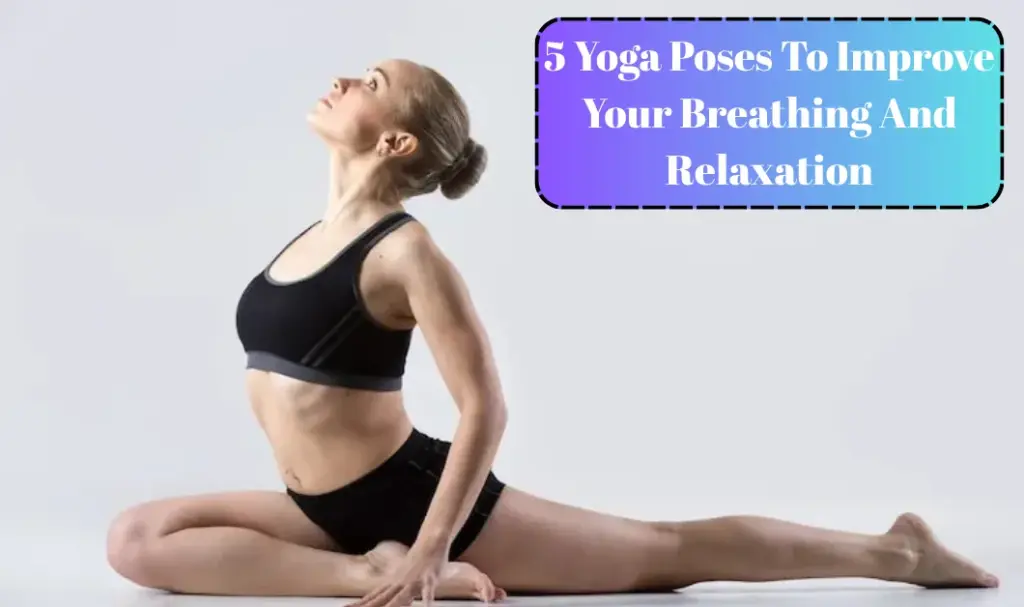
Breathing is something we do naturally, but it’s also one of the most powerful tools for relaxation and stress relief. Yoga provides an excellent way to harness the power of the breath to calm the mind, reduce tension, and promote deep relaxation. Through mindful breathing techniques paired with specific poses, you can improve your respiratory function, reduce stress, and achieve a sense of calm. In this article, we’ll explore five yoga poses that focus on improving your breathing and fostering relaxation. These poses will help you release physical tension while simultaneously calming your mind and bringing more awareness to your breath.
1. Child’s Pose (Balasana)
Child’s Pose is a restorative pose that encourages deep, slow breathing while gently stretching the back, hips, and legs. It’s perfect for calming the mind and promoting relaxation after a long day or a stressful situation.
To get into Child’s Pose, start by kneeling on the mat with your big toes touching and knees spread apart. Sit back onto your heels and slowly lower your forehead to the mat, extending your arms in front of you or alongside your body. Focus on breathing deeply, inhaling into your belly and exhaling slowly. Allow your body to sink deeper into the pose with each breath, feeling the release of tension in your back and hips.
This pose helps to calm the nervous system and can be held for several minutes, allowing for deep relaxation and awareness of your breath. As you practice Child’s Pose, focus on lengthening your inhales and exhales to bring more attention to your breathing.
2. Cat-Cow Pose (Marjaryasana-Bitilasana)
Cat-Cow Pose is a gentle flow between two postures that promotes flexibility in the spine while encouraging mindful breathing. This pose is ideal for releasing tension in the neck, shoulders, and back, which often affects our breathing patterns.
Begin on your hands and knees in a tabletop position, with your wrists directly under your shoulders and your knees under your hips. As you inhale, arch your back and lift your chest forward into Cow Pose, allowing your belly to drop toward the floor and your spine to elongate. As you exhale, round your back into Cat Pose, tucking your chin to your chest and drawing your belly button toward your spine. Flow between these two positions with each inhale and exhale, creating a fluid motion.
This pose helps you synchronize movement with breath, calming the mind and encouraging deep abdominal breathing. The focus on the breath during Cat-Cow helps release any physical tension in the spine, neck, and shoulders, which can improve overall relaxation.
3. Extended Side Angle Pose (Utthita Parsvakonasana)
Extended Side Angle is a powerful standing pose that stretches the body, opens the chest, and encourages deep, mindful breathing. It is especially helpful for improving lung capacity and promoting calmness during stressful times.
To practice Extended Side Angle, begin by standing with your feet wide apart and turning your right foot 90 degrees outward. Bend your right knee so that it forms a 90-degree angle, while keeping your left leg straight. Reach your right hand down to the floor or a block next to your right foot, and extend your left arm over your head, forming a straight line from your left heel to your left hand. Keep your chest open and focus on taking deep, steady breaths, allowing the breath to expand your ribcage and lungs.
This pose helps open the chest and improves circulation, allowing for deeper breaths. It’s excellent for releasing tension in the body while cultivating focus and relaxation through deep, controlled breathing.
4. Legs Up the Wall Pose (Viparita Karani)
Legs Up the Wall Pose is a deeply restorative pose that helps to relax the body and calm the nervous system. By elevating the legs, this pose encourages deep breathing and facilitates relaxation by reducing tension and increasing blood circulation.
To perform this pose, sit next to a wall and swing your legs up so that they are extended vertically against the wall. Lie back on the floor with your arms resting by your sides or overhead. Close your eyes and focus on your breath, taking slow, deep inhales and exhales. Relax into the pose, allowing the breath to deepen with each exhale. The gentle inversion of the legs helps to reduce swelling and relax the nervous system.
This pose is known for promoting relaxation and reducing anxiety. It encourages a slower, deeper breathing pattern and is especially useful for releasing built-up tension in the legs and lower back.
5. Savasana (Corpse Pose)
Savasana, often referred to as Corpse Pose, is the ultimate relaxation pose in yoga. It allows the body to rest deeply while focusing on the breath. Savasana is often done at the end of a yoga practice, but it can also be used anytime you need to relax and reset your mind and body.
To enter Savasana, lie flat on your back with your legs extended and arms by your sides, palms facing up. Close your eyes and focus on your breathing, letting go of any tension in your body. Allow your breath to flow naturally, without any effort, and feel the rise and fall of your belly with each inhale and exhale. If your mind begins to wander, gently bring your attention back to your breath.
Savasana promotes complete relaxation, reduces stress, and calms the mind. The combination of deep breathing and full-body relaxation allows you to achieve a state of rest that revitalizes both the body and mind.
Final Thoughts
Yoga offers a wonderful combination of physical movement and mental focus that can significantly enhance your breathing and relaxation. The five poses outlined in this article—Child’s Pose, Cat-Cow Pose, Extended Side Angle, Legs Up the Wall, and Savasana—are all designed to promote deep, mindful breathing while releasing physical tension and fostering a sense of calm.
By incorporating these poses into your daily practice, you can improve your ability to relax, manage stress, and bring more awareness to your breath. Remember that yoga is not just about the physical poses—it’s also about cultivating mindfulness and presence, which leads to greater relaxation and inner peace.
So, the next time you’re feeling stressed or anxious, take a few minutes to practice these poses. Your body, mind, and breath will thank you for it.