Across the UK and US, more households are freezing bread to cut waste and save money. Yet small mistakes in how bread is frozen and thawed can quietly wreck its texture, flavour and even tweak its nutritional impact.
Why frozen bread is not the enemy
Freezing bread has become a practical response to rising food prices and busy schedules. It lets you buy in bulk, take advantage of bakery deals, and avoid throwing away dry, stale slices at the end of the week.
From a safety standpoint, bread copes very well with freezing. No harmful toxins develop in the freezer, and nutrients such as minerals and most vitamins stay intact. You are not losing all the goodness just because your loaf spends a month on ice.
Freezing bread is safe for health, but the way you freeze and thaw it makes the difference between a pleasant crust and a chewy disappointment.
Nutrition experts point out a lesser-known effect: reheated bread can have a slightly different impact on blood sugar. When bread is baked, cooled, frozen and then reheated, its starch structure is altered. Some studies suggest this can modestly change how quickly your body processes it, especially if you already live with diabetes or prediabetes.
The hidden deadline in your freezer
Technically, bread can sit in the freezer for months without becoming dangerous. The real problem lies in what happens to its structure over time. Water in the crumb slowly forms ice crystals that grow larger as weeks pass. Those crystals damage the bread’s internal network, leaving it chalky and pale.
Kept too long in the freezer, bread tends to turn whitish, rubbery and oddly dry, even once reheated.
Gluten, the protein network that gives bread elasticity, also changes during long storage. Instead of a springy baguette, you get a slice that bends like foam or crumbles in the toaster tray.
How long different breads should stay frozen
- White baguette or crusty rolls: ideally under 1 month
- Country-style or sourdough loaves: around 1 to 2 months
- Dense rye or wholegrain breads: up to 2 months
- Packaged industrial sliced bread: often 2 to 3 months, thanks to additives and a closer crumb
Industrial bread usually keeps its texture a bit longer because of preservatives and a tighter crumb, even if it is often less impressive nutritionally or in flavour.
➡️ Spraying vinegar on the front door some claim it repels negative energy while experts explain the practical household reason
➡️ A true living fossil: French divers capture rare first ever images of an emblematic species in Indonesian waters
➡️ A robot can now build a 200 m² home in just 24 hours a major breakthrough that could transform construction and ease the housing crisis
➡️ “At 68, my sleep depended on routine”: why irregular evenings ruined my nights
➡️ Hairstyles after 60 the blunt truth from stylists who say keeping old lady looks is a choice to age faster and this one cut exposes it
➡️ Saturn will shake up the horoscope of these zodiac signs (for better and for worse)
➡️ After four years of research scientists conclude working from home increases satisfaction yet weakens loyalty and long-term promotion chances
➡️ The Citroën C5 Aircross goes fully electric for the first time: for better or for worse?
The biggest mistake: how you thaw your bread
The detail that catches most people out is the thawing stage. Many home cooks simply leave frozen bread on the counter until it softens. That habit shortens its life dramatically.
Letting bread thaw slowly at room temperature often leads straight to limp, stale slices within hours.
As the loaf warms on the worktop, moisture moves unevenly through the crumb. Parts become soggy, while the crust loses its crisp edge. The bread then dries out again, leaving a dull, cottony texture by the end of the day.
The right way to revive frozen bread
Instead of thawing at room temperature, food specialists recommend reheating frozen bread directly:
- In the toaster: ideal for slices or half baguettes; pop them in still frozen.
- In a preheated oven (170–190°C / 340–375°F): 5–10 minutes for small pieces, 10–15 minutes for a part loaf.
- On a hot pan or griddle: useful for flatbreads and rolls; toast both sides quickly.
This direct heat restores a crisp crust and an airy crumb. The surface dries just enough to be appetising, while the interior regains its softness.
Once thawed and reheated, bread should be eaten fairly quickly. After roughly half a day, the crumb starts to go firm again and the crust softens, so freezing in smaller packets becomes a smart habit.
Smart freezing: how to avoid waste and sad toast
The way you store bread before it goes into the freezer matters as much as the time you leave it there. Too much air means dehydration. Too little protection invites odours from nearby foods.
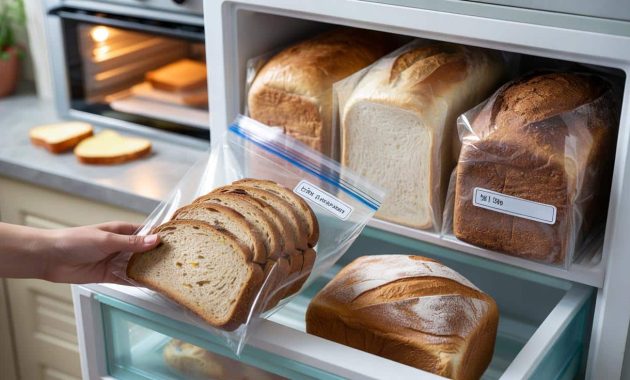
Always freeze bread in a sealed bag or airtight wrap to keep just enough moisture inside and unwanted smells out.
Before you freeze: simple steps
- Let freshly baked bread cool completely so steam does not form ice inside the bag.
- Slice the loaf first, unless you plan to reheat it whole for a meal.
- Use freezer bags or wrap tightly in foil, then in a second layer such as a plain bag.
- Label the bag with the date and type of bread to avoid mystery packages.
Portioning is key. If you live alone or in a small household, divide a baguette into short sections or freeze four slices at a time. That way, you thaw only what you need for breakfast or dinner, and the rest stays in good condition.
What frozen bread does to nutrition and blood sugar
Bread itself is not transformed into junk food by freezing. Wholegrain and seed loaves still bring fibre, magnesium, iron and B vitamins, whether fresh or frozen. The bigger question is how fast their carbohydrates hit your bloodstream.
When bread is baked, cooled, then reheated, starch can reorganise, sometimes creating a bit more so-called “resistant starch”. This type of starch behaves more like fibre and is digested more slowly. That said, reheating also means your bread is warmed for a second time, which can nudge the glycaemic response upwards for some people compared with cold bread.
| Situation | Texture | Effect on blood sugar (tendency) |
|---|---|---|
| Fresh bread, eaten warm | Soft crumb, crisp crust | Faster rise |
| Frozen then reheated bread | Good if well frozen and toasted | Slight change; varies by person and bread type |
| Stale bread used in recipes | Hidden in dishes like puddings | Depends on added sugar, fat and portion size |
People managing diabetes or trying to stabilise blood sugar may want to favour dense wholegrain breads, pair them with protein or fat (such as eggs, cheese or nut butter), and keep portions modest, whether the loaf is fresh or frozen.
What to do when bread is already past its best
If you open a frozen bag and find bread that is pale, dry and rubbery, all is not lost. It might no longer work for sandwiches, but it can still be transformed.
- Turn it into garlic bread: brush with oil, rub with garlic, bake until crisp.
- Make crunchy croutons for soups and salads.
- Blend into breadcrumbs and freeze again in a labelled container.
- Use it in bread-and-butter pudding, French toast or savoury strata.
As long as there are no signs of mould or off smells, you can safely use tired bread in cooked recipes where texture changes become an advantage rather than a drawback.
Practical scenarios for everyday kitchens
Picture a shared flat with four students and an unpredictable timetable. One large loaf often goes stale before anyone finishes it. Slicing it, freezing in four-slice bags, and keeping a small list of dates on the freezer door can cut both waste and last-minute toast emergencies during exam week.
In a family setting, parents who work shifts might keep a mix of sliced wholemeal, bagels and pittas in the freezer. Marking “breakfast”, “sandwich” or “soup night” on each bag helps everyone grab the right bread without rummaging through icy piles every day.
Key terms and small risks worth knowing
Two technical notions help explain what happens to bread in the freezer: starch retrogradation and freezer burn. Retrogradation describes the process where starch molecules reorganise over time, pushing out water and making the crumb feel dry. Freezer burn refers to the grey-white, dry patches that occur when unprotected food loses moisture directly into the freezer air.
Neither of these processes makes bread dangerous, but both harm flavour and texture. Good wrapping, limited storage time and quick reheating sharply reduce the chance that tonight’s toast will taste like last year’s leftovers.