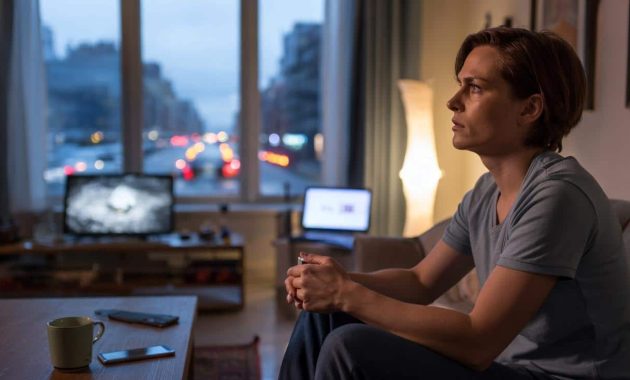
Others say it feels like walking into a room where the TV has been left on mute. After years of living in emotional extremes – stress, drama, worry, rush – genuine emotional balance can seem suspicious, almost wrong. Your phone isn’t buzzing, your chest isn’t tight, your brain isn’t spinning future disasters. You’re just… okay. And that “okay” feels so unusual that your first reflex is to go looking for the next problem, just to feel like yourself again.
You might scroll your emails “just in case”. Pick a fight in your head with someone who isn’t even there. Replay an old argument like a favourite series. Anything to fill that new quiet space.
Because here’s the twist: when you’ve spent years surviving on emotional chaos, calm doesn’t feel safe at first. It feels unfamiliar.
Why balance feels like a foreign country
Picture this: you’re sitting on a late train, forehead against the window, watching your own reflection sway in the glass. You realise your shoulders aren’t up by your ears. Your jaw isn’t clenched. There’s no urgent email, no crisis, nobody demanding anything from you in this exact second. Your nervous system, on autopilot for years, doesn’t know what to do with that.
So it sends up a flare: “Something’s wrong. We’re missing something.”
Emotional balance is not the absence of feeling. It’s the absence of constant alarm. And if your inner alarms have been ringing for as long as you remember, silence isn’t relaxing. It’s eerie.
A therapist once told me about a client who panicked when her life finally calmed down. She’d left a toxic job, started sleeping properly, was in a kind relationship. No yelling, no walking on eggshells, no Sunday-night dread. Within three weeks, she was convinced something awful was about to happen.
She’d start fights over nothing. She’d check her partner’s phone, afraid he was hiding something. On good days, she felt “numb” and “not herself”. On bad days, she felt restless and went looking for a crisis.
What was actually happening? Her body had been trained to believe that high stress was normal. Calm felt like the unfamiliar thing, not the toxic chaos. Statistically, people raised in high-conflict or unpredictable homes are far more likely to recreate that atmosphere later, not because they enjoy suffering, but because *the known feels safer than the unknown* – even when “the known” is painful.
At a basic level, your brain is a prediction machine. Its job is to keep you alive by guessing what happens next. If you grew up around shouting, sudden mood swings, money panic, silent treatments, or emotional whiplash, your brain learned, “This is how life works. This is home turf.”
➡️ The key to a perfect weekend lies in this one mindset shift
➡️ Nutritionists now argue junk food is less harmful than restrictive diets and parents should stop banning it
➡️ “We normalized the abnormal”: the climate signal experts say should alarm us
➡️ Elite universities reserved for the top 1 percent of taxpayers proposal divides the nation
➡️ This is why your fridge fills up so fast, and how to prevent it
➡️ Starlink Unveils Mobile Satellite Internet: No Setup, No New Phone Needed
➡️ “I always felt mentally cluttered,” until I adopted this simple reset
➡️ Winter storm warning issued as up to 80 inches may bury neighborhoods and push emergency services to their limits
So when you start to experience emotional balance – fewer rollercoasters, more level ground – your prediction machine gets nervous. It has less data. Less control. No clear script.
That’s why peace can feel flat, boring, or wrong at first. Your system confuses “non-drama” with “emptiness”. That discomfort isn’t proof that calm isn’t for you. It’s proof that your settings are still calibrated to chaos. Emotional balance isn’t instantly cosy. It’s more like breaking in new shoes that don’t hurt, when your feet only know blisters.
Learning to stay when it feels weird
One simple, precise habit helps: name the unfamiliar state instead of fleeing it. When you notice that odd sense of quiet or neutrality, pause and mentally label it: “This is what not being in crisis feels like.”
That tiny sentence gives your brain a new file to open.
You might add a sensory detail: “My chest is not tight. My breathing is slow. Nothing bad is happening right now.” You’re not forcing positivity. You’re just describing reality out loud, like a commentator at the edge of a pitch.
Do it for fifteen seconds at a time. That’s it. Let your nervous system have tiny tastes of balance, the way you’d introduce a new food to a wary child.
Most people, when they first taste emotional balance, try to turn it into a performance. They set huge morning routines, promise to meditate every day, vow to “never overreact again”. Soyons honnêtes : personne ne fait vraiment ça tous les jours.
A more realistic approach is to treat emotional balance like a visiting guest, not a military regime.
Ask yourself once or twice a day, “On a scale of 0 to 10, how activated am I right now?” If you’re below a 4, notice what that actually feels like in your body. If you’re above a 7, pick one tiny downshift – three slow exhales, a short walk without your phone, putting your hand on your chest for 30 seconds. The goal isn’t to be zen. The goal is to become just 1 point less wired.
“Healing isn’t the sudden arrival of peace. It’s the slow realisation that you’re no longer organising your entire life around anxiety.”
It helps to keep a few reminders in front of you, especially on days when calm feels “off”.
- Emotional balance can feel boring at first. Boring is not bad. Boring is often nervous system rehab.
- Your old reactions were survival skills, not personal failures.
- You don’t need to “deserve” peace for your body to gradually learn it.
- Discomfort in calm is a phase, not a personality trait.
- Small, repeatable moments of steadiness teach your brain more than any big breakthrough.
Making room for a new normal
There’s a quiet turning point that many people never mention. It’s not dramatic. No big epiphany, no cinematic breakdown. You simply notice, one Tuesday afternoon, that you reacted to something in a way your old self never could have – and you didn’t even think about it.
The email came, the plan changed, someone snapped at you, the bus was late. Instead of spiralling, you sighed, adjusted, maybe complained a bit, and moved on. An hour later, you realise you didn’t lose the whole day to it. Emotional balance often lands like that: sideways, sneaky, almost unremarkable.
We tend to imagine balanced people as endlessly serene, sipping herbal tea and journalling at sunrise. In reality, emotional balance looks more like: less replaying the same argument in your head. Less stalking your ex’s social media. Less needing everyone to approve of you before you can sleep.
It’s not drama-free. It’s drama-proportionate.
When emotional balance stops feeling so foreign, you might notice other subtle shifts. You cancel plans without three days of guilt. You apologise faster, not because you’re grovelling, but because your ego isn’t running the whole show. You catch yourself before you fire off the angry text, and you choose a response that won’t haunt you tomorrow.
On a larger scale, you may become less interested in people or environments that feed your old addiction to chaos. Loud group chats, permanent crisis at work, that friend who only calls to complain. You find yourself pulling back, not in a cold way, but like someone quietly stepping out of a nightclub at 2 a.m., suddenly realising they’re tired of shouting over the music.
On a nervous system level, that’s your body learning that regulation is allowed. It’s the opposite of “going soft”. It’s you becoming less available as a host for everyone else’s storms.
That shift can feel lonely at times. Your old patterns were social, shared, familiar. Gossip, venting, joint catastrophising – they bond people. When you start craving more emotional balance, you’re also changing how you connect.
You might talk less, listen more. You might choose more honest, slower friendships over intense, fast-burning ones. You may even miss the highs and lows, the way someone misses the rush of a bad habit. That’s normal. On a human level, you’re grieving the version of you who survived on noise.
Emotional balance, when it stops being a stranger, becomes a kind of quiet friendship with yourself. Not always tender, not always easy, but increasingly consistent.
| Point clé | Détail | Intérêt pour le lecteur |
|---|---|---|
| Balance feels strange at first | Your brain and body confuse calm with danger because they’re used to stress and drama. | Normalises the discomfort so you don’t abandon progress too early. |
| Micro-practices beat big promises | Short, repeatable habits (labelling states, tiny downshifts) gently retrain your nervous system. | Makes emotional balance feel doable in daily life, not like a full-time job. |
| New normal = new connections | As you stabilise, you often step away from chaos-driven dynamics and seek steadier relationships. | Prepares you for changes in your social world and reduces self-doubt when they appear. |
FAQ :
- Why do I feel anxious when nothing is wrong?Because your nervous system has been trained to expect constant threat. When external stress drops, the body sometimes keeps ringing the alarm, simply out of habit. That mismatch feels like free-floating anxiety.
- Does emotional balance mean I’ll stop feeling things deeply?No. Balance doesn’t flatten your emotions, it gives them context. You still feel joy, anger, sadness, excitement – you’re just less likely to be swept away by every single wave.
- How long does it take for calm to feel normal?There’s no fixed timeline. For some, a few months of consistent small habits make a big difference. For others with long histories of stress or trauma, it’s more of a slow, multi-year recalibration.
- What if my family or friends prefer the “old me”?That happens. People who are used to your over-giving, over-reacting or over-available self can feel threatened when you change. Their discomfort doesn’t mean you’re wrong to protect your balance.
- Can I do this alone, or do I need therapy?You can start alone with small practices and honest self-observation. Therapy or coaching helps when patterns feel stuck, overwhelming, or linked to past trauma. Both paths can work; what matters is that you don’t keep white-knuckling your way through chaos as if that’s the only option.