
In the turmoil of the Caribbean, where political tensions and economic instability have long held sway, a new player has entered the fray – the United States Navy. With a show of force and a determined presence, the Navy aims to assert its influence and safeguard American interests in this strategically vital region. But behind the scenes, a senior admiral is quietly questioning the wisdom of this heavy-handed approach.
Admiral Daryl Caudle, the newly appointed chief of the US Navy, has found himself in a curious predicament. As his ships and aircraft patrol the Caribbean waters, Caudle is left wondering whether this traditional, carrier-led deployment still makes sense in the modern geopolitical landscape. The Caribbean mission, once a hallmark of American naval dominance, now seems to be triggering doubts within the very institution tasked with executing it.
A Flagship in the Caribbean, a Skeptical Admiral in Washington
The US Navy’s presence in the Caribbean is nothing new – for decades, the region has served as a strategic hub for American military might. But in recent times, the Navy’s role has taken on a new level of significance, as it seeks to counter the growing influence of nations like China and Russia in the hemisphere.

However, Admiral Caudle’s doubts about the Caribbean mission suggest a shift in the Navy’s priorities. As he settles into his new role, Caudle is asking tough questions about the long-term viability and efficacy of the Navy’s traditional deployment strategies. His skepticism reflects a broader rethinking of naval operations, one that seeks to adapt to the evolving geopolitical landscape.
Caudle’s questioning comes at a critical juncture, as the Navy grapples with the challenges of modernization and the need to maintain a competitive edge in an increasingly complex global arena.
What Caudle Wants to Change Inside the US Navy
Admiral Caudle’s concerns about the Caribbean mission are not merely isolated thoughts, but rather a reflection of a broader strategic vision he has for the US Navy. Recognizing the changing nature of warfare and the shifting global power dynamics, Caudle is pushing for a fundamental shift in the Navy’s approach.

At the heart of Caudle’s proposed changes is a move away from the traditional, carrier-centric model of naval operations. While the massive aircraft carriers have long been the centerpiece of American naval power, Caudle believes that the time has come to explore more diverse and adaptable force structures.
This shift, Caudle argues, would not only enhance the Navy’s ability to respond to a wider range of threats but also optimize the use of limited resources. By diversifying the fleet and incorporating more agile, technology-driven platforms, the Navy could potentially achieve greater operational flexibility and cost-effectiveness.
Paris Conference: A New Naval Vocabulary
| Key Takeaways from the Paris Conference | Implications for the US Navy |
|---|---|
|
|
Admiral Caudle’s views have been informed by recent global discussions on the future of naval warfare, most notably the Paris Conference on Maritime Security and Stability. This high-level gathering of naval experts and policymakers has helped shape a new vocabulary for the challenges facing modern navies.
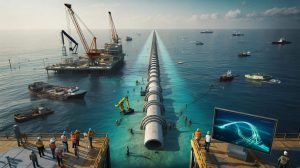
Key themes that emerged from the conference, such as the importance of multi-domain warfare, the growing role of unmanned and autonomous systems, and the need for greater interoperability, have resonated deeply with Caudle. These insights have reinforced his belief that the US Navy must adapt its strategies and force structures to remain relevant and effective in the years to come.
Modernization Plans: A Mixed, Partly Autonomous Fleet
| Current US Navy Fleet Composition | Proposed Future Fleet Composition |
|---|---|
|
|
Caudle’s vision for the Navy’s modernization involves a more diverse, flexible, and technology-driven force structure. While the iconic aircraft carrier will remain a key component, the admiral envisions a future fleet that places greater emphasis on other platforms, including a growing number of attack submarines and surface combatants.
Crucially, Caudle’s plan calls for a significant investment in unmanned and autonomous systems, which he sees as critical to enhancing the Navy’s operational capabilities and resilience in the face of emerging threats. This shift towards a more mixed, partly autonomous fleet represents a significant departure from the Navy’s traditional, carrier-centric approach.
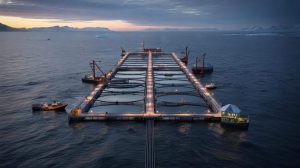
The proposed changes to the Navy’s force structure and modernization efforts are not without their challenges, however. Balancing the need for traditional platforms with the integration of new, cutting-edge technologies will require careful planning, resource allocation, and careful consideration of the risks and trade-offs involved.
Why the Caribbean Mission Triggers Doubts
“The Caribbean is a complex and dynamic region, and our presence there must evolve to meet the changing needs of the geopolitical landscape. We cannot simply rely on the same playbook that has served us in the past.”
– Admiral Daryl Caudle, Chief of Naval Operations

As the Navy’s new chief, Caudle’s doubts about the Caribbean mission are rooted in his broader vision for the service’s future. The traditional, carrier-led deployments in the region, while once effective, now seem to be at odds with the admiral’s push for a more diverse, adaptable, and technology-driven force.
Caudle sees the Caribbean mission as emblematic of the Navy’s reliance on large, expensive platforms that may not be the most appropriate or cost-effective solution for the evolving challenges in the region. Instead, he believes that a more distributed, networked approach, leveraging a mix of manned and unmanned systems, could better address the complex security threats and fluid geopolitical dynamics at play.
Moreover, Caudle’s skepticism reflects a desire to reallocate the Navy’s limited resources towards modernization efforts that he believes will better position the service for long-term success. By shifting focus and investment away from the Caribbean mission, the admiral hopes to accelerate the development and integration of the technologies and operational concepts that he sees as critical to the Navy’s future.

What “Hedge Strategy” Really Means for Sailors and Taxpayers
“A ‘hedge strategy’ is not about abandoning our responsibilities in the Caribbean, but rather about finding more efficient and effective ways to maintain a presence and protect our interests in the region. It’s about being smarter, more agile, and more cost-conscious in how we deploy our forces.”
– Admiral Daryl Caudle, Chief of Naval Operations
When Caudle speaks of a “hedge strategy” for the Caribbean mission, he is not suggesting a complete withdrawal or abandonment of the Navy’s presence in the region. Rather, he is proposing a more nuanced and strategic approach that aims to optimize the use of naval resources while still maintaining a deterrent force in the Caribbean.

For sailors, this “hedge strategy” could mean a shift in the type of deployments and missions they are tasked with, with a greater emphasis on smaller, more agile platforms and a more distributed, networked force structure. Instead of relying solely on large, carrier-based operations, sailors may find themselves operating a diverse mix of manned and unmanned systems, tasked with a wider range of security and deterrence responsibilities.
For taxpayers, Caudle’s “hedge strategy” holds the promise of more efficient and cost-effective naval operations in the Caribbean. By moving away from the reliance on expensive, capital-intensive platforms like aircraft carriers, the Navy may be able to achieve similar levels of presence and influence in the region at a lower overall cost, potentially freeing up resources for other critical modernization efforts.
Risks, Trade-offs, and What Could Come Next
“As we chart a new course for the US Navy, we must carefully weigh the risks and trade-offs involved. Maintaining a strong presence in the Caribbean is vital, but we must also ensure that our overall strategy and force structure are optimized for the challenges of the 21st century.”
– Admiral Daryl Caudle, Chief of Naval Operations

Caudle’s proposed changes to the Navy’s Caribbean mission and broader modernization efforts are not without their risks and trade-offs. Reducing the number of aircraft carriers, for example, could have implications for the Navy’s ability to project power and respond to crises in the region. Similarly, the integration of new, untested technologies and platforms may introduce operational uncertainties and challenges.
As the Navy navigates these complex decisions, Caudle is cognizant of the need to balance short-term priorities with long-term strategic objectives. Maintaining a strong and visible presence in the Caribbean may be crucial for deterring adversaries and protecting American interests, but the admiral believes that a more adaptable, technology-driven force structure could ultimately yield greater strategic benefits in the years to come.
In the weeks and months ahead, the Navy’s leadership will likely engage in robust discussions and debates around the future of the Caribbean mission and the broader modernization efforts. The outcome of these deliberations will have far-reaching implications not only for the Navy’s sailors and operations but also for the security and stability of the Caribbean region as a whole.
FAQs
What are the key reasons behind Admiral Caudle’s doubts about the Caribbean mission?
Admiral Caudle’s doubts stem from his belief that the Navy’s traditional, carrier-centric approach to the Caribbean mission may not be the most effective or efficient strategy in the evolving geopolitical landscape. He is pushing for a more diverse, technology-driven force structure that can better adapt to the complex security challenges in the region.
How does Caudle’s vision for the Navy’s modernization differ from the current approach?
Caudle’s modernization plan calls for a reduction in the number of aircraft carriers, an increase in attack submarines and surface combatants, and a significant investment in unmanned and autonomous systems. This shift represents a move away from the Navy’s traditional, carrier-centric model towards a more flexible and adaptable force structure.
What are the potential risks and trade-offs associated with Caudle’s proposed changes?
Reducing the number of aircraft carriers could impact the Navy’s ability to project power and respond to crises in the Caribbean. Additionally, the integration of new technologies and platforms may introduce operational uncertainties and challenges. Caudle acknowledges the need to carefully balance short-term priorities with long-term strategic objectives.
How might the Caribbean mission evolve under Caudle’s “hedge strategy”?
Caudle’s “hedge strategy” for the Caribbean mission does not involve abandoning the Navy’s presence in the region, but rather finding more efficient and effective ways to maintain a deterrent force. This could mean a shift towards smaller, more agile platforms and a more distributed, networked approach, leveraging a mix of manned and unmanned systems.
What are the potential implications of Caudle’s proposed changes for sailors and taxpayers?
For sailors, the “hedge strategy” could mean a shift in the type of deployments and missions they are tasked with, with a greater emphasis on operating a diverse mix of manned and unmanned systems. For taxpayers, Caudle’s approach holds the promise of more efficient and cost-effective naval operations in the Caribbean, potentially freeing up resources for other critical modernization efforts.
How might the Navy’s deliberations on the Caribbean mission and modernization efforts play out in the coming months?
The Navy’s leadership will likely engage in robust discussions and debates around the future of the Caribbean mission and the broader modernization efforts. The outcome of these deliberations will have far-reaching implications for the Navy’s sailors, operations, and the security and stability of the Caribbean region as a whole.
What are the key factors that have shaped Admiral Caudle’s strategic vision for the US Navy?
Caudle’s vision has been informed by global discussions on the future of naval warfare, such as the Paris Conference on Maritime Security and Stability. Themes like the importance of multi-domain warfare, the growing role of unmanned and autonomous systems, and the need for greater interoperability have reinforced his belief that the US Navy must adapt its strategies and force structures to remain relevant and effective in the years to come.
How does Caudle’s “hedge strategy” for the Caribbean mission aim to balance short-term priorities and long-term strategic objectives?
Caudle’s “hedge strategy” is not about abandoning the Navy’s responsibilities in the Caribbean, but rather finding more efficient and effective ways to maintain a presence and protect American interests in the region. By transitioning towards a more diverse, technology-driven force structure, the Navy can potentially achieve similar levels of presence and influence at a lower overall cost, freeing up resources for other critical modernization efforts.
Originally posted 2026-02-15 11:22:45.