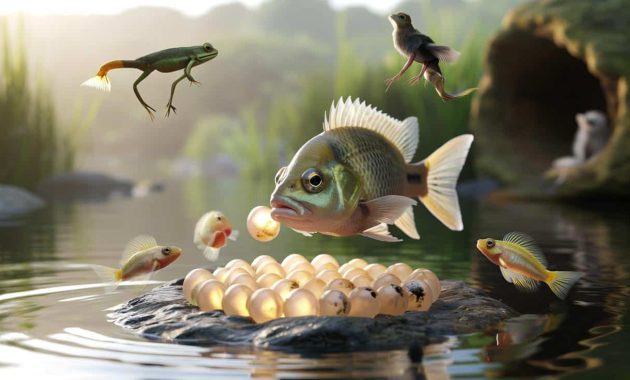
In the intricate tapestry of animal behavior, there is a startling phenomenon that defies our conventional understanding of parental instincts: the practice of parents eating their own offspring. This seemingly unnatural act, once thought to be a rare aberration, is now being recognized as a complex evolutionary strategy employed by various species across the animal kingdom.
From the underwater nests of certain fish to the crowded colonies of insects, this grim tactic of filial cannibalism is not only more widespread than we once believed but also serves a crucial role in ensuring the survival of the bloodline. As unsettling as it may seem, this practice is now being studied by scientists as a testament to the relentless drive of nature to adapt and thrive in the face of adversity.
A Shocking Betrayal or a Calculated Survival Tactic?
When a parent turns on its own young, it can appear to be a shocking betrayal of the most fundamental parental duties. However, this behavior is often the result of a complex interplay of environmental factors, resource availability, and genetic pressures that drive the species to make difficult choices for the greater good of the population.
In many cases, the decision to consume one’s offspring is not a reckless or impulsive act, but a carefully calibrated response to the specific challenges faced by the species. By selectively eliminating weaker or surplus offspring, parents can direct limited resources towards the most viable individuals, increasing the overall chances of the lineage’s survival.
This grim tactic, known as “genetic triage,” is a harsh but pragmatic approach to population control, ensuring that the species can weather the storms of environmental stress and competition for scarce resources.
The Hidden Logic of Filial Cannibalism
Beneath the surface of this disturbing behavior lies a hidden logic that, when understood, sheds light on the evolutionary pressures shaping animal societies. In crowded insect colonies or fish nests, for example, the available resources may be insufficient to sustain all the offspring, leading parents to make the difficult decision to cull the weakest or most vulnerable individuals.
In some cases, filial cannibalism is also linked to issues of paternity and the need to ensure the survival of one’s own genetic legacy. By eliminating offspring that are not their own, parents can redirect resources towards their biological young, increasing the chances of their genetic material being passed on to future generations.
This silent population control within nests and colonies, while seemingly cruel, serves to maintain the delicate balance necessary for the species to thrive in the face of adversity.
The Impact on Animal Societies and Ecosystems
The widespread practice of filial cannibalism has far-reaching implications for the structure and dynamics of animal societies. By selectively culling offspring, parents shape the composition and genetic diversity of their populations, influencing everything from social hierarchies to mating patterns.
In some species, the decision to consume one’s young is also tied to factors such as resource scarcity, environmental instability, or the threat of predation. In these cases, the practice of filial cannibalism can serve as a crucial population control mechanism, preventing overpopulation and ensuring the long-term sustainability of the ecosystem.
However, the impact of this behavior on the broader ecosystem is not always straightforward. The removal of a significant number of individuals from a population can have cascading effects on the food web, altering the delicate balance of predator-prey relationships and influencing the overall health of the environment.
Ethical Considerations and Implications for Pet Owners
As unsettling as the practice of filial cannibalism may be, it is important to recognize that it is a natural and, in many cases, necessary response to the challenges faced by various animal species. From the perspective of human ethics and values, however, this behavior can raise complex moral questions, particularly when it comes to the care and management of domestic animals.
For pet owners, understanding the potential for filial cannibalism in certain species can be crucial in providing the appropriate care and environment for their animals. While this behavior may not be common in domestic settings, it is important to be aware of the underlying drivers and to create conditions that minimize the risk of such occurrences.
In the realm of wildlife conservation and management, the insights gained from the study of filial cannibalism can inform strategies for protecting vulnerable species and maintaining the delicate balance of natural ecosystems.
The Paradox of Parental Care
At the heart of the phenomenon of filial cannibalism lies a profound paradox: the very instinct that drives parents to nurture and protect their young can, in certain circumstances, lead them to consume their own offspring. This apparent contradiction highlights the intricate and often counterintuitive ways in which evolution shapes the behavior of living organisms.
By understanding the underlying logic and the evolutionary pressures that give rise to this disturbing practice, we can gain deeper insights into the complex calculus of survival that governs the natural world. This knowledge, in turn, can inform our approach to animal welfare, conservation, and the broader stewardship of the ecosystems we share with our fellow creatures.
As we grapple with the unsettling realities of filial cannibalism, we are reminded of the fragility and resilience of life, and the delicate balance that must be maintained for species to thrive in the face of relentless challenges.
The Ethical Dilemma and the Pursuit of Understanding
The practice of filial cannibalism presents a profound ethical dilemma for humans, who often view parental care and the protection of the young as a fundamental moral imperative. However, as we delve deeper into the scientific understanding of this behavior, we are confronted with the sobering reality that what appears to be a betrayal of parental duties may, in fact, be a calculated survival strategy driven by the relentless forces of evolution.
As we grapple with this ethical quandary, it is important to remember that our moral judgments, rooted in human values and experiences, may not always align with the harsh realities of the natural world. By approaching this phenomenon with empathy, curiosity, and a willingness to understand, we can gain insights that may inform our approaches to animal welfare, conservation, and the stewardship of the ecosystems we share with our fellow creatures.
Ultimately, the study of filial cannibalism serves as a reminder of the complex and often counterintuitive ways in which life adapts and thrives in the face of adversity. As we continue to explore and understand this behavior, we may well find that the answers it provides challenge our preconceptions and push the boundaries of our ethical considerations.
| Species | Filial Cannibalism Behavior | Evolutionary Drivers |
|---|---|---|
| Fish | Parents may consume their own eggs or newly hatched fry in fish nests. | Resource scarcity, overcrowding, and the need to allocate limited resources to the strongest offspring. |
| Rodents | Mothers may selectively cull their litters, particularly in times of stress or resource scarcity. | Ensuring the survival of the fittest individuals and maintaining the genetic integrity of the population. |
| Insects | In crowded insect colonies, parents may consume their own eggs or young larvae. | Regulating population size, maintaining colony stability, and preserving the genetic legacy of the parents. |
“Filial cannibalism is a stark reminder that the natural world operates under a different set of rules and priorities than our own. As challenging as it is to confront, this behavior is ultimately a reflection of the relentless drive to survive and thrive in the face of adversity.”
– Dr. Emma Walters, Evolutionary Ecologist
“While filial cannibalism may seem unnatural to us, it is important to recognize that it serves a vital role in the complex ecosystems of the animal kingdom. Understanding this behavior can inform our approaches to conservation and animal welfare in meaningful ways.”
– Sarah Nguyen, Wildlife Policy Analyst
“The decision to consume one’s own offspring is not a reckless or impulsive act, but a carefully calibrated response to the specific challenges faced by a species. It is a testament to the ingenuity and adaptability of life in the face of adversity.”
– Dr. Liam Chambers, Behavioral Biologist
As we continue to unravel the mysteries of the natural world, the phenomenon of filial cannibalism stands as a stark reminder that the relentless drive to survive can sometimes lead to behaviors that challenge our own moral sensibilities. Yet, by approaching this subject with empathy, curiosity, and a willingness to understand, we may well find that the answers it provides offer profound insights into the complex calculus of life itself.
What is filial cannibalism?
Filial cannibalism is the practice of parents consuming their own offspring, which can be observed in various animal species across the fish, rodent, and insect kingdoms. This behavior, while seemingly shocking, is often a calculated survival tactic driven by evolutionary pressures.
Why do some animals engage in filial cannibalism?
Filial cannibalism can serve as a population control mechanism, allowing parents to selectively cull weaker or surplus offspring and allocate limited resources to the most viable individuals. It can also be linked to issues of paternity and the need to ensure the survival of one’s own genetic legacy.
What are the evolutionary drivers behind filial cannibalism?
The practice of filial cannibalism is often a response to environmental factors such as resource scarcity, overcrowding, and the threat of predation. By eliminating weaker or non-viable offspring, parents can improve the overall chances of the species’ survival.
How does filial cannibalism impact animal societies and ecosystems?
Filial cannibalism can shape the composition and genetic diversity of animal populations, influencing social hierarchies and mating patterns. The removal of individuals from a population can also have cascading effects on the broader ecosystem, altering predator-prey relationships and the overall balance of the environment.
What are the ethical considerations surrounding filial cannibalism?
Filial cannibalism challenges our human notions of parental care and the protection of the young, raising complex moral questions. Understanding the evolutionary logic behind this behavior can inform our approaches to animal welfare, conservation, and the stewardship of natural ecosystems.
How can the study of filial cannibalism inform our understanding of animal behavior and biology?
The study of filial cannibalism provides insights into the intricate and often counterintuitive ways in which evolution shapes the behavior of living organisms. This knowledge can deepen our understanding of the complex calculus of survival that governs the natural world.
What are the practical implications of filial cannibalism for pet owners and wildlife managers?
For pet owners, awareness of the potential for filial cannibalism in certain species can inform appropriate care and environmental conditions. In wildlife conservation and management, the insights gained from studying this behavior can inform strategies for protecting vulnerable species and maintaining the delicate balance of natural ecosystems.
How common is filial cannibalism in the animal kingdom?
Filial cannibalism is more widespread than previously thought, with documented cases across a variety of fish, rodent, and insect species. While the prevalence of this behavior varies, it appears to be a common evolutionary strategy employed by a range of animal species in response to specific environmental and genetic pressures.