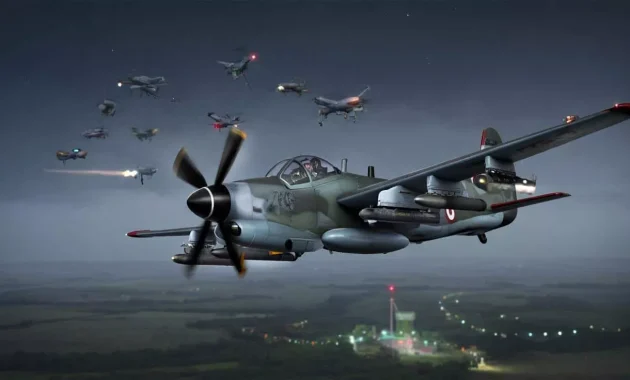
In the skies above Poland, a new battle is brewing – one that pits the country’s air force against a growing fleet of drones, some armed and some merely decoys, that have breached its borders. This drone intrusion has forced Warsaw to rethink its air defense strategy, leading it to consider the acquisition of the A-29 Super Tucano, a versatile light attack aircraft that could play a crucial role in the fight against these unmanned aerial threats.
The night of September 9-10 saw at least 19 Russian-designed drones, a mix of decoys and armed variants, cross into Polish airspace, a stark reminder of the evolving security challenges facing the country. These incursions have prompted a comprehensive review of Poland’s defense doctrine, with a focus on addressing the growing threat posed by these cheap, nimble, and potentially deadly unmanned aircraft.
As the Polish air force grapples with this new reality, it is exploring options that could bolster its ability to detect, track, and neutralize drones that may attempt to violate its airspace in the future. The A-29 Super Tucano, a turboprop light attack and reconnaissance aircraft, has emerged as a potential solution, offering a versatile platform that could be adapted to meet the unique demands of anti-drone warfare.

From Drone Intrusion to a New Defence Doctrine
The September drone incursion was a wake-up call for the Polish military, forcing it to confront the limitations of its current air defense systems. “We focused too much on ground-based systems and didn’t pay enough attention to the aerial threat,” acknowledged a senior Polish air force officer, speaking on condition of anonymity.
This realization has prompted a comprehensive review of Poland’s defense strategy, with a renewed emphasis on developing capabilities to counter the growing drone menace. The country’s leaders are now grappling with the question of how to effectively protect their airspace from these nimble, often difficult-to-detect unmanned aircraft.
The challenge is multifaceted, as drones can be deployed in swarms, employ decoys, and even be armed with explosives or other payloads. Conventional air defense systems, designed primarily to engage manned aircraft, may struggle to effectively neutralize these evolving threats. This has led Warsaw to explore alternative solutions, including the potential acquisition of the A-29 Super Tucano.

A €2bn Anti-Drone “Wall” – With Limits
In response to the drone incursions, the Polish government has announced plans to construct a €2 billion “anti-drone wall” along its borders. This ambitious project aims to integrate a network of radar systems, electronic warfare capabilities, and surface-to-air missile batteries to create a comprehensive defense against unmanned aerial threats.
However, experts caution that this “wall” approach has its limitations. “It’s not a silver bullet,” warned a defense analyst who requested anonymity. “Drones can still find ways to penetrate the defenses, and the system will be costly to maintain and upgrade as the threat evolves.”
Additionally, the construction of such a large-scale infrastructure project will take time, leaving Poland’s airspace vulnerable in the interim. This has highlighted the need for a more agile and adaptable solution that can be deployed more quickly to address the immediate drone threat.

Polish Air Force: “We Focused Too Much on Ground Systems”
The Polish air force’s admission that it has “focused too much on ground-based systems” underscores the need for a more comprehensive approach to air defense. While the anti-drone “wall” may provide a layer of protection, the air force recognizes the value of having airborne assets that can actively engage and neutralize drone threats.
This realization has led the Polish military to explore the acquisition of the A-29 Super Tucano, a light attack and reconnaissance aircraft that has gained a reputation for its versatility and effectiveness in counter-insurgency and counter-drone operations.
The A-29’s ability to carry a variety of weapons, including precision-guided munitions and air-to-air missiles, makes it a potential game-changer in the fight against drones. Additionally, its long endurance and advanced sensors could allow it to detect, track, and engage these unmanned aerial threats more effectively than traditional fighter jets or ground-based systems.

Why Warsaw is Eyeing the A-29 Super Tucano
The A-29 Super Tucano’s proven track record in anti-drone operations, particularly in Ukraine, has caught the attention of Polish military planners. The aircraft’s ability to operate from short runways and its relatively low operating costs make it an attractive option for a country like Poland, which is seeking to enhance its air defense capabilities without breaking the bank.
Moreover, the A-29’s multi-role capabilities, including its capacity for intelligence, surveillance, and reconnaissance (ISR) missions, could make it a valuable asset in Poland’s efforts to monitor and respond to drone incursions. The aircraft’s onboard sensors and communication systems could provide critical real-time data to ground-based command and control centers, improving the overall situational awareness and decision-making process.
In a hypothetical anti-drone mission, the A-29 could be equipped with air-to-air missiles, precision-guided bombs, and even anti-drone specific payloads to engage and neutralize unmanned aerial threats. Its maneuverability and agility could also allow it to effectively counter drones that may attempt to evade or outmaneuver traditional fighter jets.

Learning from Ukraine’s Improvised Anti-Drone Fleet
As Poland contemplates its options, it can draw valuable lessons from the experience of its neighbor, Ukraine, which has had to confront a relentless barrage of drone attacks from Russian forces. The Ukrainian military has been forced to improvise and adapt, cobbling together an ad-hoc fleet of repurposed aircraft and helicopters to counter the drone threat.
These makeshift anti-drone platforms, while not as sophisticated as the A-29 Super Tucano, have demonstrated the value of having airborne assets that can quickly respond to and neutralize unmanned aerial threats. The Polish air force is closely studying these Ukrainian tactics and technologies, seeking to incorporate the most effective elements into its own air defense strategy.
The lessons from Ukraine have underscored the importance of flexibility, adaptability, and a willingness to think outside the box when it comes to confronting the drone challenge. As Poland weighs its options, the A-29 Super Tucano’s versatility and proven track record in counter-drone operations have made it a prime contender for the country’s evolving air defense needs.

Adapting Existing Aircraft and Helicopters
While the A-29 Super Tucano has emerged as a leading candidate, the Polish air force is also exploring ways to adapt its existing fleet of aircraft and helicopters to enhance their anti-drone capabilities. This approach could provide a more immediate solution, allowing the country to leverage its current assets and infrastructure while it finalizes a decision on the potential acquisition of the A-29.
One such adaptation could involve equipping Poland’s fleet of Mi-24 attack helicopters with specialized sensors and weapons designed to detect, track, and engage drone targets. Similarly, the air force may consider outfitting its F-16 fighter jets with additional electronic warfare capabilities and air-to-air missiles optimized for the anti-drone mission.
These interim measures could bridge the gap until the A-29 Super Tucano, or a similar platform, is integrated into the Polish air force’s arsenal. By leveraging its existing resources, the country can bolster its immediate defenses against the drone threat while also laying the groundwork for a more comprehensive, long-term solution.

How an A-29 Anti-Drone Mission Could Look
In a hypothetical anti-drone mission, the A-29 Super Tucano could take on a multifaceted role. Armed with a mix of air-to-air missiles, precision-guided bombs, and potentially even specialized anti-drone payloads, the aircraft could engage and neutralize both armed and decoy drones that attempt to penetrate Polish airspace.
The A-29’s advanced sensors and communications systems could also play a crucial role in detecting, tracking, and sharing real-time data on drone movements with ground-based command and control centers. This enhanced situational awareness could allow the Polish military to coordinate a more effective and coordinated response, leveraging both airborne and ground-based assets to defend its skies.
Additionally, the A-29’s ability to operate from shorter runways and its relatively low operating costs could make it an ideal platform for conducting persistent air patrols and rapid-response missions in the event of a drone incursion. This agility and flexibility could be a significant advantage in the fast-paced, unpredictable world of drone warfare.

Key Terms and Risks Behind the Strategy
As Poland navigates this new chapter in its air defense strategy, several key terms and considerations will shape the decision-making process. Concepts like “counter-UAS” (counter-unmanned aircraft systems), “swarming drones,” and “electronic warfare” will become increasingly important in the country’s efforts to protect its airspace.
At the same time, the acquisition and integration of the A-29 Super Tucano, or a similar platform, will not be without its own set of risks and challenges. Issues such as interoperability with existing systems, training and maintenance requirements, and the potential for technological obsolescence will all need to be carefully evaluated.
Moreover, the broader geopolitical landscape and the evolving nature of the drone threat will require Poland to remain nimble and adaptable in its approach. As the country seeks to bolster its air defense capabilities, it must also be prepared to continuously reassess and refine its strategy to keep pace with the rapidly changing dynamics of modern warfare.
FAQ
What is the A-29 Super Tucano?
The A-29 Super Tucano is a turboprop light attack and reconnaissance aircraft that has gained a reputation for its versatility and effectiveness in counter-insurgency and counter-drone operations. It is capable of carrying a variety of weapons, including precision-guided munitions and air-to-air missiles, making it a potential game-changer in the fight against drones.
Why is Poland considering the A-29 Super Tucano?
Poland is considering the A-29 Super Tucano as a potential solution to the growing threat of drone incursions into its airspace. The aircraft’s proven track record in anti-drone operations, its ability to operate from short runways, and its relatively low operating costs make it an attractive option for the Polish air force as it seeks to enhance its air defense capabilities.
How could the A-29 Super Tucano be used in an anti-drone mission?
In an anti-drone mission, the A-29 Super Tucano could be equipped with air-to-air missiles, precision-guided bombs, and even specialized anti-drone payloads to engage and neutralize unmanned aerial threats. Its advanced sensors and communication systems could also provide critical real-time data to ground-based command and control centers, improving the overall situational awareness and decision-making process.
What other options is Poland considering for its air defense?
In addition to the potential acquisition of the A-29 Super Tucano, Poland is also exploring ways to adapt its existing fleet of aircraft and helicopters to enhance their anti-drone capabilities. This includes equipping Mi-24 attack helicopters with specialized sensors and weapons, as well as outfitting F-16 fighter jets with additional electronic warfare capabilities and air-to-air missiles optimized for the anti-drone mission.
What are the key terms and risks associated with Poland’s anti-drone strategy?
Key terms like “counter-UAS,” “swarming drones,” and “electronic warfare” will become increasingly important in Poland’s efforts to protect its airspace. At the same time, the acquisition and integration of the A-29 Super Tucano, or a similar platform, will come with its own set of risks and challenges, such as interoperability with existing systems, training and maintenance requirements, and the potential for technological obsolescence.
How does Poland’s strategy compare to Ukraine’s approach to countering drone threats?
Poland is closely studying the tactics and technologies used by Ukraine to counter the relentless barrage of drone attacks from Russian forces. While Ukraine has had to improvise and adapt its existing aircraft and helicopters, Poland is exploring more sophisticated solutions like the A-29 Super Tucano, which could provide a more comprehensive and effective response to the drone threat.
What are the limitations of Poland’s proposed “anti-drone wall”?
While the Polish government’s €2 billion “anti-drone wall” project aims to create a comprehensive defense against unmanned aerial threats, experts caution that this approach has its limitations. The system may still be vulnerable to drone incursions, and the high cost of maintaining and upgrading the infrastructure could be a significant burden on the country’s resources.
How will Poland’s air defense strategy evolve in the face of changing drone threats?
As the drone threat continues to evolve, Poland will need to remain nimble and adaptable in its air defense strategy. The country will need to continuously reassess and refine its approach, incorporating new technologies, tactics, and lessons learned to keep pace with the rapidly changing dynamics of modern warfare. The acquisition of the A-29 Super Tucano, or a similar platform, could be a crucial step in this ongoing process.