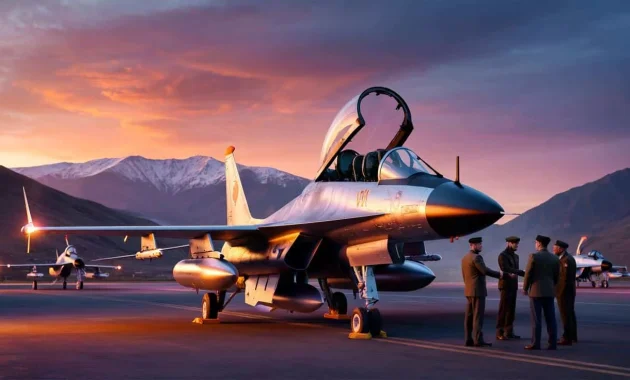
The South Caucasus is no stranger to geopolitical upheavals, but the latest development out of Yerevan is set to send shockwaves across the region. Armenia, long considered a staunch Russian ally, is on the verge of signing a landmark arms deal with India worth billions of euros. This unexpected shift in alliances signals a deeper strategic realignment that could redraw the security landscape of this volatile corner of Eurasia.
The proposed contract centers around the acquisition of advanced Su-30MKI fighter jets, a move that goes far beyond a simple military hardware upgrade. Analysts view this as a pivotal moment for Armenia, one that challenges its traditional dependence on Moscow and opens the door to a new geopolitical orientation.
A Turning Point for Armenia’s Air Force
For decades, the Armenian air force has been equipped with aging Soviet-era aircraft, relying heavily on Russia’s support and equipment. The Su-30MKI deal represents a dramatic departure from this status quo, as Yerevan seeks to modernize its aerial capabilities and reduce its military reliance on Moscow.

The Su-30MKI, a multirole fighter jet developed by Russia’s Sukhoi and produced under license in India, is widely regarded as one of the most capable and versatile air platforms in the region. Its advanced avionics, long-range strike capabilities, and formidable air-to-air and air-to-ground performance make it a game-changer for Armenia’s defense posture.
The acquisition of these state-of-the-art fighters would not only bolster Armenia’s air superiority but also signal a marked shift in its strategic calculations. Abandoning its traditional Russian suppliers in favor of an Indian-made system carries profound geopolitical implications.
Why Yerevan is Looking Beyond Moscow
Armenia’s decision to pursue this deal with India has its roots in a complex web of regional dynamics and shifting power balances. The country’s longstanding tensions with neighboring Azerbaijan, exacerbated by the Nagorno-Karabakh conflict, have compelled Yerevan to seek alternative military partnerships.

Historically, Russia has been Armenia’s primary arms supplier and security guarantor, but growing concerns over Moscow’s perceived tilt toward Baku have led Yerevan to explore new alliances. The India deal represents a strategic diversification, allowing Armenia to reduce its dependence on Russia and potentially gain access to a wider range of military equipment and technologies.
Moreover, this shift aligns with Armenia’s broader efforts to assert its geopolitical autonomy and carve out a more independent role in the South Caucasus. By forging closer ties with India, Yerevan is signaling its desire to chart a course beyond the traditional Russian-Turkish-Iranian axes that have long dominated the region.
India’s Rise as an Arms Exporter
The potential Armenia-India arms deal is also a testament to India’s growing prominence as an exporter of military hardware. Once largely dependent on foreign suppliers, India has in recent years made strides in developing its indigenous defense industry and expanding its global footprint as an arms provider.

The Su-30MKI, in particular, has been a key export success for India, with several countries in the region, including Malaysia and Algeria, having acquired the aircraft. The opportunity to supply these advanced fighters to Armenia represents a significant coup for New Delhi, further cementing its status as an emerging power in the global arms market.
For India, the Armenia deal carries geopolitical significance as well. By strengthening its military cooperation with Yerevan, New Delhi can potentially offset China’s growing influence in the region and counter Pakistan’s strategic alignment with Azerbaijan. This move aligns with India’s broader efforts to expand its regional influence and hedge against its rivals.
Logistics, Financing, and Unanswered Questions
The practical details of the Armenia-India arms deal remain shrouded in uncertainty, with both sides still negotiating the final terms and conditions. Questions linger over the logistics of the transaction, the financing mechanisms, and the timeline for the delivery of the Su-30MKI fighters.

One key challenge is the complex web of international sanctions and export controls that could complicate the procurement process. As a close Russian ally, Armenia has faced its own set of economic restrictions, which could create obstacles in securing the necessary financing and technical support for the deal.
Additionally, the cost of the Su-30MKI fighters, estimated to be in the range of several billion euros, could stretch Armenia’s military budget and necessitate innovative financing solutions, potentially involving third-party guarantors or international financial institutions.
Regional Jitters Across the South Caucasus
The prospect of an Armenia-India military partnership has sent ripples of concern across the South Caucasus, with neighboring countries closely monitoring the developments. Azerbaijan, in particular, has expressed unease over the potential shift in the regional balance of power, fearing that the Su-30MKI acquisition could enhance Armenia’s air superiority and embolden its position in the Nagorno-Karabakh conflict.

Georgia, another key player in the region, has also voiced cautious concerns, cognizant of the potential implications for the delicate geopolitical equilibrium. Tbilisi is mindful of maintaining a careful balancing act between its Western-leaning orientation and the need to navigate the complex regional dynamics.
Turkey, a crucial regional power and a close ally of Azerbaijan, has also been closely following the developments. Ankara’s own military partnership with Baku and its ongoing tensions with Armenia could lead it to view the potential India-Armenia deal as a strategic challenge to its regional influence.
What the Su-30MKI Means on the Battlefield
The introduction of the Su-30MKI fighters into the Armenian air force would significantly enhance the country’s military capabilities, potentially shifting the balance of power in the region. These advanced multirole aircraft are equipped with a wide range of sophisticated systems, including powerful radars, long-range air-to-air and air-to-ground missiles, and advanced electronic warfare capabilities.

In the event of a renewed conflict with Azerbaijan, the Su-30MKI’s superior range, firepower, and maneuverability could provide Armenia with a decisive edge in the air. The fighters’ ability to perform precision strikes, engage multiple targets simultaneously, and dominate the airspace could prove to be a significant force multiplier for Yerevan’s armed forces.
However, the introduction of these advanced systems also brings a new set of challenges, including the need for extensive pilot training, maintenance, and logistical support. The successful integration of the Su-30MKI into Armenia’s military will require substantial investment and close coordination with India, further underscoring the geopolitical gravity of this potential deal.
Risks, Trade-Offs, and What Could Go Wrong
While the Armenia-India arms deal presents strategic opportunities for both countries, it also carries inherent risks and potential trade-offs. The shift away from Russia’s military support could strain Yerevan’s relations with Moscow, potentially jeopardizing other areas of cooperation and increasing Armenia’s vulnerability in the face of potential Russian retaliation.

Moreover, the successful implementation of the Su-30MKI acquisition hinges on Armenia’s ability to navigate the complex web of international sanctions and export controls, as well as secure the necessary financing. Delays or setbacks in this process could undermine the deal’s intended impact and leave Armenia’s air force in a precarious position.
Regionally, the introduction of the Su-30MKI into the Armenian arsenal could trigger a destabilizing arms race, as neighboring countries seek to counter the perceived military advantage. This, in turn, could heighten tensions and increase the risk of miscalculation, potentially sparking a renewed cycle of conflict in the South Caucasus.
| Country | Air Force Strength | Key Platforms |
|---|---|---|
| Armenia | 15,000 personnel | MiG-29, Su-30MKI (proposed) |
| Azerbaijan | 18,000 personnel | MiG-29, Su-25, F-16 |
| Georgia | 3,500 personnel | MiG-29, L-39 |
| Characteristic | Su-30MKI | MiG-29 |
|---|---|---|
| Max Speed | 2,120 km/h | 2,400 km/h |
| Range | 3,000 km | 1,500 km |
| Weapons Capacity | 8,000 kg | 3,000 kg |
“This deal represents a major geopolitical shift for Armenia, one that could have profound implications for the regional balance of power. By aligning with India, Yerevan is clearly signaling its desire to diversify its strategic partnerships and reduce its reliance on Moscow.”
– Dr. Anahit Shirinyan, regional security analyst

“The introduction of the Su-30MKI fighters into the Armenian air force could significantly enhance their capabilities, potentially tipping the military balance in the Nagorno-Karabakh conflict. This is a development that will be closely watched by all the key players in the region.”
– General Aslan Aslanov, Azerbaijani military expert
“India’s willingness to supply advanced fighter jets to Armenia represents a strategic shift in its regional positioning. By engaging with Yerevan, New Delhi is seeking to expand its influence and counter the growing Chinese and Pakistani presence in the South Caucasus.”
– Dr. Sameer Patil, foreign policy analyst at Gateway House
As the details of the Armenia-India arms deal continue to unfold, the ripples of this geopolitical earthquake will undoubtedly be felt across the South Caucasus and beyond. The region, already fraught with tensions and complex power dynamics, is bracing for a new chapter in its ever-evolving security landscape.
What is the significance of the Armenia-India arms deal?
The proposed deal for Armenia to acquire advanced Su-30MKI fighter jets from India represents a significant geopolitical shift for the country. It signals Armenia’s desire to diversify its military partnerships beyond its traditional reliance on Russia, potentially altering the regional balance of power in the South Caucasus.
How will this deal impact the regional dynamics?
The introduction of the Su-30MKI fighters into the Armenian air force could heighten regional tensions, as neighboring countries like Azerbaijan and Turkey may view it as a threat to the military balance. This could trigger an arms race and increase the risk of conflict in the already fragile South Caucasus region.
What are the potential risks and challenges for Armenia?
The successful implementation of the Armenia-India arms deal faces several challenges, including navigating international sanctions and export controls, securing the necessary financing, and integrating the new platforms into its military. Additionally, the shift away from Russia could strain Yerevan’s relations with Moscow, potentially increasing its vulnerability.
How does this deal fit into India’s broader regional strategy?
For India, the Armenia deal represents an opportunity to expand its regional influence and counter the growing presence of its rivals, such as China and Pakistan, in the South Caucasus. By strengthening its military cooperation with Yerevan, New Delhi is seeking to diversify its partnerships and hedge against the strategic moves of its competitors in the region.
What are the potential implications for the Nagorno-Karabakh conflict?
The acquisition of the Su-30MKI fighters could significantly enhance Armenia’s air superiority and military capabilities in the Nagorno-Karabakh conflict. This could embolden Yerevan’s position and potentially trigger a renewed escalation of hostilities with Azerbaijan, further destabilizing the already fragile regional security environment.
How will this deal affect Armenia’s relations with Russia?
Armenia’s shift towards India for its military procurement could strain its long-standing partnership with Russia, which has been the country’s primary arms supplier and security guarantor. This move could jeopardize other areas of cooperation between Yerevan and Moscow, potentially increasing Armenia’s vulnerability in the face of potential Russian retaliation.
What are the broader geopolitical implications of this deal?
The Armenia-India arms deal is part of a broader trend of geopolitical realignment in the South Caucasus, as countries in the region seek to navigate the complex web of regional and global power dynamics. This development could have far-reaching implications for the balance of power, alliances, and security architecture in this strategically important part of Eurasia.
How likely is the deal to be finalized, and what are the potential timelines?
The final details of the Armenia-India arms deal are still being negotiated, and the timeline for its implementation remains uncertain. Factors such as financing, technical integration, and navigating international sanctions and export controls could all impact the pace and viability of the transaction. Nonetheless, the strategic significance of this potential partnership means that it will continue to be closely watched by regional and global observers.