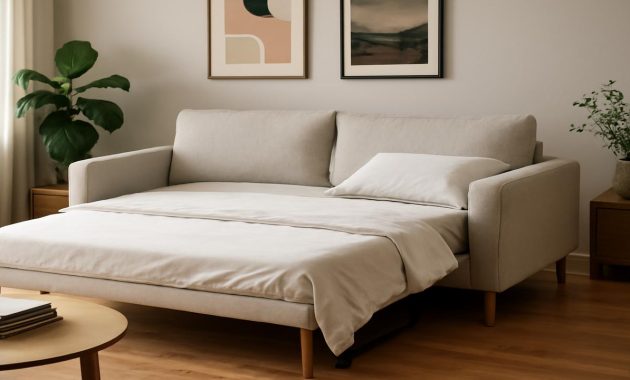

The box arrived on a Tuesday afternoon, interrupted only by the soft clatter of the delivery truck backing away. No flat-pack branding, no cartoon man with a tiny hex key. Just a plain cardboard promise that something different was about to sneak into the living room and quietly change everything about how the space worked—and how it felt. It didn’t look like a revolution, but then, the best ones rarely do.
The Slow Breakup With the Sofa Bed We Pretend to Like
You probably know this dance. At some point in your life, you bought—or inherited—the “practical” sofa bed. Maybe it was from Ikea. Maybe it was from a friend who swore it was “surprisingly comfortable.” You wrestled with cushions. You unfolded a clunky metal frame. A wafer-thin mattress groaned into place, sagging in the middle like a hammock after a long summer. You told your guests, “It’s actually not that bad,” and hoped you wouldn’t hear them shifting all night.
The irony is: we’ve learned to accept this. We’ve made peace with the idea that a sofa bed has to be a compromise between comfort, aesthetics, and price—that you can’t possibly have all three without selling a kidney or sacrificing half your living room to a massive, shapeless blob. It’s as if good design and tight budgets were sworn enemies.
But something has been changing quietly in design circles. Scroll through home accounts on socials, stalk the “small space inspiration” tags, or peek into the trend-conscious homes of your most effortlessly stylish friends. There’s a new kind of sleeper sofa slipping into the conversation. It’s lower to the ground, softer in its lines, often modular, usually wrapped in fabrics you actually want to touch. It doesn’t just fold out; it transforms. It doesn’t shout “guest bed!” every time you walk into the room. It blends in—until you need it to step up.
Forget the Ikea sofa bed. There’s a new budget sleeper sofa winning over design fans, not because it’s screaming for attention, but because it’s finally listening to what we’ve been asking for all along: more comfort, less compromise, and an actual sense of style.
The Moment a Sofa Stops Being Furniture and Starts Being a Feeling
The first time you see one of these new sleepers in person, it hits you in a way that’s hard to articulate but easy to feel. The edges are rounded or gently structured, not boxy. The fabrics are textured and touchable—linen blends, soft twills, nubby boucle—not the shiny, suspiciously plasticky upholstery that squeaks every time you shift your weight. You run your hand along the armrest and it gives just slightly, like a good hug, not like a plastic shell.
Then you sit down.
It’s the quiet difference that tells you this thing was designed recently, for the way people actually live now. The seat has depth; you can tuck one leg underneath you without feeling like you’re perched on a bus stop bench. The cushions don’t collapse instantly into a crater. There’s a subtle resistance, the kind that promises support without punishing your spine. This is not a “formal” sofa that glares at you if you dare eat popcorn on it. It’s a sofa that seems to invite a movie marathon, a lazy Sunday, a laptop-on-your-knees workday.
And then someone asks the question that flips its identity entirely: “Where should I crash?”
You don’t sigh. You don’t brace yourself for the wrestling match with metal frames and rogue springs. You just pull, or slide, or fold—the mechanism smooth, minimal, almost intuitive. The seat glides forward, the back drops flat, or the modules rearrange like soft building blocks. In seconds, the room exhales. The sofa is now a bed. A real one. A wide, cushioned island that looks like it could actually deliver on an eight-hour sleep promise.
From Afterthought to Centerpiece
In classic sofa-bed culture, the bed function was a tacked-on trick—a necessity stapled onto a design that never really wanted it. With this new wave of on-trend sleeper sofas, the opposite is happening. The sleeping function is baked into the heart of the piece, treated not as a compromise but as a core strength.
Here’s what design lovers are noticing:
- No clunky metal frame lurking under a thin mattress. The primary cushion surface often doubles as the sleeping surface, meaning what you sit on is what you sleep on—and both are designed for comfort.
- Low visual weight, especially important for small apartments. Clean lines, slim arms, and leggy bases keep them from dominating the room.
- Neutral but character-driven fabrics—stone grays, warm beiges, sage greens, muted rust—that don’t scream “student rental” or “corporate lobby.”
- Modularity that lets you shift from lounging, to napping, to full guest-bed setup, all with the same piece.
It’s furniture that recognizes your living room is not a showroom—it’s a constantly shifting mix of office, cinema, guest room, and nest.
The Budget Reality: Beauty Without the “Designer Tax”
Of course, there’s always the moment the excitement hits the brick wall of reality: the price tag. Traditionally, if you wanted a sleeper sofa that didn’t feel like a fold-out torture device, you had to move into custom territory or chase boutique European brands that cost more than your last used car. For many of us, that’s an automatic no.
That’s why this new sleeper sofa moment is surprising people: so many of the pieces that design fans are loving don’t live in the four-figure fantasy realm. They squat right in the sweet spot of “I really shouldn’t” and “I actually can.” The trick is that they do a lot more with less—less hardware, less overbuilt frame, less pointless detail—leaning into simple engineering and clever proportion instead of expensive gimmicks.
Consider what you’re usually paying for with a classic sofa bed:
- Complicated fold-out metal mechanisms
- A separate inner mattress that tends to be thin and short-lived
- Bulky, heavy frames that cost more to produce and ship
With newer sleeper sofa designs, much of that has been streamlined away. There’s a focus on thick, high-resilience foam or layered cushions that serve double duty. The “bed” is the sofa—and vice versa. Fewer moving parts, fewer ways to break, fewer reasons for the price to skyrocket.
How the New Wave Compares
Here’s a simple snapshot of how these on-trend sleeper sofas often stack up against the usual suspects many of us started with:
| Feature | Traditional Sofa Bed | Modern Budget Sleeper Sofa |
|---|---|---|
| Comfort (as a bed) | Thin mattress over metal bars | Full cushion surface, even support |
| Look in the living room | Boxy, bulky, obviously a sofa bed | Clean-lined, on-trend, reads as a “real” sofa |
| Ease of conversion | Multiple steps, heavy pull-out | Slide, fold, or flip in one or two motions |
| Suited for small spaces | Often too deep, visually heavy | Lower profile, lighter look, modular options |
| Price vs. design value | Often cheap-looking or overpriced for quality | Budget-friendly with thoughtful, modern design |
It’s not that the Ikea-era sofa bed is “bad.” It did its job for a particular moment—and for many of us, it made having guests possible when space and money were both tight. But design has moved forward, and budget-conscious furniture has followed.
Small Space, Big Life: Why Design People Are Paying Attention
Ask a designer what excites them in furniture right now, and you’ll hear a recurring theme: versatility. Homes are shrinking, prices are growing, and people are asking more of every square foot. A rug isn’t just a rug; it’s how you zone a room. A table isn’t just a table; it’s a desk by 9 a.m. and a dinner surface by 7 p.m. Your sofa? It’s a lounge, a work spot, and—on Friday nights when friends overstay in the best way—a guest room.
The new sleeper sofa feels like a direct response to that reality. It understands that style matters even more when your living room is also your entryway, your Netflix cave, your Zoom backdrop, and your hallway. You can’t hide ugly furniture in a spare room if there is no spare room.
The New Criteria: Not Just “Does It Fit?” But “Does It Feel Right?”
Design fans, even on a budget, have become more demanding. They’re not just checking dimensions and color options. They’re asking:
- Does it sit low and cozy or formal and upright? Lower profiles tend to feel more relaxed and modern.
- Are the proportions balanced? A slim arm with a generous seat creates visual lightness without sacrificing comfort.
- Can I actually live on this? Machine-washable or removable covers, durable fabrics, and sensible colors matter more than ever.
- Will it photograph well? In the age of social sharing, yes, this matters. Design lovers want pieces that look good from every angle.
The right budget sleeper sofa ticks these boxes by being quietly clever. It doesn’t lean on bold patterns or flashy colors to make an impact. Instead, it uses shape, texture, and proportion—the language of real design—to earn its place in the room.
And because it turns into a bed that people actually want to sleep on, you suddenly gain something modern living rarely gives freely: hospitality without stress. No digging out an air mattress. No apologizing for the “temporary setup.” Your home feels ready, almost effortlessly, to stretch and welcome someone else in.
Designing the Evening: How It Changes the Way You Host
Picture this: a winter evening, outside air sharp enough to make your breath visible, inside a soft low glow from a floor lamp curling into the corners of the room. The coffee table is cluttered with the aftermath of a casual night in—half-finished mugs of tea, an empty popcorn bowl, someone’s abandoned book. A film finishes, that familiar late-night hush settling over everyone.
“You sure you don’t want to stay over?” you ask, half out of politeness, half out of genuine hope the night doesn’t have to end just yet.
In the old sofa-bed era, this question was tinged with logistical dread. There’d be a flurry of cushion removal, frame unfolding, awkward mattress wrangling, sheets that never quite fit. By the time you’d made the bed, the moment of warmth and spontaneity would have cooled into something more procedural.
Now, instead, you take two or three steps. Slide the base forward, or flip the backrest down, or pull a hidden platform out with a smooth, gliding motion. The room rearranges itself like a magic trick that doesn’t try to hide its method—it just makes it look easy. The sofa sighs flat, and suddenly your living room is a soft, wide plane of possibility.
You toss over a duvet, drop a pillow, adjust a throw blanket so it looks purposely draped rather than hurried. Your guest sinks into the cushion and laughs: “Wait, this is your couch?” It feels like a compliment to more than just your taste. It’s a compliment to the experience you’ve created.
The Emotional Mathematics of a Good Sleeper Sofa
A surprisingly large part of why this new sleeper style is winning fans has nothing to do with its mechanics and everything to do with its emotional arithmetic. It lets you do things that feel generous and relaxed without demanding proportional effort.
- Last-minute sleepovers become effortless instead of mildly stressful.
- Family visits don’t require a dedicated guest room or elaborate planning.
- Solo nights gain the option of sprawling out fully horizontal without “going to bed” yet.
- Studio apartments stop feeling like one big compromise and start feeling intentionally multipurpose.
That’s why this isn’t just a furniture trend. It’s a lifestyle one. It reflects a shift toward homes that are looser, more flexible, more honest about the fact that we use every inch of our spaces, all the time.
Choosing Your Own “Forget the Ikea” Moment
If you’re standing at the edge of this decision, hovering between “my current sofa bed is fine” and “maybe I’m ready for an upgrade,” it helps to think less about specs and more about scenes. Imagine how you want to live with it. Picture the real moments: Sunday afternoons, late-night guests, sick days when the living room becomes command central, long work-from-home stretches where you slide from laptop typing to midday nap without entirely meaning to.
The right budget-friendly sleeper sofa will quietly support those scenes instead of getting in the way. It will look good enough that you don’t feel like you settled. It will function smoothly enough that you actually use its sleeper feature, not just brag about having it “in case.” And it will cost little enough that you can invest in the other details that finish the story of your space—soft lighting, a throw that feels like a cloud, artwork that makes you stop and breathe for a second.
We spent a long time believing that good design was either expensive, impractical, or both. But this new generation of sleeper sofas is a reminder that sometimes, evolution sneaks in through the everyday object you see and touch the most. You don’t need a massive renovation to change how your home feels. Sometimes, you just need a sofa that understands you’re not choosing between a beautiful life and a practical one.
Forget the Ikea sofa bed—not out of snobbery, but out of possibility. There’s a softer, smarter, better-looking alternative waiting to unfold in the middle of your living room, ready to host your people, hold your body, and quietly reshape your idea of what “budget” furniture can be.
FAQ
Is a budget sleeper sofa actually comfortable for everyday use?
Many modern budget sleeper sofas are designed with comfort as a top priority, using thick foam, supportive cushions, and thoughtful ergonomics. While not all are suitable as an every-night bed, the best ones are genuinely comfortable both for lounging and for regular guest use.
Will a sleeper sofa overwhelm a small living room?
Not necessarily. Newer designs favor low profiles, slimmer arms, and streamlined shapes, which help them feel visually lighter. Choosing a neutral fabric and legs that lift the sofa off the floor can make even compact rooms feel more open.
How do I know if the mechanism will last?
Look for simple conversion systems with fewer moving parts—sliding bases, fold-down backs, or modular cushions rather than complex metal frames. Read product descriptions for weight limits, user reviews for real-world feedback, and check if there’s a warranty.
What fabric should I choose for a high-use sleeper sofa?
Go for durable, medium-textured fabrics like twill, woven polyester blends, or performance linen-style materials. These tend to resist stains, hide wear, and hold their shape. If possible, opt for removable or washable covers for easier upkeep.
Is it worth upgrading if I already have a functioning Ikea-style sofa bed?
It depends on how often you use it and how you feel about your space. If guests rarely stay over and you love your current sofa, you may not need to change. But if you regularly host, work from your sofa, or feel your living room doesn’t quite reflect your style, upgrading to a better-designed sleeper can make a noticeable difference in daily comfort and how your home feels overall.
