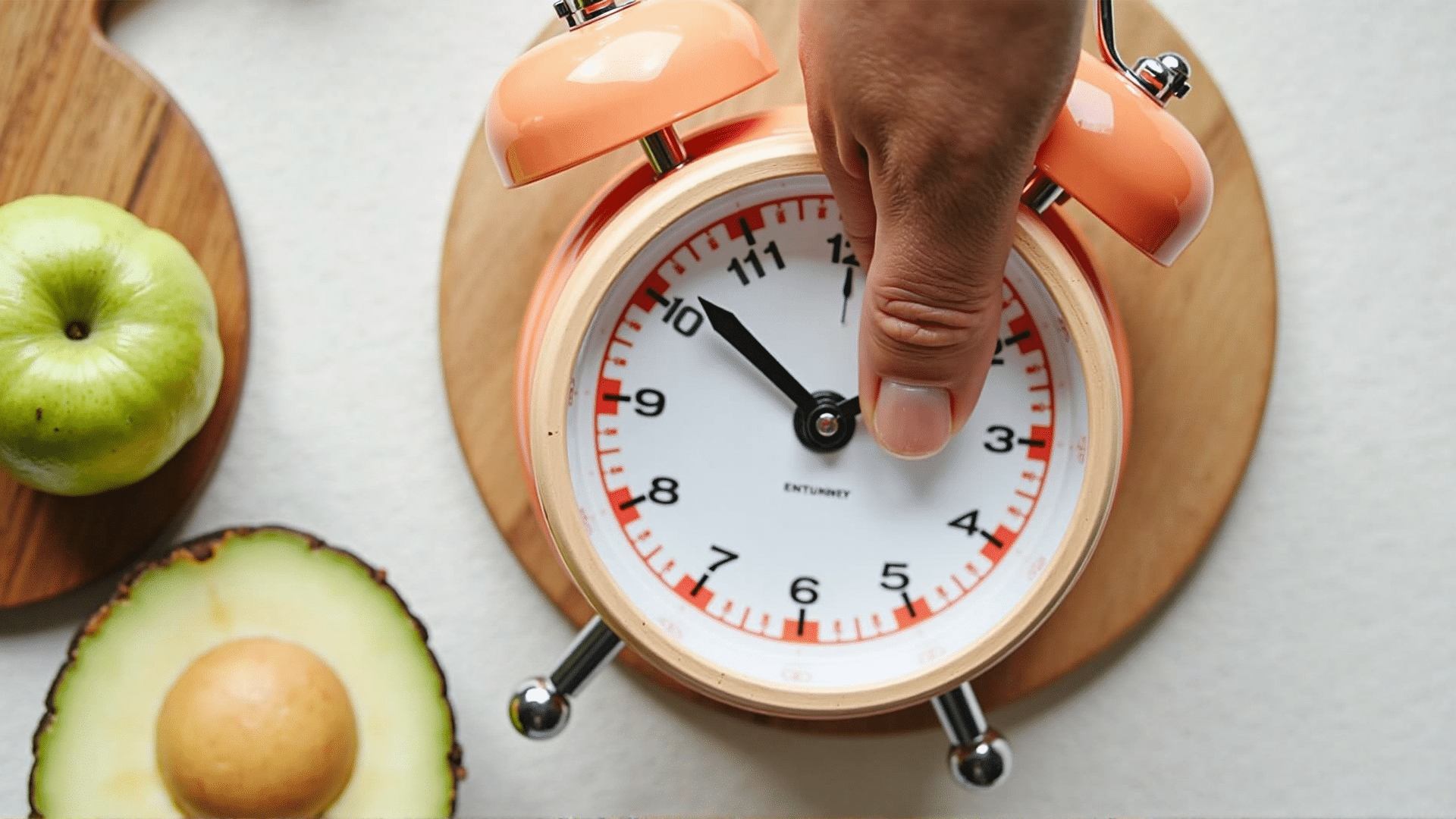
m., the way it does when you’ve gone looking for something sweet you swore you didn’t need. My glucose meter had been chirping at me all week. There’s a specific tone to it—clinical, slightly smug—that made me feel like I was on the wrong side of my own body. I shut the door, made a cup of mint tea instead, and told myself I’d try one small rule: no calories for twelve hours between evening and morning. No counting, no apps, no drama.
Three weeks later, the chirping eased. A month on, it got quiet. That was the first time I heard something else—my own footsteps on the pavement at 7 a.m., lighter, quicker, purposeful. What changed inside those twelve hours felt small from the outside, almost invisible, but it did not feel small to my blood. And that’s where the story starts to get interesting.
The morning my meter went quiet
We’ve all had that moment when your numbers feel like a verdict. Mine had been creeping up for years, edging from “watch it” to “we need to talk.” Pills were on the table. So was the idea of living smaller, watching everything, being watched by everything. It didn’t sit right with me, and it didn’t sit well with my shoulders either.
A friend who’s a nurse said something that seemed almost too gentle to work: fence your day. Finish dinner, brush your teeth, and let your body settle for twelve hours. Not a heroic fast, not monk-like restraint—just a quiet stretch where insulin isn’t being poked every half hour. It sounded like a nap for my pancreas. It sounded doable.
Why twelve hours is a sweet spot
Your liver is a tidy archivist. It stores away glycogen from your meals, ready to parcel it back out as glucose, especially overnight. After about ten hours without new calories, that store starts to run low. Near hour twelve, insulin levels drift downward, and your body begins leaning on fat, not snacks, for steady energy. The drama isn’t loud. It’s chemical and patient.
Twelve hours isn’t extreme. It fits the rhythm humans kept for generations, the kind where kitchens actually closed and night meant night. You’re not punishing hunger. You’re letting hormones—insulin, glucagon, cortisol—unspool in their own order instead of all at once. Twelve quiet hours can tip your metabolism back toward you.
What happens at hour 10, 11, 12
At hour ten, you’re drawing down what you stored from dinner. Your blood sugar floats more steadily because nothing new is barging in, and insulin gets a break from constant door duty. At hour eleven, fat released from storage—especially around the liver—starts to be used with less pushback, which is exactly where type 2 diabetes gets tangled: too much fat where it shouldn’t be, making insulin’s job harder.
At hour twelve, the body is calmer. In the background, the liver’s fat and sugar conversations are less frantic. This isn’t a cure-all; it’s a physics tweak. The same mechanism that helped many of us into trouble—late-night eating, constant grazing, meals stacking on meals—can be nudged back. A small act becomes a lever.
The rule that feels human
The best part was the simplicity. I picked a finish line that worked with my life: 7 p.m. The kitchen closed. Tea and water were fine; the cupboard stayed quiet. If I ate later because life happened, I slid the morning forward and kept the fence. It wasn’t about being perfect. It was about keeping a promise most days.
I set a timer on my phone and let the kitchen close itself. The teeth-brushing became a ritual, a signal to my brain that the show was over. The first week, I went to bed slightly hungry a few nights, and it was okay. I used that feeling like a small wave to surf, instead of something to drown in. Unexpectedly, sleep got deeper. My morning numbers started showing the change before anything else did.
➡️ “One in 200 million”: fisherman hauls dazzling electric-blue lobster from the Atlantic
➡️ Psychology explains why emotional neutrality can feel unsatisfying
➡️ The quick and effective method to restore your TV screen to like-new condition
The first week: hunger has a voice
Hunger speaks louder in week one. It loves to whisper at 10 p.m., promising just a spoon of peanut butter or a quick bowl of cereal. That was the moment for me: the sound of the kettle, the smell of mint or chamomile, the small victory of closing a cupboard door. The feeling passed. It always did. By week two, the whispers got bored and wandered off.
There were hiccups. A late train, a birthday cake, a work event that ran until nine. I didn’t throw it all away. I shifted my window, laughed about it, carried on. Let’s be honest: no one really does this every day. The win is not a streak. The win is a pattern your body learns to trust.
Food in the window: not a monk’s diet
What I ate while the window was open mattered—but not in a punishing way. I kept meals simple: protein, vegetables, some fruit, enough fat to feel satisfied, carbs I actually loved and not the crumbs of a rushed afternoon. The fasting made me choosier without trying. When you only have so many hours to eat, you want food that feels like a hug and not a negotiation.
I didn’t weigh spinach or count almonds. I ate at a table, with a plate, and if I could, with someone else. I took a ten-minute walk after dinner, which made my blood sugar chart look like a scenic drive instead of a rollercoaster. Weekend roast? Absolutely. A pastry on a rainy morning? Sometimes. The point wasn’t purity. It was rhythm.
What doctors told me
I spoke to my GP because I was on medication, and you should too if you’re considering any fasting habit. Some drugs, like insulin or sulfonylureas, can make your sugar drop low if you change your eating times. That’s not a brave story—it’s dangerous. We adjusted things, agreed on targets, and I kept a diary. Knowledge is a calmer kind of power.
This wasn’t a rebellion against medicine. It was a partnership. Over months, my numbers improved. HbA1c slipped down, weight settled, blood pressure softened. As we saw sustained change, we stepped medications back under supervision. The day I needed none was not a victory lap. It was a quiet Tuesday, and it felt like home.
What science keeps finding
Remission of type 2 diabetes isn’t a myth. Trials in the UK and beyond have shown that losing liver and pancreatic fat can lift the condition into remission for many people. Some did it with tightly controlled low-calorie diets, others with time-restricted eating that respects circadian rhythms. Twelve-hour overnight fasting sits on the gentlest end of that spectrum, and for some of us, that’s the only end we can truly live on.
Early eating windows—breakfast a bit earlier, dinner a bit earlier—seem to help insulin sensitivity more than late ones. Nighttime snacking pushes blood sugar up and sleep quality down, a double whammy. Remission isn’t magic; it’s mechanics. When insulin stops being pestered all day and night, cells hear the message again. Think of it as turning the volume down, so the body can finally listen.
Weight isn’t the only dial
People love to say it’s just about weight. There’s more to the picture. Stress hormones nudge glucose up at dawn. Poor sleep nudges appetite up all day. A ten-minute walk can blunt a post-meal spike better than a long lecture ever could. The twelve-hour fence helps all these pieces line up.
My best mornings were the ones after decent sleep and a short evening stroll. My worst ones were after late emails and cheese. The pattern wasn’t perfect. It was human. And my numbers respected the effort even when life didn’t.
Slips, holidays, and the messy middle
The messy middle is where most of us live. There were days I broke my fast with a croissant at 6 a.m. at an airport, and nights I ate curry at 9 with friends I hadn’t seen in years. This is life. The trick was to let the next twelve hours be the next twelve hours, not a punishment for the last one. A reset, not a reckoning.
I kept a few simple anchors: a glass of water before coffee, a protein-forward first meal, a short walk after the biggest one. I forgave the rest. My meter was kinder when I was. And gradually, the graph that used to scare me started looking like something I could live with, then like something I could trust.
Stories from the kitchen table
There was Tom, a builder who joked that he’d eat anything that sat still long enough. He moved dinner earlier and stopped buying crisps for the van. Eight weeks later, he sent me a photo of his meter with a grin wide enough to rinse concrete. There was Shreya, a nurse on shifts, who couldn’t do neat windows but could do twelve hours after her last meal, even if that meal was at 2 a.m. The window moved. Her numbers followed.
My favourite was Ann, a grandmother who kept shortbread in a tin “for guests” and admitted she was the only guest who came. She put the tin inside another box during her twelve hours, and that silly little barrier was enough. Her GP lightened her meds slowly. She said the best part wasn’t the scale. It was waking up not feeling like she’d fought herself all night.
If you try it, try it gently
Start with the smallest win: a real finish line. Brush your teeth early. Close the kitchen. Choose boring snacks you won’t miss, and keep beautiful food for the daytime. If you take medications that can cause low blood sugar, speak to your doctor first. If you’re pregnant, underweight, recovering from an eating disorder, or living with type 1 diabetes, this isn’t the tool for you. There are other doors to try.
Most of all, expect it to feel awkward for a week and then strangely normal. Expect friends to tease you at first and copy you later. Expect to slip, and then to remember why you started. Start small, stay kind, and keep your GP in the loop. The rest becomes habit, and habit is where quiet miracles live.
The small thing that changes big things
What I love about the twelve-hour fast is not glamour. It’s the way it gives you back the feeling that you can steer. No expensive powders, no spreadsheet of macros, no doom. Just a fence around your night and a little more faith in your morning.
Maybe “reverse” is a big word. Doctors prefer “remission,” and they’re right. Words matter. Still, when the meter stops nagging, when your energy climbs, when medication doses step down under proper care, it feels like reversal in the places that count: the dinner table, the walking pace, the mirror that doesn’t make you sigh. If you’re wondering whether a quiet twelve hours could change your day, your week, your health, I’ll ask what I asked myself standing by that humming fridge: what happens if tonight, you just let your body rest?