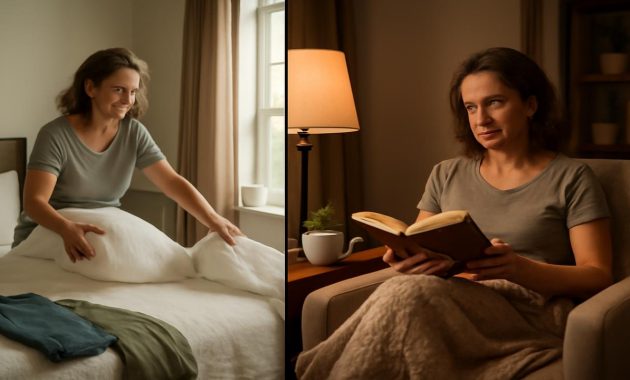

The first time you notice it, you’re halfway through your day, barefoot in the kitchen, wondering why everything suddenly feels… softer. The light seems kinder. The clink of your mug on the counter sounds less sharp. You’re not on vacation. Nothing dramatic has changed. But there’s a quiet sense of ease that wasn’t there a month ago, the sort of forgotten comfort you feel when you sleep in fresh sheets or step into warm sunlight after a long winter. You can’t pin it on any big life decision, so your brain, eager for stories with heroes, shrugs and moves on. But the cause is there, quietly humming beneath the surface, invisible and consistent: small habits, stacked like tiny stones, nudging your comfort more than you ever gave them credit for.
The Quiet Architecture of Tiny Choices
We tend to imagine comfort as a destination—something you arrive at when you finally buy the right couch, move to the right city, or escape the chaos of your current job. It’s a finish line, glowing faintly in some imagined near-future where things are calmer, easier, better. But comfort, the kind that seeps into your bones and settles into your nervous system, is rarely delivered in big, cinematic moments. It’s built, almost secretly, by tiny choices that repeat so steadily they turn into the background music of your life.
Consider the glass of water you drink as soon as you wake up. It takes less than a minute. At first, it feels like nothing—a practical checkbox in a world obsessed with hydration. But a week into this barely noticeable ritual, your mornings feel a fraction clearer. Your head isn’t as foggy; your first thoughts aren’t as sharp-edged. A month in, you’re less inclined to reach for a second coffee by 10 a.m. A year later, you don’t even think about it. The glass waits, like a quiet friend, and your body trusts that it’ll be there. Hydration isn’t heroic. But the comfort it provides—less fatigue, fewer headaches, better digestion—carries into everything else you do.
Or think of the way you place a small bowl on a table near the door. It’s there for keys, headphones, that one card you always misplace. The first time you use it, it feels oddly formal, like you’re pretending to be one of those organized people from magazines. By the 20th time, it feels like a kindness you’re offering to your future self. No frantic patting of pockets when you’re already late. No turning the house upside down because the keys have once again disappeared into some domestic Bermuda Triangle. One small habit quietly rearranges the emotional texture of your mornings. The day hasn’t changed. Your life hasn’t magically simplified. But your stress has one less excuse to flare.
These are not grand gestures. They’re not Instagrammable. You don’t get applause for them. Yet this is where the architecture of everyday comfort actually lives: in the way you unconsciously answer the question, “How can I make things just a little easier for myself… again and again?”
The Nervous System Remembers What You Repeat
Your body is always keeping score—of light, sound, motion, and every repeatable rhythm of your days. To your nervous system, habits are not moral issues or productivity trophies; they are patterns of predictability. And predictability is one of the deepest roots of comfort.
When you light the same candle every evening at around the same time, or when you take the same slow, looping walk around the block after dinner, your nervous system slowly learns: this is what “winding down” feels like. The habit becomes more than a behavior; it becomes an environmental cue, a kind of sensory doorway into a more relaxed state.
Imagine someone who finishes their workday by shutting the laptop, exhaling once, and immediately reaching for their phone. Scroll, scroll, scroll—dopamine hits, yes, but also flashing lights, sudden news, a barrage of conflicting emotions. Another person shuts the same laptop and takes three unhurried minutes to stretch their shoulders, roll their neck, and look out the nearest window. One habit floods the nervous system with stimuli; the other offers it a chance to recalibrate. Over a single evening, the difference feels small. Over a year, these habits carve deeply different grooves in the brain.
The brain loves shortcuts. When you repeat a small act—laying out your pajamas in the morning, dimming the lights at the same time, cracking a window before you sleep—your body starts anticipating the comfort that follows. Muscles loosen more quickly. Heart rate slows more readily. Sleep arrives with less struggle. What seemed like a throwaway detail (“I just like the window cracked a bit”) is actually part of a whole choreography of signals you’ve been quietly teaching your body.
We like to think we’re in control of these signals purely through willpower, but more often, we’re shaped by the friction or ease of our tiny choices. A yoga mat already rolled out beside the bed pulls you into two minutes of stretching without a fight. A book on your nightstand pulls your attention away from the infinite scroll. An alarm renamed from “Get up now” to “Gentle start” messes less with your mood than you’d expect. Every small habit whispers, “This is the kind of day we’re having,” and your nervous system listens.
Comfort in the Senses: Micro-Habits of the Body
Modern life is loud in all directions—phones buzzing, lights glaring, news cycling. Against this backdrop, comfort often boils down to how you manage the sensory landscape around you. Even the smallest sensory habits can tilt the whole experience of your day toward tension or ease.
Think about sound first. There’s the habit of leaving the TV on as background noise, even when you’re not really watching. It fills the house with constant chatter, rising music, artificial conflict. You might not consciously notice it, but your body does. Compare that to the habit of pressing play on a single, quiet playlist when you start making dinner. Same technology. Very different nervous systems by the end of the night.
Light works the same way. You might never think of the overhead light in your kitchen as an enemy, but that harsh white glare at 10 p.m. can make your eyes squint and your brain stay alert long past the time you meant to soften into sleep. The tiny habit of switching to a warm lamp after dinner transforms the shape of the evening. It costs almost nothing, yet what follows—a calmer body, a smoother slide into rest—feels like luxury.
Then there’s touch: the feel of your socks, the weight of your blanket, the way your clothes either scratch or soothe your skin. Sensory comfort is often in the little switch you make without much thought: swapping one itchy sweater you always tolerate out of guilt for one soft shirt you actually love; choosing a lighter blanket in summer instead of waking up sweaty and annoyed every night and calling it “just how it is.” None of these decisions are dramatic. But each one quietly edits your day toward less friction, less irritation, more ease.
Even smell and taste become part of a comfort ritual. The habit of brewing herbal tea after a tough meeting; the decision to open the window for five minutes every morning to let in cool air and outside scents; the way you associate the smell of coffee or toast with a specific, steady part of your day. Your senses are always learning: this means we’re safe, this means we’re rushing, this means we’re allowed to rest. And the teacher is often a tiny habit that barely registers as important—until you notice what happens when you stop doing it.
How Tiny Habits Stack into Big Comfort
Individually, small habits hardly seem like much. But the real magic shows up when you step back and notice how they interact: how your morning glass of water, your choice of sound, the way you keep your keys in the same place, and the 30 seconds you spend opening your curtains all start working together, like threads woven into something strong.
It helps to picture your day as a series of “landing points”—small moments where you either crash into chaos or arrive gently. Are the shoes always in the way near the door, forcing you to navigate a tiny obstacle course every time you come home? Does your email app flood you with red dots and notifications as soon as you wake up? Do you rifle through clutter every time you need a pen? These aren’t just inconveniences; they are small taxes on your comfort.
Now imagine that instead, coming home means your shoes have a place. Morning means curtains open, one slow stretch, one glass of water. Your phone sleeps in another room for the first ten minutes of your day. Your favorite mug waits in the same easy-to-reach spot. You’ve built landing points that feel like soft ground instead of sharp edges.
None of this appears glamorous enough to post about. No one congratulates you for having a “keys bowl strategy” or a “lamp policy.” But here’s what does happen: your baseline stress drops. You get fewer spikes of irritation. You spend less time searching, rushing, apologizing for being late, wondering where the noise in your head is coming from. In its place, you find tiny pockets of quiet, like pools of still water in a fast river.
This is how big comfort is often built—not by one major life overhaul, but by dozens of tiny, barely visible choices that slowly, stubbornly shape the terrain of your life into something more livable.
| Small Habit | Immediate Effort | Comfort Effect Over Time |
|---|---|---|
| Drinking water first thing in the morning | 30–60 seconds | Clearer mornings, less fatigue, gentler start to the day |
| Keeping keys in a bowl by the door | 2 seconds each time | Fewer last-minute panics, calmer departures |
| Dimming lights after dinner | 5–10 seconds | Smoother wind-down, easier sleep, reduced eye strain |
| Two-minute stretch after work | 2 minutes | Less body tension, clearer boundary between work and home |
| Putting your phone in another room at night | 10 seconds | Deeper rest, fewer late-night spirals, quieter mind |
Designing Your Own Small Comfort Rituals
The beautiful, slightly intimidating truth is this: you are already living inside a network of habits. Some of them help. Some of them quietly drain you. The question isn’t whether you have habits—it’s whether they are working in your favor.
Designing small habits that nurture comfort doesn’t require a complicated system. It asks for something simpler and more honest: noticing. Start with the moments that feel the least comfortable. Where does your day consistently snag? Maybe it’s the frantic rush out the door. The restless half-hour before bed. The way your shoulders tighten every time you sit down to work. These are not signs that you’re failing; they are signposts telling you where a tiny habit might make a big difference.
Good comfort habits are usually:
- Very small—under two minutes
- Attached to something you already do
- Sensory, not abstract
- Easy enough that you can still do them on your worst days
Maybe you decide that every time you make coffee, you’ll also open a window for a minute and take three slow breaths of outside air. Maybe every night, when you plug in your phone, you’ll flip face-down any notifications and turn on “Do Not Disturb” without thinking too much about it. Perhaps you place a soft blanket over the back of the couch where you usually sit, or keep a pair of comfortable house shoes by the bed so your feet never meet cold floors first thing in the morning.
The trick, though, is kindness. If a tiny habit fails one day, or three days, or a whole week, that’s information, not a verdict. Maybe it needs to be easier. Maybe it needs to live somewhere more visible. Maybe it doesn’t belong in your life at all. The goal isn’t to build a flawless ritualized day; the goal is to lower the background noise of discomfort enough that your life feels more like a place you can inhabit, rather than a race you’re constantly running.
Over time, these comfort rituals become part of the way you tell yourself, “I am worth taking care of.” And that story, repeated in such small, practical ways, becomes hard to disbelieve.
When Comfort Feels Undeserved
There’s a quiet resistance that often rises when we start weaving more comfort into our days. It sounds like: “I’ll do that when things calm down.” Or, “I don’t really need that, I’m fine.” Or, the sharpest one: “I haven’t earned it yet.” Somewhere along the way, many of us learned to treat comfort as a luxury that must be justified—a prize for finishing the to-do list, hitting the goal, being the right kind of productive person.
But comfort, especially the subtle, everyday kind, is not a prize. It’s more like maintenance. You don’t earn the right to drink water or stretch your back or soften the lights at night. You need those things the way a plant needs sun and soil. Denying yourself small comforts because you feel behind is like refusing to water a wilting plant because it hasn’t grown enough.
Small habits help challenge this story because they are so gentle, so undramatic, that it’s harder to weaponize them into something moral. Sitting in silence for one minute before opening your email is not laziness; it’s a moment of recalibration, like wiping fog from a window before you drive. Putting your favorite mug at the front of the cupboard is not indulgence; it’s permission to enjoy one stable, kind thing in a noisy world.
As these habits accumulate, something subtle shifts inside you. You begin to trust that you will meet yourself with a bit of softness, even on days when you’re tired, impatient, or not at your best. And that trust becomes its own form of comfort—the sense that your life is not just a place where you perform, but where you are quietly, steadily cared for.
Letting the Small Things Matter
Look around the room you’re in right now. Notice the way your body feels in this exact position. Notice the light—too sharp, too dim, or just right? Notice the sounds hovering at the edges of your awareness. Is there anything, anything at all, you could shift in under sixty seconds to make this moment even one degree more comfortable?
Maybe it’s opening a window. Turning down the brightness on your screen. Rolling your shoulders back twice. Placing a glass of water within reach. Putting your phone face-down. Moving a pile of clothes off the chair you’d rather sit in. Not a total transformation. Just a one-degree turn.
That one degree, repeated often enough, is how you end up in a different place. Not all at once, not in some sweeping montage, but in the quiet, steady accumulation of tiny comforts that shape how you move through your days. You may never be able to control everything that happens to you. But you can, slowly and gently, become the kind of person who pays attention to the small things that soften the edges, who understands that comfort isn’t a distant reward—it’s something you’re allowed to build, here, now, in the smallest of ways.
And maybe, weeks from now, you’ll find yourself standing barefoot in the kitchen again, noticing that the day feels a little softer, the world a little kinder, and you a little more at home in your own life—without any grand reason you can point to. Just the patient work of tiny habits, humming quietly under the surface, reshaping what comfort means to you.
FAQ
Do small habits really make a noticeable difference to comfort?
Yes. A single habit may feel insignificant, but comfort is cumulative. Tiny reductions in stress, friction, and sensory overload add up over weeks and months, slowly lowering your overall tension and making daily life feel smoother and more manageable.
How long does it take for a new habit to start influencing my comfort?
Some habits can shift your experience immediately—like dimming lights or stretching tight muscles. Others, like drinking more water or creating better sleep cues, may take a few days to a few weeks before the comfort benefits become clear. The key is gentle consistency, not perfection.
What if I struggle to stick to new habits?
Start smaller. If two minutes of stretching feels like too much, begin with 30 seconds. Attach the habit to something you already do, like brushing your teeth or making coffee. And if you miss a day, simply notice it and begin again without judgment. Habits grow better in an atmosphere of kindness, not criticism.
Are comfort habits the same as productivity hacks?
Not exactly. Productivity hacks aim to help you do more. Comfort habits aim to help you feel more at ease in your life. Sometimes they overlap—reduced stress can improve focus—but the main goal of comfort habits is to support your body, senses, and nervous system, not to squeeze more output from you.
Can small habits help if my life is very stressful right now?
They won’t erase big stressors, but they can create small islands of relief that make the load more bearable. A minute of quiet, a short walk, a consistent bedtime cue, a tidier entryway—these give your nervous system brief chances to reset, which can be especially valuable when life feels overwhelming.

Originally posted 2026-02-08 15:27:04.