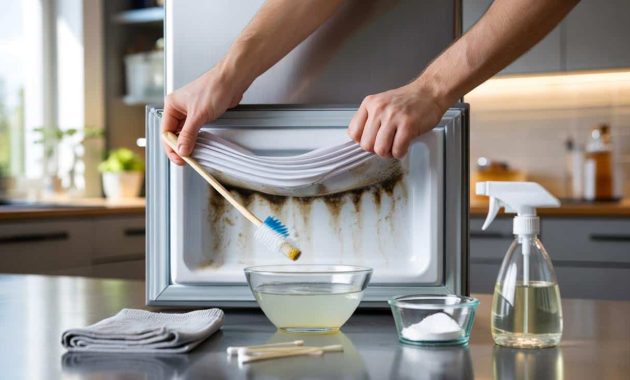
You open the fridge for milk and instead get a whiff of something damp and sour. Your eye slides down the door and there it is: that grayish-black fuzz clinging to the rubber seal, hiding in every fold. You wipe it with a sponge, slam the door, tell yourself it’s sorted. Two weeks later, it’s back. A little darker, a little slimier, like it’s been plotting in the cold.
The rest of the fridge can look spotless, but those gummy seals are where the quiet horror lives. Food crumbs, juice drips, condensation that never dries. It’s like the perfect Airbnb for mold spores.
Once you’ve seen it, you can’t unsee it.
Why fridge seals become a mold magnet
The rubber gasket around your fridge door is doing two jobs at once. It keeps the cold air inside and traps all the tiny spills, crumbs, and condensation that slide down the door. That little groove along the seal? It might as well have a neon sign saying “Moist, dark, and open for mold.”
You don’t notice it at first. You’re focused on the shelves, the drawers, that sticky jar ring. Meanwhile, the seal is quietly collecting orange juice drips, yogurt smears, and steam from hot leftovers you stash inside too fast. Given a bit of time, it starts to grow a fuzzy outline.
Picture this. You’re expecting guests, the kitchen looks Instagram-ready, and you do that last-minute wipe of visible surfaces. You pass your cloth along the outside of the fridge door and feel something rough. You bend down and see a full-on mold colony along the bottom seal, like a dark border.
You grab whatever is under the sink, give it a quick scrub, maybe throw in some strong-smelling cleaner to feel better about it. The stain fades, the smell seems gone, and you move on with the evening. The problem is, that “quick fix” only cleaned what your eyes could see, not what’s tucked deep in the folds.
Two weeks later, same scene, different day, same mold.
Mold loves three simple things: moisture, food, and time. Fridge seals offer all three. Condensation gathers on the cold door edge, food particles stick to the rubber, and the air doesn’t move much down there. That groove in the gasket can trap water for hours.
On top of that, many people clean the inside walls and shelves with care but barely touch the seals, so mold spores can settle and come back after every “wipe down.” *If the root of the mold stays inside the creases of the rubber, the surface will darken again no matter how hard you scrub.*
➡️ This “impossible” French aircraft promises 11 times less energy use
➡️ Toilet debate settled: should the seat stay up or down and what hygiene experts actually recommend
➡️ A tomb that upends history: the first gold jewellery of humanity was here
➡️ Signals Are Building: What’s Brewing In The Pacific Points To A New, More Extreme Climate Phase
The trick isn’t scrubbing harder. It’s cleaning deeper and drying smarter.
The right way to clean fridge seals so mold doesn’t return
Start with a calm, methodical clean, not a panicked scrub. Switch off the fridge if you can, or at least work quickly with the door open. Fill a small bowl with warm water and a splash of mild dish soap, then add a cup of white vinegar. That’s your base mix.
Take a soft toothbrush or a cotton swab and gently pull the seal back with your fingers. Work section by section. Dip the brush in the solution, then scrub along the folds, corners, and especially the bottom edge where moisture pools. Wipe away the dirt with a clean microfibre cloth as you go.
For stubborn black spots, a baking soda paste (baking soda + a few drops of water) on the toothbrush helps lift the stain without tearing the rubber.
This is where most people quietly self-sabotage: they clean the visible bits, feel proud, then close the door on wet seals. That trapped moisture is like handing mold a second chance. You clean, you walk away, mold says thank you.
So once you’ve scrubbed and wiped the gasket, go over it again with a dry cloth. Press the cloth into the folds, don’t just slide along the surface. Leave the fridge door slightly open for 10–15 minutes so that the last humidity can evaporate.
If your kitchen is very humid, you can even point a fan in that direction for a short while. It looks a bit ridiculous, but the rubber dries fully and the smell disappears faster.
Cleaning expert line that actually sticks in your head:
“You don’t win against fridge mold by cleaning harder once a year. You win by cleaning a little deeper, a little more often.”
- Use gentle tools: soft toothbrush, cotton swabs, microfibre cloths.
- Choose smart products: warm soapy water, white vinegar, baking soda paste.
- Target the hidden spots: lower edge of the seal, corners, and folds.
- Dry completely: pat the gasket dry and leave the door ajar for a short time.
- Repeat briefly: a quick monthly check prevents the big “disgusting surprise” clean.
How to stop mold from coming back (without obsessing)
No one wants a new chore added to their week, and yet the fridge is a place you open every single day. That’s why the smartest strategy is to sneak seal care into moments that already exist. After a big grocery run, after wiping a spill, after throwing out old leftovers. Not a “special project,” just a small extra gesture while you’re there.
Once a month, run your fingers along the gasket while the door is open. If it feels sticky, damp, or rough, that’s your cue. Two minutes with a cloth and a bit of vinegar solution now saves you from the horror-movie reveal later.
Let’s be honest: nobody really does this every single day. You’ll forget, you’ll be tired, you’ll close the door with your hip and walk away. The goal isn’t perfection, it’s rhythm.
If mold tends to come back in your fridge, look for the silent culprits. Hot food containers that steam up the inside. Juice cartons that drip down the door. Cracked seals that no longer close properly and let warm, moist air creep in. Sometimes the real fix is reducing those daily “mini leaks” more than any cleaning product.
When the seal stays reasonably dry and crumb-free, mold has nowhere to dig in.
There’s also a moment of quiet satisfaction when you bend down, pull the rubber back, and it’s just… clean. No smell, no black edges, no slime. It’s like finding a tidy drawer in a messy week, a small corner of your home that feels under control.
Some people even say that once they’ve tackled their fridge seals properly, they start seeing other “hidden edges” in their home differently: window tracks, shower door rails, washing machine gaskets. Those places where grime loves to hide because nobody looks closely.
Maybe that’s the real shift this tiny task brings. Not just a cleaner fridge, but a new habit of checking the places we usually ignore, and quietly deciding that mold doesn’t get the last word.
| Key point | Detail | Value for the reader |
|---|---|---|
| Deep clean the folds | Use a toothbrush, vinegar solution, and baking soda paste for stains | Removes mold at the root, not just on the surface |
| Always dry the gasket | Pat with a dry cloth and leave the door slightly open | Stops moisture from feeding new mold growth |
| Create a light routine | Quick monthly check while you already use the fridge | Keeps seals clean without adding heavy chores |
FAQ:
- How often should I clean my fridge seals?For most homes, a light wipe every month and a deeper clean every 3–4 months is enough, unless you’ve had major spills or live in a very humid area.
- Can I use bleach on moldy fridge seals?You can, but it can weaken rubber over time and leave strong fumes. Vinegar and baking soda usually work well without damaging the gasket.
- What if the black stains don’t disappear?Sometimes the mold has stained the rubber permanently even after it’s dead. If it stays rough, cracked, or smells bad, the seal may need to be replaced.
- Why does mold keep coming back on the bottom of the seal?The bottom edge collects more condensation and drips. That zone needs extra drying and slightly more frequent checks.
- How do I know if my fridge seal needs replacing?If you see gaps, cracks, or if a sheet of paper slides out easily when the door is closed, the seal isn’t airtight anymore and a new gasket will do more than any cleaning session.
Originally posted 2026-02-01 08:32:59.