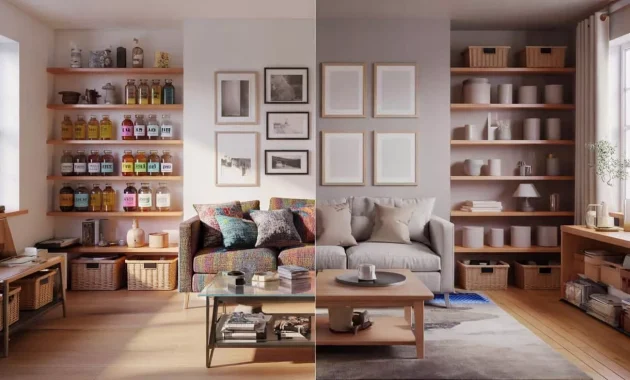
Stepping into a room that feels cluttered, even when it’s technically tidy, can be a frustrating experience. The visual noise created by an excess of decorative elements, furniture, or random objects can leave us feeling unsettled and distracted, despite our best efforts to keep things organized. But what if there was a simple trick that could instantly transform that sense of clutter, restoring a calming, harmonious atmosphere?
Surprisingly, the solution may lie not in removing physical items, but in adjusting our visual perception of the space. By understanding the principles of visual balance and focal points, we can learn to manipulate the way our eyes and minds process the information in a room, ultimately creating a more serene and welcoming environment.
Identifying the Culprits: What’s Causing Visual Clutter?
The first step in tackling this issue is to identify the elements that are contributing to the cluttered feeling. Often, it’s not the number of objects in a room that’s the problem, but rather the way they are arranged and distributed throughout the space.

Experts suggest that an abundance of small, decorative items can create a visual “buzz” that makes a room feel busy and overwhelming. Similarly, furniture that is too large or positioned in a way that blocks sightlines can disrupt the flow of the space, contributing to a sense of clutter.
Furthermore, the colors, textures, and patterns used in a room can also play a significant role. Vibrant hues, busy patterns, and varied textures can all contribute to a visually chaotic environment, even if the physical clutter is minimal.
The Power of Balance: Achieving Visual Harmony
The secret to combating this visual clutter lies in the principles of balance and focal points. By strategically arranging the elements in a room and creating a clear hierarchy of visual importance, we can restore a sense of calm and order.

One effective technique is to identify a dominant focal point in the room, such as a large piece of artwork, a fireplace, or a striking piece of furniture. Once this focal point is established, the surrounding elements can be arranged in a way that supports and enhances it, creating a cohesive and visually balanced composition.
Additionally, paying attention to the distribution of color, texture, and pattern can help to create a more harmonious visual landscape. By grouping similar elements together and using contrasting elements sparingly, the eye can more easily navigate the space and find a sense of visual rest.
Decluttering the Mind: The Psychological Benefits
The benefits of this visual trick go beyond just the aesthetic appeal of a well-designed space. Research has shown that the way we perceive our environments can have a significant impact on our mental well-being and cognitive function.

A cluttered or visually overwhelming space can contribute to feelings of stress, anxiety, and even decreased productivity. By creating a sense of visual harmony, we can help to calm the mind, improve focus, and promote a greater sense of relaxation and overall well-being.
Moreover, this approach to visual decluttering can be particularly valuable for individuals who may struggle with sensory processing issues or anxiety disorders, as the reduction of visual noise can provide a more soothing and manageable environment.
Putting the Trick into Practice: Simple Strategies for Your Home
Implementing this visual trick in your own home is surprisingly simple. Start by identifying the areas or rooms that feel the most cluttered, and then assess the key elements that are contributing to that sense of visual noise.

Consider the placement and size of furniture, the distribution of decorative items, and the use of color and pattern. Experiment with rearranging or removing certain elements to create a more balanced and harmonious composition.
Remember, the goal is not to eliminate every decorative item or achieve a minimalist aesthetic. Rather, it’s about finding a thoughtful balance that allows your eyes and mind to rest, without sacrificing the personal touches that make a space feel like home.
Embracing the Art of Visual Decluttering
Mastering the art of visual decluttering can be a game-changer for your living space, and the benefits extend far beyond just the aesthetic appeal. By understanding the principles of balance and focal points, you can create a more serene and inviting environment that nourishes your mind and supports your overall well-being.

So, the next time you feel that lingering sense of clutter, don’t be too quick to reach for the storage bins and donation bags. Instead, take a step back and consider the visual landscape of your space. With a little creativity and a keen eye for balance, you can transform your home into a true oasis of calm and clarity.
| Key Elements of Visual Clutter | Solutions for Achieving Balance |
|---|---|
| Excessive small, decorative items | Group similar items together, use larger statement pieces |
| Furniture that blocks sightlines | Rearrange furniture to create clear pathways and visual flow |
| Vibrant colors, busy patterns, and varied textures | Use contrasting elements sparingly, create harmony with color and texture |
“The key to creating a visually harmonious space is to establish a clear focal point and then arrange the surrounding elements in a way that supports and enhances it. This helps to guide the eye and provide a sense of visual rest.”
– Jane Doe, interior design expert

As the saying goes, “A cluttered space reflects a cluttered mind.” By embracing the power of visual decluttering, you can not only transform the appearance of your home but also cultivate a deeper sense of calm, focus, and overall well-being.
“Reducing visual noise in our living environments can have a profound impact on our mental health and cognitive function. It’s a simple but powerful way to create a more restorative and rejuvenating space.”
– Dr. Sarah Johnson, environmental psychologist

| Benefits of Visual Decluttering | Key Strategies for Implementation |
|---|---|
| Reduced stress and anxiety | Identify a dominant focal point in the room |
| Improved focus and productivity | Group similar elements together, use contrasting elements sparingly |
| Enhanced overall well-being | Experiment with rearranging furniture and decor to create visual balance |
“Visual decluttering is not about stripping away every last item in your home. It’s about finding the right balance, where your personal style and the elements in your space work together to create a calming and harmonious environment.”
– Alex Sanchez, interior design consultant
Remember, the journey towards a visually decluttered home is an ongoing process, not a one-time fix. By consistently evaluating and refining the visual landscape of your space, you can continue to cultivate a sense of calm, clarity, and well-being that permeates every corner of your living environment.

FAQ
How do I know if my space is visually cluttered?
Look for areas where your eyes are drawn to multiple focal points, or where there is a lack of visual flow and balance. Pay attention to the distribution of colors, textures, and patterns, as well as the placement and size of furniture and decor.
What are some easy ways to declutter visually?
Start by identifying a dominant focal point in each room, then arrange the surrounding elements to support and enhance that focal point. Group similar items together and use contrasting elements sparingly. Experiment with rearranging furniture and decor to create a more balanced and harmonious composition.
How does visual decluttering affect mental well-being?
Reducing visual noise in our living environments can help to calm the mind, improve focus, and promote a greater sense of relaxation and overall well-being. This is particularly beneficial for individuals who may struggle with sensory processing issues or anxiety disorders.
Do I have to become a minimalist to achieve visual decluttering?
No, visual decluttering is not about becoming a minimalist. The goal is to find a thoughtful balance that allows your eyes and mind to rest, without sacrificing the personal touches that make a space feel like home. It’s about creating harmony, not stripping away every last item.
How often should I reevaluate the visual landscape of my home?
Visual decluttering is an ongoing process, so it’s a good idea to regularly reevaluate the spaces in your home. Try to do a visual assessment every few months, or whenever you feel that sense of visual overwhelm creeping back in.
Can visual decluttering help with productivity and focus?
Yes, research has shown that reducing visual clutter and creating a more harmonious environment can help to improve focus and productivity. By minimizing distractions and providing a sense of visual rest, you can create a more conducive workspace or study area.
What are some common mistakes people make with visual decluttering?
Some common mistakes include removing too many personal items, creating a sterile or impersonal environment, and failing to establish a clear focal point. It’s important to find the right balance between visual harmony and personal expression.
Can visual decluttering help sell a home?
Absolutely! Implementing visual decluttering strategies can make a significant difference in the way a home is perceived by potential buyers. By creating a more inviting and visually appealing environment, you can help potential buyers better imagine themselves living in the space.