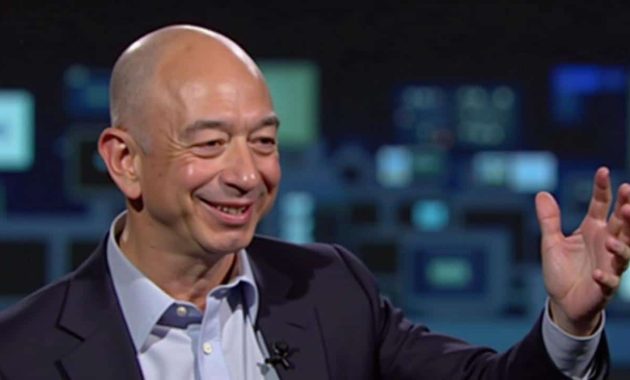
At a tech conference in Washington, the room went strangely quiet when Jeff Bezos said it. No grand slide, no dramatic drumroll. Just a calm billionaire in a navy blazer explaining that in about 20 years, “millions of people” will be living and working in space, commuting above the clouds like it’s the most normal thing in the world.
You could almost hear the mental eye-rolls.
Outside that room, headlines are full of wars, climate chaos, layoffs. People are struggling to pay rent, not book a ticket to orbit. Yet Bezos doesn’t just sound optimistic. He sounds almost confused that anyone could be so gloomy about the future.
The gap between that vision and our daily reality says a lot about where we are right now.
Jeff Bezos vs. the age of doomscrolling
Bezos has been repeating this idea for years: space is not a billionaire’s playground, it’s our next industrial zone. On stage, he speaks about orbital habitats the way a real-estate developer describes a new suburb. Artificial gravity, parks, rivers, schools. The whole thing delivered in his measured, almost nerdy tone.
Meanwhile, many of us are just trying to survive rising bills and shrinking hope. It’s hard to reconcile your grocery receipt with the idea of kids doing homework in a spinning cylinder 1,000 kilometers above Earth. The contrast feels almost indecent.
Yet Bezos doesn’t flinch. He doesn’t share the prevailing pessimism at all.
He has a name for the project: Blue Origin’s long-term ambition is to build giant space habitats where millions can live. Not dusty Mars bases, but lush orbital cities inspired by physicist Gerard O’Neill. Picture rotating cylinders with forests inside, clean energy, endless sunlight.
When he says “20 years,” he doesn’t mean everyone. He’s talking about the first wave: workers, engineers, technicians, early settlers who will live in space stations that feel closer to cruise ships than grim bunkers. Blue Origin is already flying its New Shepard rocket on tourist hops, while developing its heavier New Glenn launcher and a private space station project called Orbital Reef.
The money isn’t a side note. He’s literally funding this with Amazon wealth, selling his own stock to build rockets.
➡️ This career allows workers to increase earnings without changing roles
➡️ The forgotten kitchen liquid that effortlessly turns grimy cabinets smooth, clean, and shiny again
➡️ Kate Middleton revives an abandoned royal habit and commentators can’t agree on what it really means
➡️ A legendary rock band announces its retirement after 50 years, leaving behind the hit everyone knows
➡️ The €72.8 billion price tag for France’s new nuclear flagship is tiny next to the €200 billion grid overhaul
➡️ Psychologists say that waving “thank you” at cars while crossing the street is strongly associated with specific personality traits
➡️ Honda N-One RS 2026: the baby Civic Type R for €12,500 we wish we could buy
➡️ Gardeners urged to act now for robins with a 3p kitchen staple you should put out this evening
His logic is brutal and simple: Earth is a fragile garden, not a factory floor. Heavy industry, he says, should move off-planet. Mines, refineries, dirty manufacturing would run in space, powered by solar energy, while Earth becomes more like a protected national park.
Right now, that sounds wildly out of sync with burned-out workers and collapsing ecosystems. Yet history is full of people who sounded ridiculous before the infrastructure caught up. Commercial air travel was once a circus stunt. Smartphones were sci-fi props.
Let’s be honest: almost nobody can picture their own grandchildren as orbital commuters. But Bezos is betting that physics and incentives will slowly force us toward that path, even if our mood today is stuck in doomscroll.
How Bezos’s space dream is built, brick by brick
Behind the big quotes, the method is surprisingly methodical. Blue Origin moves slower than SpaceX, but it moves. Suborbital flights to test reliability. Reusable rockets to lower costs. Lunar landers to secure NASA contracts. Private stations to replace the aging ISS.
Bezos always repeats the same mantra: “Gradatim ferociter” – step by step, ferociously. No giant leap, just many small, boring ones. That’s the part headlines rarely love, because “Another test firing successful” doesn’t go viral like “Billionaire wants millions in space.”
Still, this is how every huge shift happens. Not with a single launch, but with a thousand quiet tests at 3 a.m. in the desert.
If you feel disconnected from this story, you’re not alone. We’ve all been there, that moment when some tech visionary promises a “better future” while your phone battery dies at 18% and your rent just went up again. The emotional gap is real.
One common mistake is to think that because a vision isn’t solving your problem this month, it’s automatically useless or arrogant. Another mistake is the opposite: swallowing the hype whole, like space condos will erase inequality by 2045. Both extremes miss the point.
The real question is more grounded: how will space tech quietly slip into our daily lives long before any of us move upstairs?
Bezos himself sounds almost tired of the pessimism.
“I don’t understand the defeatist attitude,” he said recently. “Our grandparents built incredible infrastructure with far fewer tools than we have. We are capable of so much more than we give ourselves credit for.”
There’s a plain-truth sentence hidden in his message: *pessimism feels rational, but it doesn’t build anything.*
If you strip away the billionaire aura, his space bet translates into a few concrete levers that will affect regular people long before orbital suburbs arrive:
- Cheaper launches – Lower costs mean more satellites for climate monitoring, communications, and science.
- New industries in orbit – Manufacturing fiber optics, medicines, or materials in microgravity could reshape jobs on Earth.
- Energy and climate tools – Better space infrastructure can supercharge solar power and planetary observation.
- Space as infrastructure, not spectacle – Routine access to orbit changing logistics the way container ships did.
- New migration stories – A future where “moving for work” might mean leaving the planet for a few years.
Living with a sky full of contradictions
There’s something almost jarring about Bezos’s confidence at a time when so many younger people describe themselves as anxious, exhausted, or simply done. On TikTok, “doomer” memes spread faster than any space launch livestream. Climate reports read like countdown timers.
Yet that’s exactly why his stance hits a nerve. He’s not saying the future will be easy. He’s saying it will be enormous, whether we feel ready or not. That in two decades, our main problem might not be “Will anyone live in space?” but “Who gets to go, and on what terms?”
Optimism at this scale is not gentle. It bulldozes right through our fatigue.
| Key point | Detail | Value for the reader |
|---|---|---|
| Bezos envisions millions living in space | Orbital habitats, off-planet industry, Earth as a preserved “garden” | Helps readers reframe space as future infrastructure, not distant sci-fi |
| Pessimism vs. long-term bets | Current mood is gloomy, but large projects are built across decades, not news cycles | Offers a way to think beyond daily doomscrolling without denying present struggles |
| Step-by-step space strategy | Reusable rockets, private stations, NASA partnerships, gradual cost reduction | Makes a huge, abstract vision feel more concrete, traceable, and debatable |
FAQ:
- Is Jeff Bezos serious about “millions of people” in space in 20 years?He’s serious about laying the groundwork now so that, within a couple of decades, space habitats and large-scale orbital work become technically and economically feasible. The exact number and date are more rallying cry than strict calendar.
- Does this mean ordinary people will move to space soon?Not in the sense of buying a cheap apartment in orbit. The early “millions” would likely be workers, specialists, and long-term residents tied to industry and research, much like early oil towns or tech hubs on Earth.
- How does this help people on Earth right now?Cheaper access to space can boost climate science, global internet coverage, navigation, disaster monitoring, and new kinds of manufacturing that ultimately feed back into everyday products and services.
- Is this just a billionaire vanity project?There is ego, branding, and competition, of course. At the same time, states and companies have always driven big infrastructure together: railways, aviation, the internet. Space is following the same messy pattern.
- What if the pessimists are right and this never happens?Then we still get better satellites, better climate tools, stronger space science, and a clearer idea of the limits of private ambition. The attempt itself will reshape policy, tech, and our sense of what’s possible, even if the “millions in orbit” end up being a smaller, slower reality.