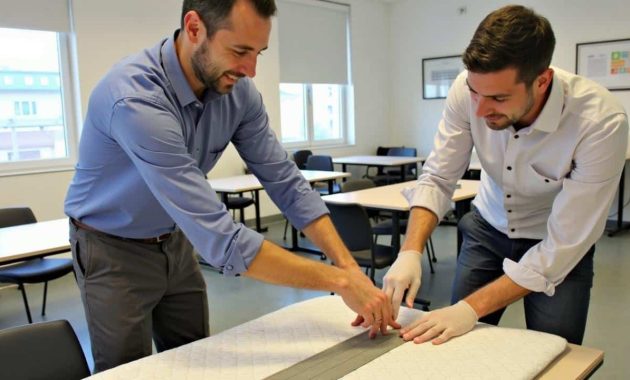
The old industrial warehouse on the outskirts of Valladolid still smells faintly of metal and dust. But this morning, the air is different. Piled up against the walls are mattresses of all shapes and sizes, their springs and fabrics no longer destined for the landfill. Instead, these discarded beds are about to embark on a remarkable second life – as the building blocks of the future.
In a groundbreaking experiment, researchers at the University of Valladolid have discovered a way to transform the waste from old mattresses into a sustainable construction material. By repurposing these discarded items, they’re not only reducing environmental impact but also paving the way for a circular economy where waste becomes the raw material for new products.
This milestone in Spanish science is set to reverberate far beyond the borders of Valladolid, offering a blueprint for how we can rethink the way we build and live in our cities.
From Abandoned Mattresses to Future Walls
The journey from a worn-out mattress to a robust building material might seem like an unlikely one, but the researchers at the University of Valladolid have cracked the code. By meticulously deconstructing and processing the components of discarded beds, they’ve developed a unique construction aggregate that can be used to create everything from bricks and blocks to insulation panels.
The key, according to lead researcher Dr. Ana Martínez, lies in the diverse materials found in a typical mattress. “Mattresses contain a wealth of resources – from metal springs and foam to textiles and wood,” she explains. “By carefully separating and refining these elements, we can create a composite material that is surprisingly strong, durable, and versatile.”
The process begins with the dismantling of the mattresses, a task carried out with the help of local recycling centers. The various components are then sorted, cleaned, and processed using specialized equipment, transforming them into a fine granular material that can be easily incorporated into construction mixes.
Transforming Waste into Sustainable Building Blocks
The potential of this mattress-derived building material goes beyond its impressive technical specifications. By repurposing waste, the researchers are tackling two pressing challenges facing the construction industry: the environmental impact of traditional building materials and the growing problem of mattress disposal.
According to the European Mattress Industry Federation, an estimated 30 million mattresses are discarded each year in Europe alone, contributing to the growing burden on landfills and incinerators. By diverting these discarded beds from the waste stream, the Valladolid researchers are not only reducing the environmental footprint of construction but also finding a practical solution to a mounting waste management issue.
“This is a win-win scenario,” says Dr. Martínez. “We’re creating a sustainable building material while also addressing the mattress disposal crisis. It’s a truly circular approach that can have a significant impact on the way we design and construct our cities.”
The Implications for Our Homes and Cities
The implications of this breakthrough go far beyond the walls of the Valladolid warehouse. As the world grapples with the need for more sustainable and resource-efficient construction practices, the Spanish researchers’ findings offer a promising solution that could reshape the future of the built environment.
By incorporating mattress-derived materials into construction, buildings can be made more energy-efficient, thanks to their improved insulation properties. This, in turn, can lead to lower energy consumption and reduced carbon emissions, contributing to the broader goal of creating more sustainable cities.
Moreover, the use of repurposed mattress components in construction can have a positive impact on the local economy, creating new jobs and industries around the recycling and processing of these discarded items. It’s a model that could be replicated in communities around the world, turning waste into a valuable resource.
A Spanish Experiment with Global Echoes
The work being done in Valladolid is not just a local initiative; it has the potential to reverberate across the globe. As governments and policymakers grapple with the challenges of sustainable development, the Spanish researchers’ innovative approach to mattress recycling could inspire similar efforts in other parts of the world.
“This is a truly groundbreaking project that has implications far beyond the borders of Spain,” says urban planning expert Dr. Luisa Fernández. “By demonstrating the viability of transforming waste into building materials, the team in Valladolid is paving the way for a more circular and sustainable future for our cities.”
As the old industrial warehouse continues to buzz with activity, the mattress-derived construction materials are being put to the test, undergoing rigorous assessments to ensure their safety and performance. But the researchers are confident that this milestone in Spanish science will soon become a global beacon, inspiring a new era of sustainable construction that puts waste at the heart of the solution.
Experts Weigh In on the Mattress-to-Building Breakthrough
“This is a truly innovative approach that has the potential to transform the construction industry. By repurposing waste mattresses, the researchers in Valladolid are not only reducing environmental impact but also creating a valuable new resource for sustainable building.” – Dr. Luisa Fernández, urban planning expert
“The ability to transform discarded mattresses into high-performance construction materials is a game-changer. This could be a blueprint for how we rethink waste management and create a more circular economy.” – Dr. Carlos Ramírez, materials science researcher
“This breakthrough in Valladolid is a testament to the power of interdisciplinary collaboration. By bringing together expertise from fields like engineering, materials science, and waste management, the team has found a solution that could have far-reaching implications for our cities and our planet.” – Dr. Sofía Gómez, sustainability policy expert
Turning Trash into Treasure: The Circular Economy in Action
The work being done in Valladolid is a shining example of the circular economy in action – a model that seeks to eliminate waste and keep resources in use for as long as possible. By repurposing discarded mattresses, the researchers are demonstrating the immense potential of this approach to transform waste into valuable products.
As the world grapples with the growing challenge of sustainable development, initiatives like the one in Valladolid offer a glimmer of hope. By finding innovative ways to turn trash into treasure, we can not only reduce our environmental impact but also create new economic opportunities and build a more resilient future.
In the end, the success of the Valladolid experiment lies not just in the technical achievements, but in the broader shift it represents – a shift towards a more conscious and responsible approach to the way we design, build, and live in our cities. It’s a milestone that could pave the way for a more sustainable and equitable future, one mattress at a time.
FAQs: Mattress Waste as Building Material
What are the key components of a mattress that can be repurposed for construction?
The main components of a mattress that can be repurposed for construction include metal springs, foam, textiles, and wood. These materials are carefully separated, cleaned, and processed to create a composite construction aggregate.
How durable and reliable are the buildings made with mattress-derived materials?
The researchers at the University of Valladolid have conducted extensive testing on the durability and performance of the mattress-derived construction materials. The results have shown that they meet or exceed the standards for traditional building materials, making them a reliable and sustainable option.
What are the environmental benefits of using mattress waste in construction?
By repurposing discarded mattresses, the construction process using this material significantly reduces waste and the environmental impact associated with traditional building materials. It also helps address the growing problem of mattress disposal, which is a major challenge in many countries.
How can this technology be scaled and replicated in other regions?
The researchers in Valladolid have developed a scalable and replicable process for turning mattress waste into construction materials. They are working to share their findings and collaborate with partners around the world to help implement similar initiatives in other communities.
What are the potential economic benefits of this circular approach to construction?
The use of mattress-derived construction materials can create new jobs and industries around the recycling and processing of discarded beds. It also has the potential to reduce the overall cost of construction by providing a more affordable and sustainable alternative to traditional building materials.
How does this breakthrough in Spain fit into the global push for more sustainable cities and buildings?
The work being done in Valladolid aligns with the global shift towards more sustainable and resource-efficient construction practices. By demonstrating the viability of repurposing waste as a building material, the Spanish researchers are contributing to the broader goal of creating more eco-friendly and circular cities.
What are the next steps for the Valladolid research team and their mattress-to-building initiative?
The researchers in Valladolid are currently focused on scaling up their production and exploring partnerships with construction companies and policymakers to help integrate their mattress-derived materials into mainstream building projects. They are also working to expand their research into other types of waste-to-building solutions.
How can the public and private sectors collaborate to support and replicate this innovative approach?
Successful implementation of the mattress-to-building technology will require collaboration between the public and private sectors. This could involve government funding and policy support, as well as partnerships with construction companies, waste management providers, and local communities to help scale and replicate the Valladolid model.