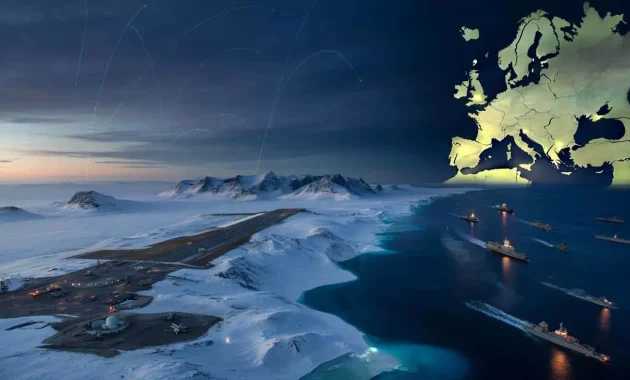
Greenland, long regarded as a strategic backwater, has suddenly emerged as a flashpoint in global geopolitics. As 2027 looms, the Arctic island’s unique status within the Kingdom of Denmark and its deep ties to US military interests have collided with wider international tensions, leaving European leaders unsettled and scrambling to respond.
This sudden shift in Greenland’s prominence has caught many by surprise, forcing policymakers and analysts to re-evaluate the island’s role in the evolving global landscape. The reverberations of Greenland’s newfound centrality are being felt across Europe, where leaders must now navigate a delicate web of competing interests and potential consequences.
The situation is further complicated by the approaching 2027 deadline, which carries significant political and strategic implications. As the world watches anxiously, the question remains: how will Europe navigate this uncharted territory, and what will the long-term implications be for the region’s stability and security?

Greenland’s Transformation from Strategic Backwater to Frontline
Greenland has long been overshadowed by its larger neighbors, with its remote location and sparse population often relegating it to the margins of global affairs. However, the island’s strategic importance has grown exponentially in recent years, driven by a confluence of factors that have thrust it into the spotlight.
The melting of the Arctic ice cap has opened up new shipping routes and access to previously untapped natural resources, making Greenland’s geopolitical position increasingly vital. Additionally, the island’s role as a key hub in the US military’s global network has become increasingly prominent, with the expansion of existing facilities and the potential for new strategic investments.
These developments have not gone unnoticed by European leaders, who now find themselves grappling with the implications of Greenland’s newfound prominence. The delicate balance of Danish sovereignty, American power, and European security interests has been thrown into disarray, creating a complex web of diplomatic and military considerations.

The Importance of Greenland to Washington
Greenland’s strategic value to the United States has long been recognized, but recent years have seen a renewed emphasis on the island’s role in Washington’s global calculus. The expansion of the Thule Air Base, a critical US military installation, has been a key priority, as has the exploration of potential new areas for investment and collaboration.
The US has also sought to increase its influence in Greenland through economic and political means, leveraging its deep historical ties and the island’s dependence on Danish and American support. This has led to tensions with Denmark, which has traditionally maintained a strong grip on Greenland’s affairs, and has raised concerns among European allies about the potential for a shift in the regional balance of power.
As the 2027 deadline approaches, the US has intensified its efforts to solidify its position in Greenland, fueling European anxieties and prompting a flurry of diplomatic and military activity across the continent.

Danish Sovereignty, American Power, and European Anxiety
The complex web of interests and alliances surrounding Greenland has created a delicate balance that European leaders are now struggling to maintain. Denmark’s sovereignty over the island, which has endured for centuries, is being tested by the growing influence of the United States and the potential implications for the region’s security and stability.
European capitals are closely monitoring the situation, aware that any misstep or miscalculation could have far-reaching consequences. The prospect of a confrontation between Danish and American interests, or the potential for Greenland to become a flashpoint in the wider geopolitical competition, has left many European leaders deeply unsettled.
As the 2027 deadline approaches, the pressure on European leaders to find a diplomatic solution that preserves their interests and maintains regional stability is mounting. The stakes are high, and the potential consequences of failure could be severe.

2027: A Political Deadline, Not Just a Date on a Slide
The year 2027 has taken on a symbolic significance in the ongoing Greenland saga, with the approaching deadline carrying important political and strategic implications. For many European leaders, 2027 represents a critical juncture, a point at which the delicate balance of power in the region could be irrevocably altered.
The significance of 2027 extends beyond the realm of military planning and strategic positioning. It is a political deadline, a marker that carries weight in the realm of public opinion and electoral politics. European leaders are acutely aware that their handling of the Greenland situation could have a profound impact on their domestic political fortunes, with the potential for public backlash or a shift in regional alliances.
As the clock ticks down to 2027, the pressure on European leaders to find a workable solution that preserves their interests and safeguards regional stability is mounting. The stakes have never been higher, and the consequences of failure could reverberate for years to come.

European Capitals Respond: Divergent Approaches and Shared Concerns
The Greenland crisis has elicited a range of responses from European capitals, each reflecting their unique geopolitical and strategic considerations. While there is a shared sense of unease and a desire to maintain regional stability, the approaches taken by individual countries have been marked by divergence and, at times, even tension.
Some European leaders have advocated for a more assertive stance, calling for a strengthening of Denmark’s grip on Greenland and a more robust response to American pressure. Others have favored a more conciliatory approach, seeking to balance the competing interests and avoid a direct confrontation with the United States.
Underlying these differing strategies is a common concern: the fear that Greenland could become a flashpoint in the wider geopolitical competition, with far-reaching implications for European security and stability. As the 2027 deadline looms, European leaders are engaged in a delicate dance, seeking to navigate this complex landscape and preserve their interests in the face of an uncertain future.

Key Terms and Scenarios Shaping the Debate
The Greenland crisis has given rise to a host of complex and interrelated terms and scenarios that are shaping the ongoing debate. From “Arctic sovereignty” to “US military primacy,” the lexicon of this unfolding situation is a reflection of the high stakes and the multifaceted nature of the challenge facing European leaders.
Scenarios such as the potential for a military confrontation between Danish and American forces, the risk of Greenland becoming a “geopolitical bargaining chip,” and the possibility of a shift in the regional balance of power have all been the subject of intense scrutiny and debate. As European leaders grapple with these issues, the need for clear-eyed analysis and strategic foresight has never been more pressing.
Ultimately, the Greenland crisis is a testament to the complexity of modern geopolitics, where the actions of a small island can have far-reaching implications for the stability and security of an entire region. As the 2027 deadline looms, the world watches with bated breath, waiting to see how Europe will navigate this uncharted territory.

| Key Developments in the Greenland Crisis | Timeline |
|---|---|
| Increased US military presence and investment in Greenland | 2015 – present |
| Tensions between Denmark and the US over Greenland’s status | 2018 – present |
| Concerns among European allies about the shifting geopolitical landscape | 2020 – present |
| Intensified US pressure on Greenland as the 2027 deadline approaches | 2025 – present |
“Greenland has become a key piece on the global chessboard, and the moves being made by the US and its allies will have far-reaching consequences for the entire region. The 2027 deadline is not just a date on a slide – it’s a political and strategic inflection point that will shape the future of European security for years to come.”
– Dr. Amelia Winters, Senior Analyst at the European Council on Foreign Relations
“The US is clearly intent on solidifying its position in Greenland, and this is creating a major headache for European leaders. They’re caught between the need to maintain their own sovereignty and the desire to preserve regional stability and security. It’s a delicate balancing act, and the stakes couldn’t be higher.”
– Professor Michael Andersen, Director of the Center for Arctic Studies, University of Copenhagen

“Greenland has always been a strategic backwater, but now it’s at the center of a global power struggle. The decisions made in the next few years will have profound implications for the future of the Arctic region and the broader geopolitical landscape. European leaders need to tread carefully and be prepared for the unexpected.”
– Julianne Baird, Senior Fellow at the Atlantic Council
As the world watches with bated breath, the Greenland crisis has become a litmus test for European unity and the enduring strength of transatlantic relations. The stakes are high, and the potential consequences of failure could be severe. The question now is: how will Europe navigate this uncharted territory, and what will the long-term implications be for the region’s stability and security?
What is the significance of the 2027 deadline in the Greenland crisis?
The year 2027 has taken on symbolic and strategic importance in the ongoing Greenland saga. For European leaders, 2027 represents a critical juncture, a point at which the delicate balance of power in the region could be irrevocably altered. The deadline carries important political and military implications, as it is seen as a potential inflection point in the wider geopolitical competition for influence in the Arctic.
How are European capitals responding to the Greenland crisis?
European capitals have adopted a range of approaches in response to the Greenland crisis, reflecting their unique geopolitical and strategic considerations. While there is a shared sense of unease and a desire to maintain regional stability, the responses have been marked by divergence, with some leaders calling for a more assertive stance and others favoring a more conciliatory approach. Underlying these differing strategies is a common concern about Greenland becoming a flashpoint in the wider geopolitical competition.
What is the role of the United States in the Greenland crisis?
The United States has played a central role in the Greenland crisis, with the island’s strategic value to Washington being a key driver of the ongoing tensions. The US has sought to expand its military and economic presence in Greenland, leading to tensions with Denmark and raising concerns among European allies about the potential for a shift in the regional balance of power. As the 2027 deadline approaches, the US has intensified its efforts to solidify its position in Greenland, further exacerbating the crisis.
How has Greenland’s geopolitical significance evolved in recent years?
Greenland’s strategic importance has grown exponentially in recent years, driven by a confluence of factors. The melting of the Arctic ice cap has opened up new shipping routes and access to previously untapped natural resources, making Greenland’s geopolitical position increasingly vital. Additionally, the island’s role as a key hub in the US military’s global network has become increasingly prominent, with the expansion of existing facilities and the potential for new strategic investments. These developments have thrust Greenland from the margins of policy papers to the center of European war-gaming and diplomatic considerations.
What are the potential consequences of the Greenland crisis for European security and stability?
The Greenland crisis has the potential to have far-reaching implications for European security and stability. The fear is that Greenland could become a flashpoint in the wider geopolitical competition, with the potential for military confrontation or a shift in the regional balance of power. European leaders are acutely aware that the handling of this crisis could have a profound impact on their domestic political fortunes, with the potential for public backlash or a shift in regional alliances. Ultimately, the stakes are high, and the consequences of failure could reverberate for years to come.
How are experts and analysts framing the Greenland crisis?
Experts and analysts have framed the Greenland crisis in a variety of ways, highlighting the complex and multifaceted nature of the challenge facing European leaders. Some have emphasized the strategic importance of the island, noting its role in the US military’s global network and the implications of the melting Arctic ice cap. Others have focused on the delicate balance of Danish sovereignty, American power, and European security interests, cautioning that Greenland could become a “geopolitical bargaining chip” in the wider competition for influence. Underlying these perspectives is a shared concern about the potential for Greenland to become a flashpoint in the geopolitical landscape.
What are the key factors shaping the debate around the Greenland crisis?
The Greenland crisis has given rise to a host of complex and interrelated terms and scenarios that are shaping the ongoing debate. From “Arctic sovereignty” to “US military primacy,” the lexicon of this unfolding situation reflects the high stakes and the multifaceted nature of the challenge facing European leaders. Scenarios such as the potential for a military confrontation between Danish and American forces, the risk of Greenland becoming a “geopolitical bargaining chip,” and the possibility of a shift in the regional balance of power have all been the subject of intense scrutiny and debate. As European leaders grapple with these issues, the need for clear-eyed analysis and strategic foresight has never been more pressing.
How has Greenland’s relationship with Denmark and the United States evolved over time?
Greenland’s relationship with Denmark and the United States has been a complex and evolving one. Formally part of the Kingdom of Denmark, Greenland has long been deeply tied to US military strategy, with the Thule Air Base serving as a critical hub in the US global network. In recent years, the US has sought to expand its influence in Greenland, leading to tensions with Denmark as it tries to maintain sovereignty over the island. The delicate balance of these relationships has been thrown into disarray by the island’s growing geopolitical significance, creating a complex web of diplomatic and military considerations that European leaders are now grappling with.
Originally posted 2026-02-11 13:24:03.