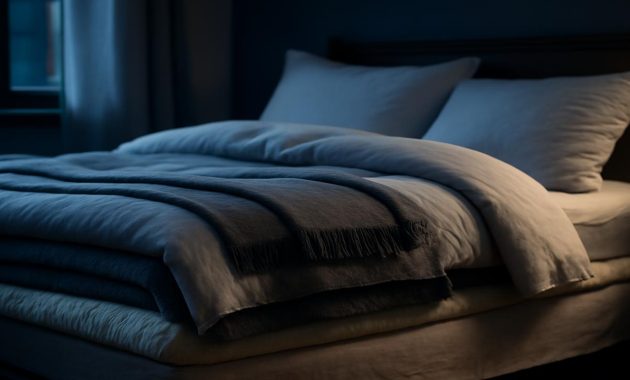

The first time I learned the Scandinavian trick, it was snowing sideways outside a small wooden cabin on the edge of a Norwegian fjord. The wind made the windows rattle like loose teeth, and the air in the bedroom felt sharp enough to bite. I remember slipping between the sheets expecting that familiar nightly ritual of curling into myself, shoulders tight, feet like ice blocks. But instead, something else happened. In the dim yellow glow of a bedside lamp, my host handed me what looked like a thick, soft marshmallow of a blanket and said with a little shrug, “Now, you’ll sleep like a Scandinavian.”
The Night the Duvet Changed Everything
I hadn’t realized yet that this wasn’t just a blanket. It was the quiet, secret technology of northern winters: the individual duvet. No top sheet. No shared covers. No tug-of-war. Just a personal cocoon of warmth that, as I’d soon learn, might be the simplest, most reliable sleep hack I’d ever try.
The bed was already made in a way that looked a little odd to me. Two narrow duvets lay side by side, each folded back neatly like its own little sleeping pod. There was no single, wide comforter stretching across the mattress, no army-cornered top sheet, no decorative quilt trying to do the heavy lifting of actual warmth. Just two individual nests, waiting.
Outside, the world felt frozen—fresh snow clung to the dark silhouettes of pine trees, and the road to the nearest town disappeared into a ghostly white blur. Inside the cabin, though, the air smelled faintly of pine wood and coffee, and the wooden floor creaked softly as we moved about. The heating was modest. Definitely not the tropical blast many of us crank up at home when winter comes knocking.
“Don’t you get cold at night?” I asked my host, eyeing the minimal bedding.
She laughed. “Never. We sleep cool, but we stay warm.”
That paradox—cool air, warm body—is the quiet genius of Scandinavian sleep culture. And it’s built around one simple, time-tested trick.
The Fail-Safe Trick: Your Own Personal Cloud of Warmth
In much of Scandinavia, couples don’t share one big blanket. Each person gets their own individual duvet—often filled with down or a high-quality synthetic alternative, and carefully chosen for the right warmth level. It sounds almost too simple to be revolutionary. But as anyone who’s spent the night wrestling over covers, sweating under a heavy blanket, or shivering in a partner’s preferred “arctic” bedroom can tell you: bedding is personal.
The Scandinavian solution is to treat it that way.
Imagine this: instead of a giant shared comforter that must somehow satisfy two very different human thermostats, the bed is made with two separate duvets, side by side. Each person can pull theirs up higher, fold it back, wrap themselves like a burrito, or kick a leg out without exposing the other to a sudden blast of cold air. No one wakes up half uncovered, clinging to the last corner of the blanket like a shipwreck survivor hanging onto driftwood.
This isn’t just about marital diplomacy. It’s a system designed to keep your body at a steady, comfortable temperature all night long. And that’s where the better sleep comes in.
Why Warm Bodies and Cool Air Make Magic
Scandinavians tend to keep bedrooms cool—often cooler than many people from warmer climates would dare. A slightly open window in winter isn’t unheard of. Thick curtains help block drafts, but the room itself is far from toasty. The warmth comes from the duvet, not the air.
This aligns surprisingly well with what sleep researchers keep telling us: the body sleeps best when the room is on the cooler side, while the bedding keeps your core comfortable. Your body temperature naturally drops at night; if your environment is too warm, you’re more likely to toss, overheat, or wake up groggy and sweaty. Too cold, and your muscles tense, your feet never quite thaw, and your body fights sleep rather than sinking into it.
The individual duvet solves that delicate equation by letting you customize your own climate. Your partner can sleep under a lighter, cooler duvet while you swaddle yourself in a thicker, winter-weight one. Both of you, in theory, get exactly what you need.
The Quiet Ritual of Making a Scandinavian Bed
There’s also a small, almost meditative act in the way Scandinavians make their beds. The top sheet is often skipped entirely. Instead, the duvet is placed inside a washable cover—think of it like a big, soft, envelope-style pillowcase. In the morning, the duvet is pulled back and aired out. Windows sometimes open for a few minutes, even in winter, to let in a rush of fresh, crisp air that bumps against the lingering warmth of the bed.
It sounds basic. But there is a strange satisfaction to it: no layers of tangled sheets, no wrestling with an extra flat sheet that always ends up twisted at your feet. Just mattress, fitted sheet, duvet. Done.
When my host showed me how to slide into bed “the Scandinavian way,” she did it with a practiced ease. She flipped one side of the duvet open, slipped her legs underneath, then pulled it up over her shoulders, tucking the edges close to her body. It was like stepping into a personal micro-climate.
“Your body will do the rest,” she said. “Just give it a few minutes.”
And it did. My feet, which are infamous for remaining stubbornly cold until approximately June, warmed up gently, not with a sudden blast of heat, but with a slow, wrapping coziness that spread from toes to shoulders. I didn’t feel smothered. I didn’t wake up sweating in the middle of the night. I didn’t wake up fighting for more blanket. I just slept—soundly, deeply, and longer than I had in weeks.
The Science Hiding in a Simple Duvet
Behind this deceptively humble bedding habit, there’s a logic that borders on elegant. A good duvet traps warm air around your body, creating a thin layer of insulation that adjusts as you shift and move. Down, in particular, is brilliant at this—it’s light and fluffy, but the tiny clusters create millions of air pockets that hold in heat without making you feel crushed under weight.
Meanwhile, the cool air of the bedroom keeps your head, neck, and face comfortable. You’re not lying in a sealed, overheated box. Your breathing feels easy. Your skin isn’t begging for cool relief. That balance—warm where you need it, cool where you don’t—quietly keeps you in the deeper stages of sleep for longer.
And because each person manages their own little climate, there’s no thermal compromise. No one is stuck shivering because the other one “runs hot.” No one is sweating because their partner loves to pile on blankets like they’re bedding down for a polar expedition.
How to Bring the Scandinavian Trick Into Your Own Bedroom
You don’t have to live within sight of a fjord or own a log cabin to sleep like a Scandinavian. You don’t even need snow. What you need is a mindset shift: instead of designing your bed for how it looks in daylight, design it for how it feels at 2 a.m.
Here’s the heart of the Scandinavian trick, in practical terms:
- Use individual duvets when two people share a bed.
- Skip the top sheet; use a duvet cover you can wash regularly.
- Keep the bedroom cooler than you think you “need.”
- Choose duvet warmth levels that actually match each person, not the average of both.
It can feel strange at first, especially if you grew up with the cultural script that couples share one big blanket as a symbol of togetherness. But connection doesn’t come from shivering under a too-thin comforter or stealthily stealing more blanket at 3 a.m. It comes from waking up rested enough to actually like each other.
Choosing the Right Duvet: A Tiny Guide
When Scandinavians shop for duvets, they don’t just grab the first fluffy one they see. They think in terms of “tog” or warmth levels, seasonal weight, and filling. Many homes actually own more than one duvet per person: a lighter one for summer, a medium or heavy one for winter. Some use all-season duvets that can be snapped together or separated.
Here’s a simple comparison to help visualize how a Scandinavian-style setup might differ from a more typical shared blanket arrangement:
| Setup | Shared Blanket | Scandinavian-Style Duvets |
|---|---|---|
| Blanket Type | One large comforter for both | Two individual duvets, side by side |
| Temperature Control | Both must accept same warmth level | Each person picks their own warmth |
| Night Movements | Tug-of-war, drafts, exposed sides | Minimal disturbance, fewer drafts |
| Washing & Hygiene | Top sheet, blanket, and comforter to manage | Duvet cover easily removed and washed |
| Sleep Quality | More likely to wake from discomfort | More stable warmth, deeper sleep |
The beauty of this system is that it’s modular. You can start small. Maybe you and your partner each choose a duvet that truly matches your sleeping preferences. Maybe you just try it for winter and see how your body responds.
Cool Air, Warm Heart: The Emotional Side of Sleeping Better
What hangs in the cold Scandinavian air at night isn’t only practicality—it’s a quiet trust in the body’s ability to self-regulate if we give it the right conditions. There’s a friendliness to the whole setup: here’s your softness, your warmth, your space. Take what you need. Sleep well.
When I brought the idea home and introduced it to my own bedroom, it felt a bit like smuggling in a secret from another climate. At first, it felt unconventional, almost rebellious, to lay two slim duvets side by side instead of one big one. But the result was undeniable. Fewer wake-ups. No more blanket battles. Less overheating. Mornings felt less like crawling out from under a heavy fog, and more like surfacing from a clean, dark lake—cool air on my face, warmth still lingering on my skin.
Something else shifted, too. Making the bed stopped feeling like a minor daily battle against stuffing too much bedding into too little space. It became a little act of care. Pull the duvet straight, give it a quick shake, let it puff out like a resting cloud. Crack the window for a short burst of fresh air, then close it again before the room gets too chilly. Simple. Calm. Repeatable.
Winter as Teacher, Not Enemy
In much of the world, winter is treated like an antagonist we must fight with central heating, aggressive insulation, and thick pajamas. But in Scandinavia, winter is a fact of life that has shaped centuries of small, clever adaptations. The individual duvet is one of them: a low-tech, nearly fail-safe way to stay warm without overheating, to feel held without feeling trapped.
There’s a quiet kind of wisdom in acknowledging the season rather than pretending it isn’t happening. Cool air is allowed to be cool. Nights are allowed to be dark and long. Instead of turning the bedroom into a replica of summer, the Scandinavian approach creates a cozy island of warmth within the natural cold—a personal micro-climate that doesn’t need the thermostat set to tropical.
You feel it when you slide into bed: the first encounter with cold sheets that quickly give way to a self-made pocket of heat. Your body earns its warmth in the gentlest possible way, and then keeps it.
Try It for Just One Night
If you’re curious but hesitant, consider this an invitation, not an ultimatum. You don’t need to overhaul your entire bedroom or invest in luxury bedding to experiment with the Scandinavian trick. Borrow an extra duvet. Use two lighter comforters instead of one. Turn the heating down slightly and see how your body negotiates with the cool air and thicker cover.
You might notice something subtle on that first night: the absence of small annoyances. No more sudden gusts of cold air across your back when your partner rolls over and takes most of the blanket with them. No more unconscious bargaining—how much blanket can I steal before they wake up? Instead, you both exist in your own soft envelope of warmth, separated only by fabric but sharing the same bed, the same cool air, the same quiet.
The next morning, pay attention not just to how you slept, but how you feel. Less stiff? Less foggy? Less likely to hit snooze three times? These are the tiny, everyday measures by which good sleep quietly shows itself.
Some traditions survive for centuries not because they are glamorous or trendy, but because they work. In a land where winter can stretch on like a long exhale and the sun sometimes disappears for weeks at a time, people cannot afford to lose sleep to something as fixable as poor bedding. The Scandinavian duvet habit is, at its core, a survival trick that evolved into a comfort ritual—a way of saying, “The night is long, but you are safe and warm here.”
And perhaps that’s the real secret: not just a warmer night, but a kinder relationship with sleep itself. A belief that instead of conquering the cold, you can simply outsmart it—with one soft, personal cloud of warmth at a time.
FAQ
Do I really need two separate duvets if I sleep alone?
No. If you sleep alone, one well-chosen duvet is usually enough. The “fail-safe” part of the Scandinavian trick for solo sleepers is mostly about finding the right duvet warmth and keeping the room a bit cooler than you’re used to, so your body can regulate temperature naturally.
Won’t two duvets look strange on a shared bed?
It might look unusual if you’re used to one big blanket, but many people find it surprisingly tidy. You can also use a larger bedspread or thin coverlet on top during the day if you want a unified, decorative look.
What if my partner moves a lot in their sleep?
That’s where individual duvets shine. Each person’s movement stays mostly contained under their own cover, so you’re less likely to get yanked, exposed, or overheated when they toss and turn.
Isn’t a cool bedroom uncomfortable in winter?
The key is balance: cool air, warm bedding. The room doesn’t have to be freezing, just a bit cooler than your living spaces. A good-quality duvet will trap enough warmth so your body feels cozy even if the air around you is brisk.
Can I try this without buying new bedding right away?
Yes. Start by using two lighter blankets or comforters side by side instead of one shared one. Lower the thermostat slightly and notice how your sleep feels over a few nights. If you like the effect, you can later invest in individual duvets tailored to each person’s warmth needs.

Originally posted 2026-02-07 07:13:47.