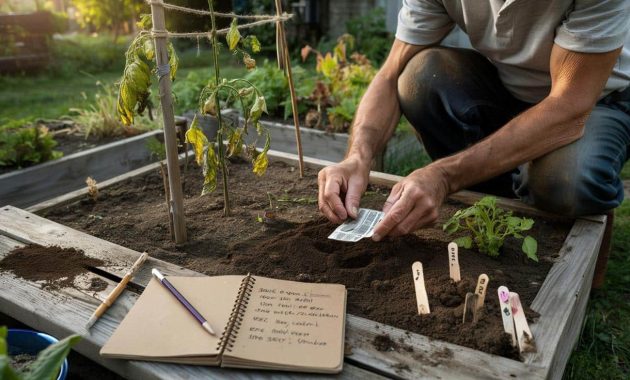
On a tired evening last September, just before the light slipped behind the fence, I watched my neighbor kneel in the dirt again. Her knees creaked, her hands moved slowly, but there she was, sorting through tomato vines drying on their strings like old laundry. The beds looked scruffy, half-done, not at all like the perfect Instagram gardens I’d scrolled past earlier. Yet her face was calm, almost stubbornly so, as she tucked one more small seed packet into a marked spot at the edge of the bed.
A storm had ruined half her harvest that year. She still went out the next day.
There’s a specific garden habit hidden inside that scene.
The quiet ritual that keeps gardeners coming back
Ask any long-time gardener what really keeps their patch alive and they rarely say “watering” or “weeding” first. They talk about coming back every season. They talk about saving a few seeds, writing tiny notes on popsicle sticks, dragging themselves outside on cold mornings to see what survived. That’s the long-term habit that quietly builds resilience year after year: the simple act of seasonal noticing and adjusting.
Not epic redesigns. Not expensive tools. Just coming back, observing, tweaking. Again and again.
One gardener I spoke with in a small suburban town has kept a notebook for thirteen years. Nothing fancy. A cheap spiral pad with soil smudges on the corners and the odd shopping list scribbled between pages. On March 12, five years ago, she wrote, “Frost killed the early peas. Try later next year.” On March 28 this year, there’s a short line: “Waited. Peas doing great.”
That’s all. Two sentences separated by five years. A lost harvest quietly turned into a lesson that now lives in her garden every spring.
This habit works because the garden is never exactly the same twice. Weather shifts. Soil changes. Your life changes too. Without a rhythm of watching and adjusting, every new setback feels like starting over from zero. With it, each failed crop becomes raw material.
Resilience doesn’t land in one big moment. It comes in thin layers, from small choices made on ordinary days when nobody is watching.
How to build this “seasonal noticing” habit in real life
Start small. Pick one simple ritual you can repeat every season, even during the messy, unglamorous months. Maybe it’s a five-minute walk around the beds every Sunday, phone in your pocket, eyes on the leaves. Maybe it’s snapping one quick photo from the same spot each week, like a shaky time-lapse of everything changing.
➡️ If your garden recovers slowly after rain, this drainage signal is often ignored
➡️ Nivea cream under fire experts say your skin may be paying the hidden price
➡️ Should we really feed robins this 3p kitchen staple tonight: gardeners clash over new advice
➡️ No bleach or ammonia needed: the simple painter-approved method to eliminate damp at home for good
➡️ A first in 100 years: a chinook salmon returns to its native California river
➡️ New ban hitting wood burners announced as fireplace rules changed
The point isn’t perfection. The point is to keep a thread running through your seasons so your garden has a memory, even when your brain is tired.
A lot of people try journaling every detail from day one. They buy the pretty notebook, draw a grid, log soil pH and moon phases… and drop the habit by week two. Let’s be honest: nobody really does this every single day. The trick is to lower the bar until it’s embarrassingly easy. One note a week. Three words on a plant tag. A voice memo saying, “Tomatoes sulked in the shade. Move next year.”
You’re not building a perfect record. You’re building a relationship with your garden that can survive your busy life.
Over time, this gentle, repeated noticing does something strange. You start to feel less panicked when things fail, because you’ve seen failure before. You even anticipate it. When hail cuts through your lettuce bed, you think, “Okay, that’s this year’s story,” and you write it down.
“A resilient garden isn’t one that never fails,” an older allotment gardener told me. “It’s one that remembers what went wrong… and grows anyway.”
- One weekly check-in walk, even in bad weather
- One brief note, photo, or voice memo per week
- One small change next season based on an old note
The long game: how gardens teach us to bend, not break
Stay with this habit for a few years and something deeper happens. You start to notice not just the plants changing, but yourself. The first year, a dead bed feels like a personal failure. By year three, it’s more like a puzzle. You walk out, you look closely, you compare it to your old notes or photos. You try something slightly different, then wait to see what the garden says back.
*That back-and-forth, quiet and a bit stubborn, is the heart of long-term resilience.*
We’ve all been there, that moment when life hits you sideways and your garden suddenly feels like one more thing you’re failing at. The house is chaos, work is heavy, you haven’t watered in a week, and the beans are hanging limp and accusing. This is where the old habit of seasonal noticing quietly saves you. You know that one bad week doesn’t erase a whole season, because you’ve seen seasons turn before.
So you walk outside anyway. You pull up what’s gone, you write one tired sentence, you plant one small thing for later. You’re not fixing everything. You’re refusing to disappear.
There’s a plain-truth piece to all this: **most resilient gardens are built by people who almost gave up several times and didn’t.** They just kept a tiny thread going. One neighbor told me she often “gardens” by standing in the doorway with a coffee, mentally noting what’s yellowing, what’s thriving, what needs moving. That counts.
Over ten years, those micro-decisions add up. Beds shift toward what works. Plants that can’t handle your soil quietly vanish from your plans. New favorites move in. And you, without really meaning to, train yourself to adapt instead of clinging to what “should” have worked.
- How does this habit actually build resilience?By turning failures into data instead of drama, so each season stands on the shoulders of the last.
- Do I need a big garden for this to work?No. A balcony, a few pots, even a single raised bed is enough to notice patterns year after year.
- What if I skip a season?Then that gap becomes part of the story. Pick up with one honest note about why, and what changed while you were away.
- Is technology helpful here?Only if it stays simple. A phone folder of weekly photos can be more powerful than any fancy app you abandon after a month.
- What if my garden keeps failing?That’s where resilience is forged. Look for one tiny improvement each year instead of a total miracle turnaround.
| Key point | Detail | Value for the reader |
|---|---|---|
| Seasonal noticing | Weekly walks, notes, or photos from the same spots | Turns chaos into patterns you can actually respond to |
| Small, repeatable rituals | Low-effort habits that survive busy or bad weeks | Makes resilience feel doable, not like another big project |
| Turning failure into data | Recording what went wrong, then adjusting next season | Reduces anxiety and builds quiet confidence over time |
FAQ:
- How do I start this habit if my garden is already a mess?Begin where you are. Walk through once this week, take three photos, and write a single sentence about what bothers you most. That’s your first data point, not a verdict.
- What’s better: a paper journal or a digital one?Whichever you’ll actually use. Paper feels grounding, but a phone photo with a quick caption can be easier on days when your hands are full or muddy.
- How long before I see real change?You’ll notice small shifts in one season, but genuine resilience tends to appear after two or three rounds of planting, failing, and adjusting.
- Can this habit help with unpredictable weather?Yes, because your notes reveal which plants handled extremes, which beds flood first, and what timing fits your microclimate instead of the calendar.
- What if I’m just not a “consistent” person?Then design the habit to fit that reality. One note per month is better than a perfect system you abandon. Consistency can be lumpy and still count.