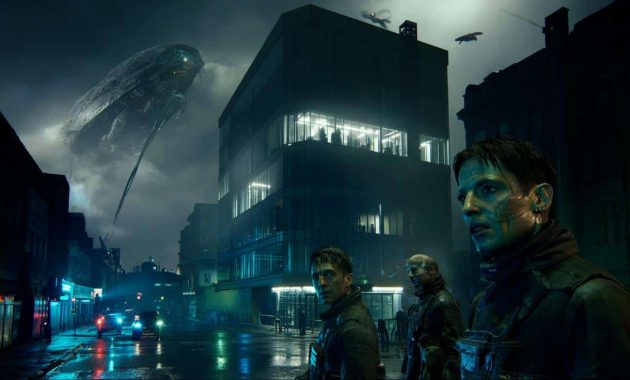
The TV phenomenon that split viewers in 2025 is gearing up for a second round, backed by huge money, higher stakes and a clear intention: push the darkness further, both visually and thematically.
An alien crash, a broken Earth and a divided audience
Alien: Earth landed in the summer of 2025 on FX in the US and then on Disney+, pitched as a grounded spin on Ridley Scott’s legendary franchise. Instead of distant colonies and deep-space freighters, the horror crashed straight onto a near-future Earth already strangled by mega-corporations and runaway technology.
The opening premise was brutally simple. A mysterious ship falls from the sky. An alien intelligence reveals itself. Human institutions, already corroded by privatised security forces and data-mining conglomerates, begin to crumble from the inside. The series leaned heavily on political intrigue, corporate espionage and bio-ethical nightmares, rather than jump scares alone.
That pitch clearly worked. French outlet Konbini reported more than 9 million views in the first week, a strong number for a dystopian sci‑fi show that doesn’t always hand-hold its audience. Nostalgia for the original films helped, but so did the presence of showrunner Noah Hawley, previously praised for the genre-bending Fargo and Legion.
Alien: Earth quickly became 2025’s “must‑argue‑about” sci‑fi series, adored and attacked with equal intensity.
As the season progressed, the online conversation changed tone. Many early fans felt the show eased off the accelerator just when it needed to lean in. From around episode five, critics noted a softer rhythm, with long stretches of dialogue and corporate intrigue where viewers had expected suffocating dread and escalating body horror.
A second season promised “blacker than ever”
Despite the backlash, industry confidence has hardened, not weakened. According to reports referenced in French media, a second season has been formally ordered, with production scheduled to start in London in 2026. The new run is being framed as darker, denser, and more psychologically punishing.
The shift in location is not just logistical. Season one’s shoot in Thailand produced bright, airy exteriors that some fans felt clashed with the franchise’s traditionally oppressive aesthetic. London’s harsher winter light, industrial outskirts and cramped interiors point to a deliberate visual reset closer to classic Alien imagery: metal corridors, rain, neon, rust.
Moving production to London signals a tonal pivot: away from sun-blasted dystopia, towards a colder, more claustrophobic nightmare.
➡️ After 131 cats were removed, this ecosystem bounced back far beyond scientists’ predictions
➡️ Goodbye Portugal : French retirees are now turning to this Atlantic coast town, a “new haven of peace”
➡️ This haircut helps women over 55 avoid heavy styling products
➡️ Saudi Arabia quietly abandons plans for a floating industrial port after costs spiral beyond forecasts and insiders question the strategy
➡️ This small daily decision can quietly affect stress levels over time
➡️ Die unterschätzte Kraft, eine einzige Information pro Tag aktiv nicht zu konsumieren, um deine Urteilsfähigkeit zu schützen
➡️ China planted so many trees in the Taklamakan Desert that it now absorbs CO2
➡️ Nine timeless habits people in their 60s and 70s keep : and why they make them happier than tech-driven youth
Financially, the gamble is huge. FX and Disney have reportedly granted Hawley a contract in the nine-figure range. That kind of investment goes beyond “let’s see how it goes” territory. It locks the series in as a strategic tentpole, expected to feed not just ratings, but streaming subscriptions, merchandise and long-term franchise value.
A fanbase split between terror and themes
The real tension sits in audience expectations. Alien: Earth attracted at least two distinct camps:
- Viewers who want raw, relentless survival horror closer to the original Alien
- Viewers drawn to the social commentary: corporate power, human-machine hybrids, post-human identity
Season one tried to serve both and pleased neither entirely. Some accused it of being “too talky, not enough teeth”. Others argued it only brushed against the deeper philosophical questions it raised, especially around AI ethics and biological experimentation.
The second season has to face that internal contradiction head-on. Go harder on horror and the more cerebral fans may feel sidelined. Go deeper into politics and philosophy and the creature feature crowd could tune out.
Can Alien: Earth fix itself without losing itself?
Speaking to French tech and culture outlet Les Numériques, Hawley defended his approach. Alien: Earth, he stressed, was never intended as a simple monster hunt. His pitch leaned on relationships between humans, machines and engineered organisms, and on how fear reshapes them all.
That stance raises a key creative question: how do you correct the show’s course without ripping up what made it distinct? A full reset of the narrative seems unlikely, as season one already locked in a complex web of corporate alliances, military agendas and classified experiments.
The most realistic path forward is not a reboot, but a rebalancing: sharper characters, tighter stakes and a more vicious sense of threat.
Industry sources and early hints suggest three possible areas of adjustment for season two:
| Focus | Season one issues | Season two opportunities |
|---|---|---|
| Characters | Too many plotlines, not enough emotional anchors | Fewer core protagonists, more time on their fears and choices |
| Horror | Long stretches of low tension | Return to uncertainty, unseen threats and body horror used sparingly |
| Themes | Ambitious ideas raised but rushed | Deeper work on human/AI hybrids, surveillance capitalism, bioweapons |
Industrial stakes behind the creative gamble
Beyond fan debates, Alien: Earth sits at a crossroads for how major studios treat adult sci‑fi on television. FX and Disney are testing whether a slow-burn, morally ambiguous series grounded in a legacy film IP can hold its own against glossier, lighter streaming content.
The nine-figure deal with Hawley also signals a maturing strategy: securing a recognised showrunner as a long-term architect, rather than swapping creative teams mid-story. If season two lands, expect similar arrangements for other franchises hovering between cinema and prestige TV.
There is a risk, though. Raising budgets and expectations makes cancellation more brutal if numbers slip. A second season perceived as “too arty” or “too safe” could push the series into that uncomfortable category: beloved by a niche, too expensive for everyone else.
How darker sci‑fi shapes what we fear
The promise of a “more black than ever” Alien: Earth taps into broader shifts in sci‑fi. Viewers in the mid‑2020s are less interested in shiny futures and more attuned to grounded anxieties: climate breakdown, AI out of control, private security firms behaving like states.
The series sits shoulder-to-shoulder with titles that mix speculative tech with very human dread. When a biotech firm in Alien: Earth weighs the value of a human life against patent rights for alien DNA, the scenario hits close to headlines about real‑world data markets and gene-editing disputes.
Dark sci‑fi works particularly well when it takes one step beyond current reality, not ten. Alien: Earth’s corporations, for instance, feel like mutated versions of present tech giants, with private satellites, proprietary police forces and opaque algorithms evaluating who lives and who is expendable.
Why “tension management” matters more than body counts
One criticism that kept resurfacing about season one was its “rhythm problem”. In serial storytelling, especially in horror, tension management matters as much as the monsters themselves.
A useful way to think about this is as a pulse. Scenes of relative calm allow viewers to breathe, but they also need to smuggle in unease: background noises, glitchy monitors, a lab technician hiding something. If the pulse stays flat for too long, even the most terrifying creature design loses impact when it finally arrives.
For season two, that means every quiet corridor and boardroom conversation has to carry a threat, whether social, psychological or physical. A hushed negotiation over weaponising alien spores can be as nerve-racking as an air duct chase, if filmed and paced with the same intent.
Key concepts Alien: Earth puts on the table
The series also serves as an accessible entry point to several dense sci‑fi concepts that will likely expand in the second season:
- Hybridisation: blending human biology with alien material or advanced machinery, raising questions over identity, consent and control.
- Post-humanism: the idea that human beings might cease to be the central reference point, replaced by networks of humans, AIs and engineered creatures.
- Corporate sovereignty: companies acting with state-level power, owning armies, infrastructure and data, beyond traditional regulation.
On screen, these ideas can look like soldiers quietly injected with alien-derived serums to increase resilience, or executives treating sentient AIs as disposable tools. Off screen, they echo ongoing debates around brain-computer interfaces, military AI projects and the role of private firms in public infrastructure.
If Alien: Earth’s second season embraces its darker promise, it won’t just be about more shadows and sharper teeth. It will be a test case for how far mainstream sci‑fi is allowed to push audiences into uncomfortable territory: morally, politically and viscerally, one episode at a time.
Originally posted 2026-02-11 05:13:51.