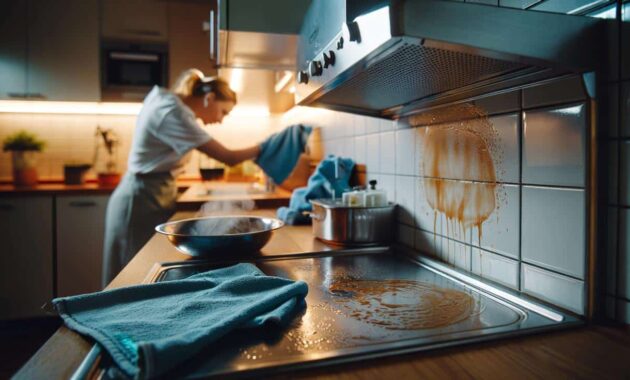
The pan is still warm, dinner plates are stacked in the sink, and the kitchen smells faintly of garlic and toasted cheese. Then your eyes land on it: that sticky ring of brown grease baked around the burner, the splatters on the backsplash, the shiny film clinging to the range hood. You grab a sponge, hesitate, then put it back. You know this scene. Bracing your wrist for a long, boring scrub you didn’t sign up for.
So you wipe around the worst spot, pretend you didn’t see it, and switch off the light. The grease wins again.
But what if the hard part could happen while you’re doing something else?
The quiet power of “letting it soak”
There’s a tiny domestic magic trick that most grandparents knew and we somehow forgot: time does the dirty work. Grease looks like a cleaning emergency, but it behaves more like a slow puzzle. You don’t need ten different sprays or a sore shoulder, you need a way to gently unstick it.
Hot water, steam and something absorbent can loosen even stubborn stains if the surface is given a chance to “relax”. That crusty brown halo? It’s just oil that has turned into a thin, brittle shell. Get under that shell and it practically slides off.
Once you see grease as something to soften, not attack, the whole story changes.
Picture a rented apartment with an old, yellowed stove hood. The kind that’s seen dozens of tenants, countless fried eggs and at least three generations of tomato sauce explosions. The current tenant, tired from work, stands there one night staring at the sticky underside where the light should shine through. It’s almost opaque with grime. She tries a quick wipe. The paper towel shreds and drags, leaving fuzzy lint lines.
So she does something different. She boils a kettle, turns off the extractor, and drapes a few layers of damp, hot microfiber cloths over the greasy panels. Then she walks away, scrolls on her phone, answers a message, forgets about it. When she comes back twenty minutes later and peels off the cloths, the grease has melted into them. What’s left is more dull dust than sticky tar.
Grease clings because it has cooled and hardened into a waxy coat, often mixed with dust and food particles. Heat reverses that process. Steam and warm moisture sneak into the tiny pores and cracks, swelling the layer and weakening its grip. That’s why kitchens feel “filthier” after a roast — the vapors lift hidden grime to the surface. Use that same principle on purpose and you get a passive clean.
A dry sponge on cold grease is just friction against glue. A warm, damp barrier left in place for a while is like sending in negotiators. By the time you come back with a gentle wipe, the stubbornness is mostly gone. Scrubbing becomes more of a polite nudge.
➡️ Why this Chinese plane in Antarctica is a strategic threat the West chose to ignore
➡️ “A fellow mum at soft play told me this” – and I stopped losing socks forever
➡️ A “flesh‑eating” bacterium killed several people this summer on US beaches, authorities on alert
➡️ I realized some cleaning tasks were stealing time without improving anything
Simple rituals that melt grease while you live your life
Start with the easiest ally you have: heat from your own cooking. As soon as you turn off the oven or stove, that’s your window. For baked-on spills inside the oven, place an oven-safe bowl of hot water on the middle rack, close the door, and just let the steam build while you eat. The warm vapor loosens fat on the walls and door glass without a single harsh product.
For stovetops and backsplashes, soak a few cloths in very hot water and wring them so they’re damp but not dripping. Lay them directly over greasy spots, especially around burners and the metal trim. Walk away for 15–30 minutes. When you return, wipe gently in straight lines, rinsing the cloth as you go. The thickest residue should slide off like soft wax.
The same “cover and wait” trick works for pans and oven trays that usually demand steel wool. Instead of scrubbing, fill the pan with very hot tap water while it’s still slightly warm (never cold water on a scorching-hot pan). Add a small splash of plain dish soap if you’re okay with that, or skip it if you’re going totally product-free. Leave it on the counter or in the sink for an hour.
Later, you’ll often find that a soft sponge or even a folded paper towel lifts the browned edges in one or two passes. Those terrifying black corners on roasting tins stop looking permanent and start behaving like something that just overstayed its welcome. Let’s be honest: nobody really does this every single day. But one “soak session” resets weeks of avoidance.
There’s one emotional trap that ruins this gentle method: impatience. We want the surface clean in 30 seconds, so we press harder, grab a rough pad, and end up scratching coatings or smearing grease into a wider circle. Then we blame the dirt or the brand of cleaner, instead of the rhythm we chose.
*The goal isn’t to fight the grease, it’s to change its texture until it stops fighting back.*
If you feel tempted to attack the stain, step away instead. Add fresh hot water to your cloth, re-cover the area, and give it more time. Your future self will be grateful that you protected the surface and your wrists.
Natural helpers that don’t smell like a laboratory
Once you’ve softened the grease with heat and moisture, you can invite a few simple pantry allies to the party — nothing industrial, nothing that stings your nose. The first is plain flour or cornstarch. On very sticky vertical areas like the range hood, dab a warm, damp cloth over the surface, then sprinkle a thin veil of flour. It clings to the grease and turns it into a dull paste. After ten minutes, wipe it off with a fresh cloth. The oily shine comes away with the powder.
On horizontal surfaces, you can do the same with a paste of water and a bit of baking soda, but the real work is still the waiting time, not the ingredient itself.
A common mistake is to treat “natural” as synonymous with “harmless assault”. People scrub glass with pure baking soda, rub lemon halves on delicate coatings, douse everything with straight vinegar, and then wonder why finishes look cloudy. Gentleness comes not from what you use, but from how long you let it act and how softly you touch it.
If you’re using vinegar on a greasy glass oven door or tiles, keep it diluted, apply with a cloth, and give it a few minutes to loosen the film before you even think of rubbing. Skip it entirely on stone or unsealed marble. And don’t layer seven different “green” tricks at once. One quiet method at a time is enough.
Sometimes the cleanest homes aren’t the ones with the strongest products, but the ones where people quietly let things soak instead of wrestling with them.
- Use heat first
Apply steam or hot cloths to soften grease before anything else. - Let time work
Give at least 15–30 minutes of “rest” under a warm, damp barrier. - Go gently on surfaces
Soft cloths, straight-line wipes, no frantic scrubbing. - One helper at a time
Flour, diluted vinegar, or a mild paste — not all of them piled together. - Turn it into a ritual
Cover, walk away, live your life, then wipe when you come back.
A different relationship with the “dirty corner”
Grease has a way of turning into shame. That one sticky corner near the stove, the discolored hood filter, the dark spot in the oven window you keep ignoring. You start avoiding eye contact with your own kitchen, as if that strip of brown means something about you. But once you understand that most of that stubbornness is just cooled fat and time, not a moral failure, it gets easier to breathe.
You can build small, almost invisible rituals that run in the background of your day. Toss a hot cloth over the backsplash while you eat. Leave a pan soaking while you watch your series. Let the oven steam while the table is being cleared. No scrubbing soundtrack, no chemical cloud over dinner.
One evening, you might notice that the worst spot — the one you’ve been mentally apologizing for — has quietly vanished after a few of these cycles. No heroic deep-cleaning day, no “before/after” marathon. Just a series of tiny, soft ambushes where heat, water and a bit of patience did the heavy lifting.
You’re left with a kitchen that feels lighter, less sticky to the touch, more yours again. And a new kind of confidence: if the grease comes back, you already know the rhythm that sends it away. That might be the real clean — not the shine, but the ease.
| Key point | Detail | Value for the reader |
|---|---|---|
| Use heat and steam | Leverage residual oven warmth, hot water, and damp cloths to soften grease | Reduces effort and avoids harsh scrubbing |
| Let time do the work | Cover greasy areas for 15–30 minutes before wiping | Makes cleaning fit naturally into daily routines |
| Stay gentle and simple | Soft cloths and basic pantry items, one method at a time | Protects surfaces, saves money, and cuts chemical exposure |
FAQ:
- Can this really work on very old, baked-on grease?Yes, but it may take several “softening rounds”. Alternate hot cloths or steam with gentle wiping over a few days instead of one exhausting session.
- What if I don’t want to use any products at all?You can rely solely on hot water, steam, and time. It may be slower, yet you’ll still see stuck-on grease loosen significantly.
- Is baking soda safe for all surfaces?No. Avoid it on glossy, delicate, or non-stick coatings, as its mild abrasiveness can dull finishes if rubbed hard.
- How often should I do these “soak sessions”?Even once every couple of weeks around the stove area can keep grease from turning into a hard crust that feels impossible to tackle.
- Does this method work on kitchen cabinets above the stove?Yes. Use very wrung-out warm cloths so wood doesn’t get soaked, give them time to sit, then wipe gently and dry afterward.